Every time yellow sheet metal wraps around a tragedy, the public shrieks for the same useless ritual. Politicians stand at microphones, weeping on cue, vowing stricter inspections, more flashing lights, and heavier steel.
They are lying to you. In similar developments, take a look at: Why Trump S Cash Dividend Campaign Promises Are More Political Theater Than Reality.
Or worse, they are profoundly ignorant of how physical mass and kinetic energy actually interact at fifty miles an hour.
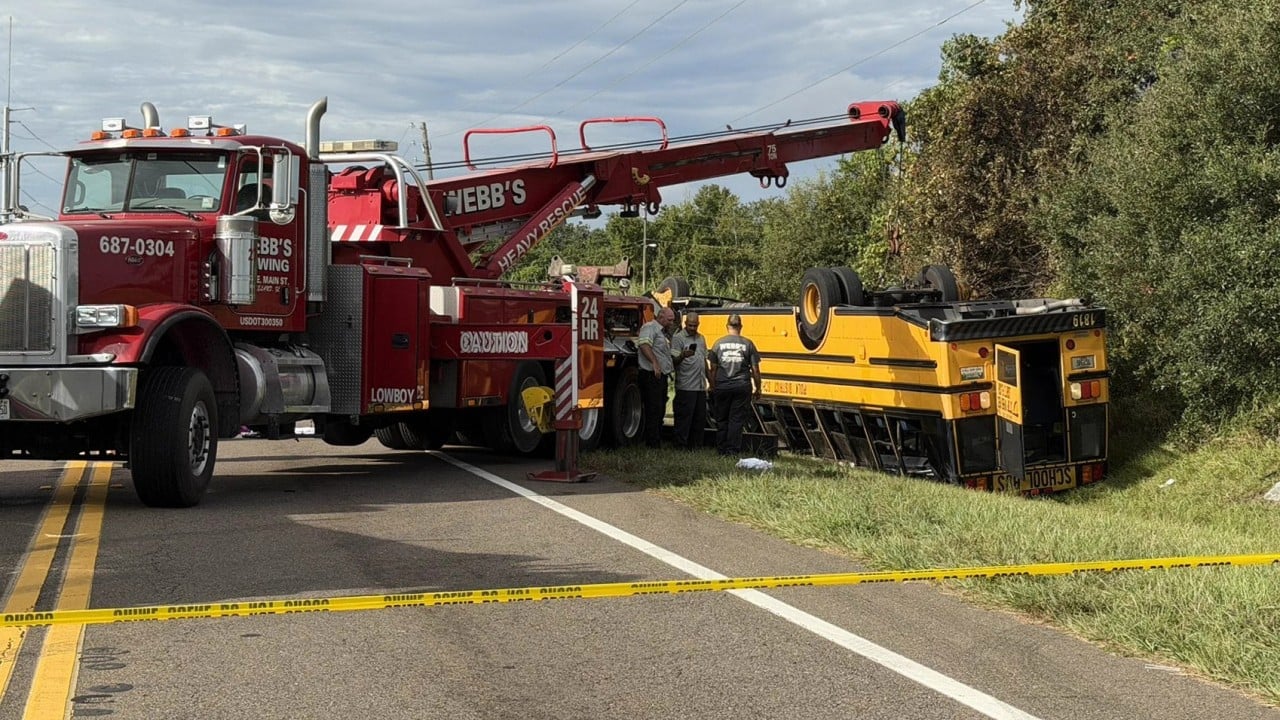
When two lives vanish in a Florida collision involving a massive yellow passenger carrier and a passenger vehicle, the knee-jerk reaction is predictable. People demand seatbelts, slower speeds, and more buffers around school zones. Nobody asks whether the multi-ton vehicle design itself is an obsolete relic from a bygone century, maintained purely because it looks comforting on a postcard. USA Today has provided coverage on this fascinating topic in extensive detail.
Let us look at the mechanics. A standard school bus weighs upward of twenty-five thousand pounds. A typical sedan weighs around four thousand. In a physics equation, that disparity is a battering ram against a pebble. But inside that massive yellow chassis, the occupants—your children—are sitting in glorified aluminum benches designed in the nineteen-thirties, completely unsecured, relying on compartmentalization.
Compartmentalization is the industry term for padding the seat in front of you so hard that your skull bounces off it instead of flying through the windshield. It is safety engineering born from an era before computer simulation or modern crash-test dummy metrics. Yet regulatory bodies defend it because retrofitting fleets with three-point harnesses costs municipal governments billions.
We protect the balance sheet of the school district while pretending we are protecting the child.
The Myth of the Giant Yellow Shield
Look at the statistics coming out of federal transit agencies. They will tell you, with straight faces, that school buses are the safest mode of surface transportation on earth. They compare passenger fatalities per mile against passenger cars.
That comparison is statistical dishonesty at its finest.
It ignores the environmental context. A bus operates on fixed routes, at lower average speeds during peak congestion hours, with professional drivers. Of course its raw mortality rate per mile looks favorable compared to a teenager texting behind the wheel of a Civic at two in the morning.
Compare buses to modern passenger vehicles equipped with side-curtain airbags, crumple zones, electronic stability control, and active collision avoidance. By comparison, a traditional bus is a rigid metal box. When energy is not absorbed by crumple zones, it transfers entirely into the frame. And when that frame hits an immovable object, or a truck of equivalent mass, the passengers inside become pinballs.
The lazy consensus is that bigger means safer. Physics tells us that bigger simply means higher momentum. If a twenty-five-ton vehicle loses control or gets T-boned by an overloaded semi-truck, the mass works against the occupants, not for them.
Why We Refuse to Mandate Restraints
For decades, the National Highway Traffic Safety Administration resisted mandatory lap-shoulder belts on large buses. Their primary excuse was financial. Districts would have to cut routes or hire fewer teachers to pay for the refits.
Think about that trade-off. We routinely accept a baseline level of catastrophic injury risk to preserve school district operating budgets, then act surprised when a high-impact collision results in fatalities that could have been mitigated by a simple three-point strap.
When states like New Jersey and Florida began passing incremental belt laws, they did it under immense public pressure after high-profile accidents. But the implementation remains half-hearted. Thousands of older models still roll down our suburban streets every morning, carrying cargo more precious than any bank vault, protected by standards that would never pass muster in a modern family sedan.
If you put your child in a modern car, they are surrounded by active and passive safety systems engineered to manage G-forces down to the millisecond. If you put them on a bus, they are relying on a padded vinyl bench and the hope that the driver of the logging truck coming the other way is paying attention.
The Uncomfortable Truth About Driver Shortages
Let us talk about the person holding the wheel.
Across the country, districts face a chronic shortage of qualified drivers. The pay is abysmal, the hours are split, and the discipline problems are legendary. To fill those seats, standards have slipped. Districts hire drivers who can barely clear basic licensing thresholds, let alone handle an emergency maneuver in a blinding rainstorm on a two-lane Florida highway.
When you combine aging mechanical fleets with exhausted, underpaid operators navigating increasingly congested corridors, a catastrophic failure is not an anomaly. It is a mathematical certainty over a long enough timeline.
Yet our public discourse focuses exclusively on the sorrow of the aftermath rather than the systemic rot of the setup. We light candles. We hold moments of silence. Then we send the same kids back onto the same rigid buses tomorrow morning.
Dismantling the Status Quo
If we actually cared about student transit safety, we would scrap the yellow bus model entirely.
We would decentralize student transport into smaller, high-safety passenger vans or localized transit pods equipped with modern crash-mitigation technology. We would mandate every single vehicle carrying minors to meet passenger-car side-impact standards. We would professionalize driver compensation to attract top-tier talent instead of scraping the bottom of the municipal barrel.
Instead, we cling to tradition because change is expensive and administrators hate answering to taxpayers about bond measures.
Stop accepting the line that yellow buses are untouchable shrines of safety. They are legacy equipment coasting on outdated statistics and emotional nostalgia.
Demands for real safety do not begin with a prayer vigil. They begin by refusing to put children into twenty-five-ton rolling metal boxes that lack basic modern restraints.
Demand better vehicles. Demand rigorous driver standards. Or stop pretending you are surprised when the physics catch up.