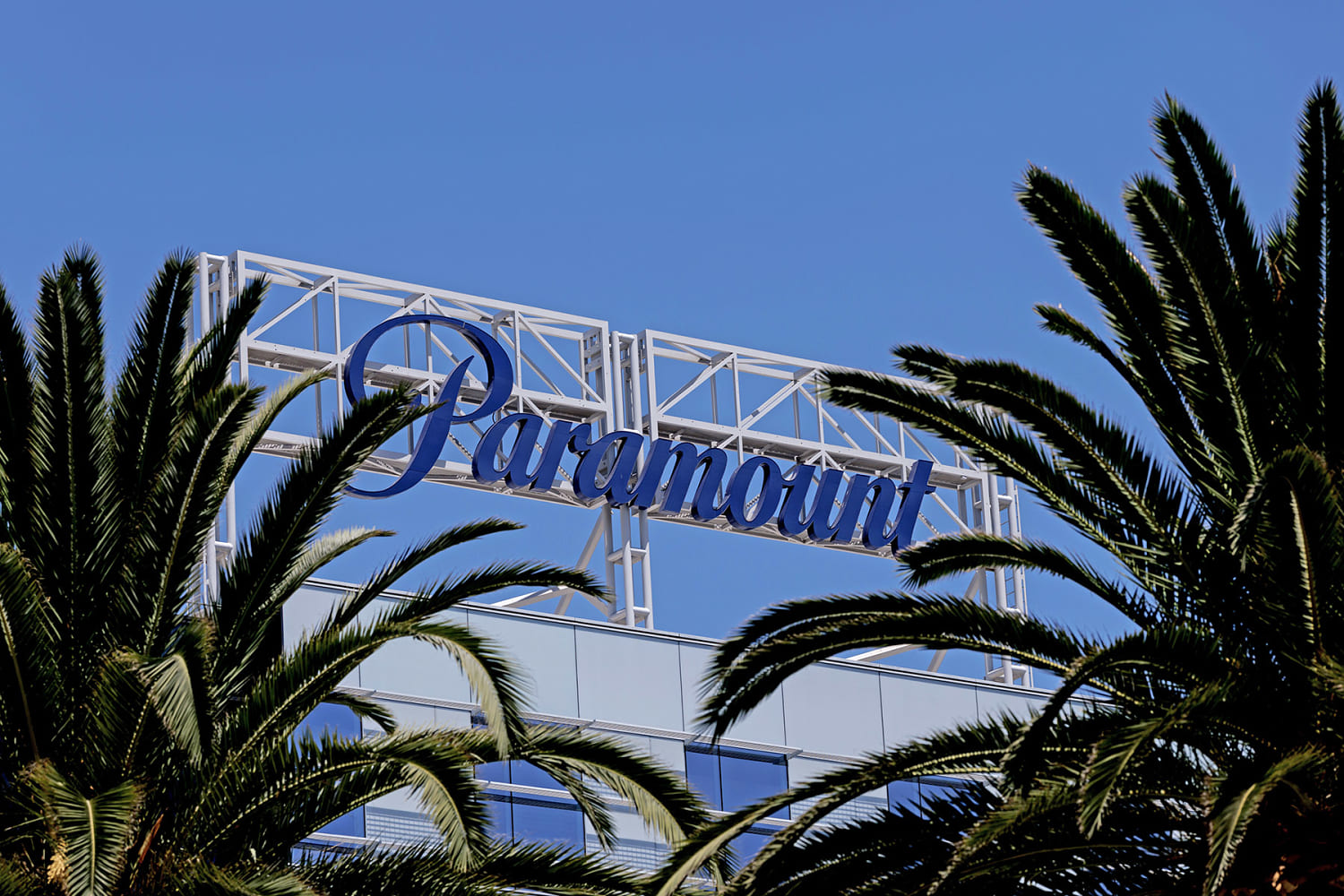
The $111 billion consolidation of Paramount Skydance and Warner Bros. Discovery (WBD) hinges not on consumer welfare metrics, but on an aggressive regulatory proxy war. A June 5 legal filing sent by Paramount to the Department of Justice (DOJ) explicitly accuses Netflix of executing a systematic campaign to derail federal clearance of the transaction. This maneuver exposes the foundational economic tension defining contemporary entertainment: the battle between digital-native scale and legacy intellectual property aggregation. Paramount asserts that Netflix is leveraging organized labor concerns and historical merger fallout to poison regulatory sentiment. In doing so, Paramount has deployed a sophisticated antitrust paradox, attempting to utilize its competitor's intense opposition as empirical proof that the combined entity will form a viable, pro-competitive counterweight to Netflix's market dominance.
Understanding this conflict requires looking past corporate rhetoric to analyze the structural bottlenecks of the entertainment labor market and the severe asset asymmetry between the top market participants.
The Strategic Asymmetry of Content Distribution
The economic rationale driving the Paramount-WBD transaction is rooted in a massive scale disparity. Subscription Video on Demand (SVOD) economics dictate that platforms with massive, upfront capital deployment require an equally massive subscriber base to achieve a sustainable average revenue per user (ARPU) relative to content amortization costs.
Recent market share data reveals a deeply asymmetric ecosystem:
- Netflix: 17.2% market share
- Disney+ / Hulu / FuboTV: 11.1% market share
- Amazon Prime Video: 8.0% market share
- Paramount+ / Pluto TV: 4.6% market share
- Max / Discovery+: 2.9% market share
The combined footprint of Paramount+ and Max yields an initial market share of 7.5%, positioning the merged company as the number four subscription streaming service. This structural reality forms the core of Paramount's legal defense. By presenting the merger as a survival-driven defensive consolidation, Paramount frames the transaction as an injection of fresh competitive energy into a market otherwise heading toward an effective duopoly or triopoly.
Labor Arbitrage and the Teamsters Bottleneck
The primary operational vector of opposition to the merger comes from organized labor, specifically the International Brotherhood of Teamsters. In March, the union petitioned the DOJ to block the merger, citing the catastrophic labor impact of the 2019 Walt Disney Company acquisition of 21st Century Fox, which led to significant job liquidations and structural project cancellations.
Paramount's legal counsel has aggressively countered this argument by isolating macro-environmental variables from structural transaction mechanics. The post-2019 contraction in Hollywood production output, Paramount argues, was an artifact of the COVID-19 pandemic and secular industry corrections, rather than an intrinsic consequence of corporate consolidation.
To systematically dismantle the union's opposition, Paramount has detailed an explicit labor production function. The business logic of the combined entity requires a transition from fragmented, under-scaled streaming operations to an aggressive, diversified distribution model. This model operates on specific operational indicators:
- Volume of Physical Capital Deployment: Commitment to theatrically release a minimum of 30 feature films annually.
- Labor-Hour Generation: Greenlighting 20 new and returning television properties within the first six months post-announcement to generate immediate work opportunities.
- Downstream Production Ecosystems: Maximizing call sheets, location shoot days, logistics, equipment transportation, catering, and casting services.
[Legacy Fragmented Model: Low Capital Efficiency -> Reduced Production Volume -> Suppressed Labor Demand]
                      │
                      ▼ (Paramount-WBD Merger Consolidation)
                      │
[Scaled Consolidated Model: High Capital Efficiency -> 30+ Films/Year & Expanded TV Slates -> Linear Scaling of Labor Demand]
This model shows that for a combined legacy studio to amortize its $110.9 billion valuation, it cannot retrench its production pipeline. It must maximize content volume across theatrical, linear, and SVOD channels simultaneously to compete for consumer attention against platforms with a lower cost of capital.
The Antitrust Paradox of Competitor Opposition
The core of Paramount's letter to the DOJ relies on an elegant application of antitrust theory regarding competitor standing. Historically, antitrust regulators view opposition from direct market competitors with deep skepticism. If a merger genuinely threatened competition by creating a predatory monopoly, rival firms would typically support the transaction, as it would allow them to raise prices or capture displaced market share under a less competitive umbrella.
When a dominant market leader like Netflix aggressively lobbies regulators or indirectly mobilizes stakeholders against a deal, it signals the exact opposite to antitrust economists: the merger is highly likely to increase competition and challenge the incumbent's pricing power.
Paramount has explicitly framed Netflix's actions as a "panic-level response." The strategic logic of this defense operates on a clear sequence:
- Step 1: Identify Netflix as the structural incumbent possessing a 17.2% domestic market share and dominant global streaming margins.
- Step 2: Highlight Netflix's previous failed $82.7 billion cash-and-debt bid for WBD's studio and streaming assets in late 2025, from which it withdrew only after Paramount submitted a superior $31-per-share all-cash offer backed by sovereign wealth capital.
- Step 3: Position Netflix's current regulatory opposition not as a defense of public consumer welfare, but as an intervention designed to protect its market insulation and prevent a consolidated competitor from achieving true operational scale.
This framework shifts the DOJ's focus away from simple asset-concentration metrics and toward an evaluation of long-term market dynamics.
Structural Vulnerabilities in the Consolidated Playbook
While Paramount's framework is legally and theoretically coherent, its execution faces severe practical constraints. The strategy assumes that capital efficiency and increased production volume flow naturally from consolidation. This assumption ignores two fundamental strategic bottlenecks.
The Debt Amortization Friction
The combined entity must absorb and service massive legacy debt loads. This creates an immediate drag on free cash flow, directly competing with the capital expenditures required to fund the expanded theatrical and television slates promised to labor unions. If macro-economic conditions tighten or linear television ad revenues decline faster than projected, the firm will face intense pressure to cut production budgets, directly invalidating its labor-growth thesis.
The Fragmented Tech Stack
Merging Paramount+ and Max involves deep technical and operational friction. Unlike digital-native platforms built on unified global architectures, legacy media integrations frequently suffer from fragmented user data, clunky content delivery networks, and high churn rates during platform migrations. A failure to execute this technical integration efficiently will rapidly erode any scale advantages gained through the merger.
Furthermore, federal approval from the DOJ does not guarantee a clear path to execution. A coalition of state attorneys general, led by California, continues to actively investigate the transaction, citing regional economic disruptions and localized labor market concentration. These state-level antitrust actions, combined with potential regulatory friction from European authorities, present a fragmented, multi-jurisdictional legal battle that could delay the transaction's close well past the summer.
The optimal strategic play for Paramount is to maintain its aggressive positioning of Netflix's opposition as definitive evidence of a pro-competitive transaction. By turning its competitor's defensive maneuvers into a core pillar of its antitrust defense, Paramount can reshape the regulatory narrative around market sustainability rather than simple corporate size. However, the long-term success of the combined firm will ultimately depend on its ability to manage the financial drag of its debt and execute a flawless technical integration of its distribution platforms.