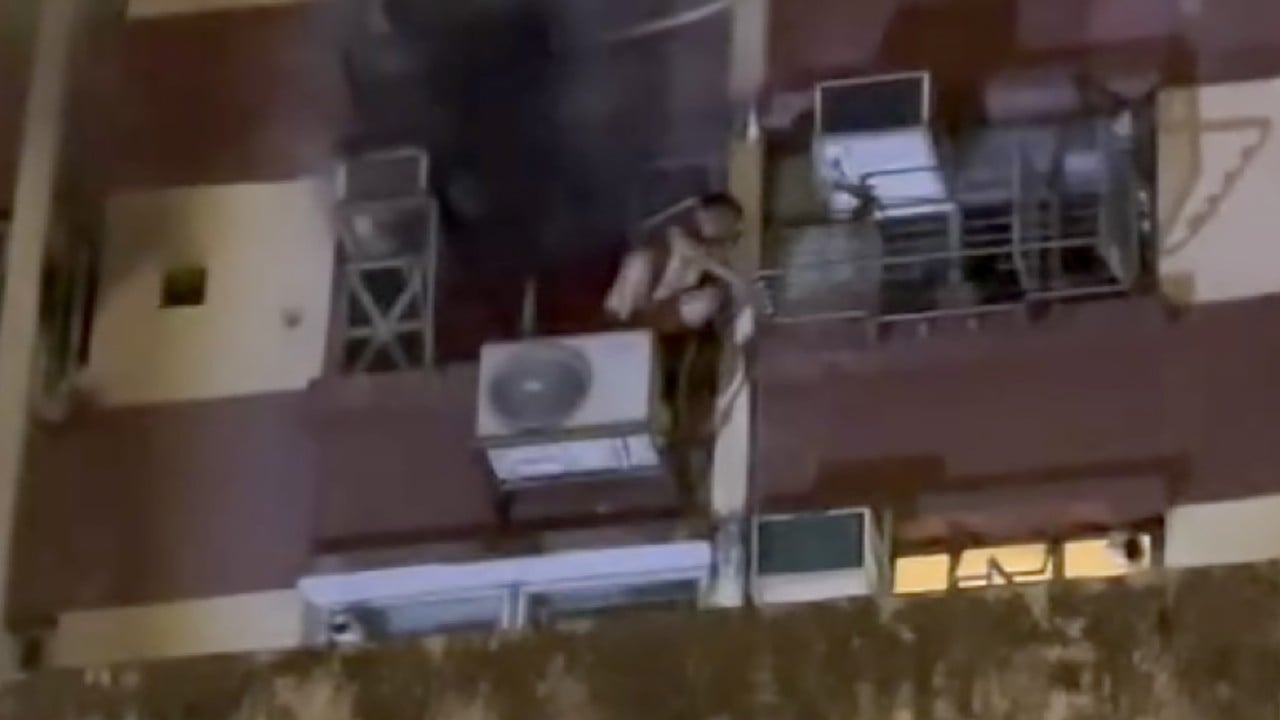
Every news cycle demands its cheap dopamine hit. A thirteen-year-old boy climbs out a high-rise window onto a vibrating, poorly anchored air-conditioning compressor unit to escape a blazing flat. The local rags run the breathless headlines about raw courage, quick thinking, and miraculous survival. Bystanders cheer. Fire crews look heroic. Everyone goes home feeling warm and fuzzy about the resilience of the human spirit.
It is a comforting narrative. It is also a catastrophic lie. For a different perspective, check out: this related article.
When a teenager has to scale a residential exterior unit suspended over concrete to avoid dying from smoke inhalation, nobody deserves a medal. Someone deserves an indictment. We are romanticizing structural dysfunction because facing the ugly reality of our built environment requires actual work. I have spent two decades analyzing the intersection of municipal infrastructure and residential architecture, and I am entirely exhausted by our collective addiction to treating systemic incompetence as an inspirational movie script.
Let us strip away the cheap sentimentality and look at what actually happened behind the sensationalized rescue footage. Similar coverage on the subject has been shared by NPR.
The Myth of the Everyday Hero
The lazy consensus in every single report about this incident centers on individual survival instincts. The boy panicked, the boy acted, the boy lived. Cue the brass band.
This framing lets every single institutional actor off the hook. It assumes that surviving a high-rise fire in a modern metropolitan area should be an extreme sport requiring parkour skills and an absence of vertigo. When we praise a thirteen-year-old for negotiating a narrow metal ledge above a vertical drop, we are normalizing a standard of safety that belongs in the nineteenth century.
A flat is not a pressure cooker designed to test whether a child can scale exterior hardware under duress. It is supposed to be a controlled enclosure engineered with passive and active fire containment systems. If the primary exit route was compromised to the point where an exterior HVAC bracket became the most viable escape vector, the failure occurred long before the first spark touched the upholstery.
Fire safety in vertical housing is not about how fast the brigade arrives with a cherry picker or how bravely a kid clings to a compressor. It is about compartmentalization, non-toxic materials, self-closing fire doors, and sprinkler systems that actually function under real-world water pressure. When those fail, a rescue is not a victory. It is a consolation prize.
The Architectural Contradiction of Modern Housing
We keep building vertical matchboxes and acting surprised when they burn like matchboxes.
Look at the average high-rise development going up across urban centers today. Developers maximize floor space by minimizing egress corridors, installing lightweight composite cladding that turns exterior walls into fuses, and hanging heavy machinery like air-conditioning compressors off brittle brackets bolted into thin skim-coat concrete.
Then we crowd these units with synthetic furnishings. The modern living room is a chemical warehouse. Polyurethane foam, polyester upholstery, and vinyl flooring do not just burn; they off-gas a lethal soup of hydrogen cyanide and carbon monoxide within seconds of ignition. A fire in a contemporary flat does not smolder politely for twenty minutes. It reaches flashover conditions faster than you can lace your shoes.
When a thirteen-year-old wakes up to that kind of thermal runaway, standard escape training goes out the window because standard escape paths are already blocked by a wall of black, blinding smoke. The interior corridors act as chimneys. The doors, rated for thirty minutes of fire resistance on paper, warp under heat differentials that the testing labs never bothered to simulate properly.
So the child opens the window. And there he is, standing on a residential air conditioner, looking down at a drop that would end his life instantly if his grip slipped.
We call that quick thinking. I call it a symptom of systemic architectural negligence.
Dismantling the Smoke and Mirrors
Let us address the questions everyone asks while missing the point entirely.
People look at these incidents and ask how parents can better educate their children on high-rise fire survival. They want drills, checklists, and safety manuals. They want to put the burden of survival squarely back on the shoulders of the occupants.
The premise of the question is flawed. Asking how an apartment dweller should navigate a burning high-rise without proper infrastructure is like asking how a passenger should survive a commercial plane crash by flapping their arms harder. You cannot educate your way out of poor engineering.
If a building lacks adequate smoke extraction systems in the hallways, no amount of fire safety orientation will save a family trapped on the fourteenth floor. If the exterior facade is wrapped in flammable insulation because the developer cut corners to meet a profit margin, your fire escape plan is essentially a prayer.
We need to stop treating residential fires as random acts of God or simple domestic accidents. They are engineered outcomes. Every material choice, every zoning exemption, every value-engineered fire door represents a calculated decision by someone who will never have to stand on an air-conditioning ledge to save their own child.
The Real Price of Complacency
Let us be entirely honest about why this narrative persists. A heroic rescue makes for great morning television. It creates a narrative arc with a clean beginning, middle, and end.
Investigating why the building's fire dampers failed, why the smoke evacuation fans weren't tied to an emergency generator, or why the exterior units were positioned directly beneath primary escape windows—that is boring. That involves lawyers, municipal code enforcement boards, greedy developers, and endless bureaucratic friction.
So we choose the boy on the ledge. We turn a structural catastrophe into a heartwarming human interest vignette.
Next time you see a headline celebrating a miraculous escape from a burning flat, do not applaud the victim's acrobatics. Ask why the architect designed a death trap, why the inspector signed off on the blueprints, and why we continue to value developer profit margins over the simple right to not scale exterior walls just to breathe fresh air.
The boy lived. Good. Now let us tear down the system that put him there before the next one drops.


