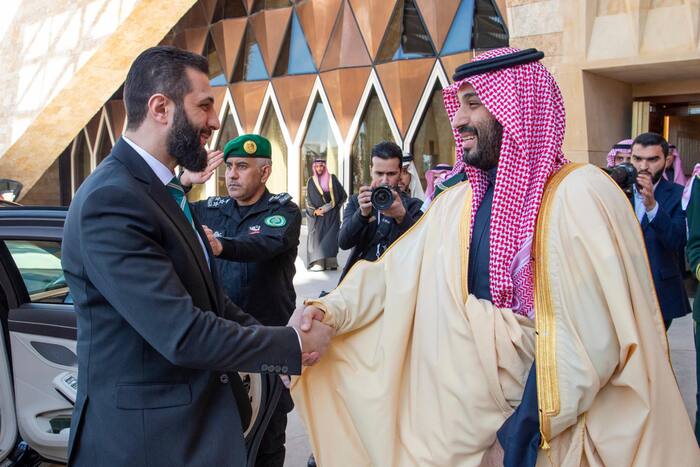
Saudi Arabia is turning toward Syria not because Bashar al-Assad offers a military rescue in Yemen, but because Riyadh needs diplomatic leverage over Iran. As Houthi drones and ballistic missiles continue to strain Saudi air defenses and threaten economic mega-projects, the Kingdom is executing a cold, transactional pivot. By rehabilitating Damascus and bringing it back into the Arab fold, Saudi strategists hope to chip away at Tehran's regional monopoly, secure intelligence cooperation, and build indirect backchannels to restrain the Houthis. It is a high-stakes gamble rooted in desperation rather than trust.
War makes strange bedfellows. For over a decade, Riyadh poured billions of dollars into toppling the Syrian government, viewing Damascus as an indispensable bridge for Iranian weapons and influence across the Levant. Yet today, Saudi diplomats are shaking hands with the very officials they once branded as war criminals. To understand this whiplash, you have to look south, not north. The grinding conflict with the Houthi movement in Yemen has become an unsustainable financial and strategic bleed for Crown Prince Mohammed bin Salman.
The Strategic Calculus Behind the Saudi Pivot
When a state runs out of kinetic options, it turns to diplomatic alchemy. The Saudi-led intervention in Yemen, launched in 2015 with promises of a swift victory, has morphed into a protracted war of attrition. Despite possessing some of the most expensive Western hardware on earth, the Royal Saudi Air Force has failed to dislodge the Houthis from Sanaa or neutralize their asymmetrical strike capabilities.
Every time a Houthi drone penetrates Saudi airspace and hits an Aramco facility or an airport, the Kingdom's Vision 2030 economic transformation takes a direct hit. Foreign investors do not like putting capital into regions where ballistic missiles are a regular weather event. Riyadh needs a way out, and it knows the road to a durable ceasefire in Yemen runs directly through Tehran.
This is where Syria enters the equation. Damascus is the beating heart of Iran's Axis of Resistance, the sprawling network of state and non-state actors that includes Hezbollah in Lebanon, Shiite militias in Iraq, and the Houthis in Yemen. For years, Saudi policy operated on the assumption that isolating Syria would weaken Iran. That strategy failed completely. Russian airpower and Iranian ground forces ensured Assad survived, leaving Riyadh with zero influence in Damascus while Tehran consolidated total control.
By normalizing ties with Syria, Saudi Arabia is attempting to buy a seat at the table. The logic is brutally pragmatic. If Riyadh cannot defeat Iranian proxies on the battlefield, it will use its immense financial reserves to compete for influence inside the very capitals Tehran considers its own.
What Damascus Actually Brings to the Table
Let us be clear about military realities. The Syrian Arab Army is an exhausted, hollowed-out institution. After more than a decade of civil war, Damascus has neither the manpower, the logistics, nor the political will to send troops to fight on Saudi Arabia's southern border. Anyone suggesting Syrian soldiers are about to deploy to Yemen is selling fiction.
Instead, the value Syria offers Riyadh is entirely asymmetric, built on intelligence, geography, and diplomatic friction.
Breaking the Iranian Monopoly
Iran spent billions keeping the Assad regime afloat, expecting permanent economic and strategic dividends in return. Yet Tehran's economy is crippled by sanctions, leaving it unable to fund the massive reconstruction Syria desperately needs. Saudi Arabia, flush with oil revenues, holds the exact checkbook Damascus requires.
By dangling reconstruction funds and Arab League legitimacy, Riyadh is testing the limits of the Syrian-Iranian alliance. Even minor friction between Damascus and Tehran serves Saudi interests. If Assad believes he can balance Iranian security guarantees against Gulf Arab money, he becomes less reliant on the Islamic Revolutionary Guard Corps. That shifts the regional balance of power, forcing Iran to spend political capital just to keep its oldest ally in line.
Intelligence and Backchannel Diplomacy
Syria sits at the crossroads of regional intelligence networks. Damascus maintains deep, decades-old institutional ties with Hezbollah, Palestinian factions, and Iranian intelligence operatives. Crucially, the Houthis maintain a diplomatic and operational presence in Damascus.
For Saudi intelligence services, re-establishing formal relations opens critical listening posts. Through Syrian intermediaries, Riyadh gains alternative backchannels to communicate with Houthi leadership and their Iranian backers without the public humiliation of begging for direct talks. Furthermore, Syrian intelligence holds vast files on the logistical supply lines Iran uses to move weapons and advisors across the Middle East. Sharing even a fraction of that data with Riyadh provides valuable insight into how Houthi capabilities are sustained.
The Captagon Bargaining Chip
You cannot analyze Saudi-Syrian rapprochement without discussing Captagon. Over the last several years, Syria has transformed into a narco-state, flooding the Gulf with billions of dollars worth of this illicit amphetamine. Saudi Arabia is the primary consumer market, and the social fabric of the Kingdom is paying a heavy price.
Damascus has weaponized this drug trade as a diplomatic lever. The implicit message from Assad to Riyadh has been simple: lift the sanctions, restore diplomatic ties, and open the investment taps, or the flood of pills continues. By engaging Damascus, Saudi Arabia is trying to turn off the tap at the source, trading diplomatic rehabilitation for border security.
The Houthi Escalation and the Limits of Hardware
To grasp why Riyadh is willing to swallow its pride with Assad, you have to look at the changing nature of the Yemen conflict. The Houthis are no longer a ragtag militia firing rusty Scuds. Backed by Iranian technical expertise, they have developed an indigenous arsenal of long-range loitering munitions, cruise missiles, and anti-ship ballistic missiles.
Consider a hypothetical scenario illustrating the economic asymmetry of this war. A Houthi unit assembles a Shahed-style drone in a cave outside Saada using commercial components costing roughly twenty thousand dollars. They launch it toward a desalination plant in southern Saudi Arabia. To intercept that single threat, a Saudi Patriot battery fires two PAC-3 interceptors, each costing roughly four million dollars.
You do not need a degree in economics to see who wins that exchange over a five-year timeline.
- Asymmetric Cost Ratio: The defender spends millions to stop threats that cost thousands to produce.
- Depletion of Stockpiles: Global supply chains for advanced interceptor missiles are stretched thin, meaning Riyadh cannot simply buy its way out of an infinite barrage.
- Psychological Deterrence: Even when missiles are intercepted, the sirens and debris shatter the image of stability Saudi Arabia desperately needs to project to global markets.
Washington's shifting priorities have compounded Riyadh's vulnerability. Successive US administrations have signaled a desire to pivot away from Middle Eastern entanglements, leaving Saudi leaders acutely aware that the American security umbrella is no longer guaranteed. When the US briefly removed the Houthis from its Foreign Terrorist Organization list and restricted offensive weapons sales to Riyadh, the message was unmistakable. Saudi Arabia realized it was on its own.
The Pushback and the Skeptics
Not everyone in the region or in Western capitals buys the logic of the Saudi-Syrian thaw. Critics argue that Riyadh is giving away massive diplomatic concessions for pennies on the dollar.
Washington has voiced strong opposition to Arab normalization with Damascus, maintaining strict sanctions under the Caesar Act designed to penalize anyone doing business with the Assad regime. American officials argue that bringing Syria back into the Arab League without demanding concrete political reforms or the removal of Iranian militias simply rewards brutality and undermines international norms.
There is also deep skepticism among veteran Middle East analysts regarding Assad's willingness to distance himself from Iran. Tehran did not just send money to Damascus; it sent thousands of fighters who bled to keep Assad in power. The Islamic Revolutionary Guard Corps is deeply embedded within the Syrian military, security apparatus, and economy. Assad could not expel Iranian influence even if he wanted to, because doing so would likely trigger his own overthrow.
From this perspective, Saudi Arabia is falling into a classic diplomatic trap. Riyadh hands Assad legitimacy, cracks open the door to Gulf capital, and weakens Western sanctions enforcement, while Damascus pockets the gains and continues facilitating Iranian regional aggression.
A Fragmented Regional Order
The outreach to Syria is not an isolated policy shift. It is part of a broader, systemic realignment across the Middle East. Saudi Arabia is hedging its bets across the board, moving away from ideological crusades and embracing cold, transactional realpolitik.
Look at the broader pattern. Riyadh restored diplomatic relations with Iran in a Beijing-brokered deal that stunned Washington. It has engaged in quiet talks with Turkey, ending years of bitter rivalry. It is balancing its historical alliance with the United States against deepening energy ties with Russia and massive infrastructure deals with China.
In this multipolar environment, old alliances are fluid, and permanent enemies do not exist. Saudi leadership has concluded that regional stability cannot be achieved by isolating rogue actors; it can only be managed by enmeshing them in webs of economic and diplomatic interdependence.
Yet interdependence cuts both ways. By tying its southern border security to diplomatic maneuvers in the Levant, Saudi Arabia is entering a complex game where Iran still holds most of the cards. Tehran understands the art of proxy warfare better than any state in the region. It knows how to calibrate Houthi escalations to extract maximum concessions at the negotiating table while maintaining plausible deniability.
If the Houthis decide to intensify their strikes tomorrow, Bashar al-Assad will not be able to stop them. He can pass messages, he can offer intelligence crumbs, and he can pose for summit photos that project an image of Arab unity. What he cannot do is alter the fundamental reality that Iran views the Arabian Peninsula as its strategic backyard and the Houthis as its sharpest dagger. Riyadh is betting billions that diplomacy in Damascus can blunt that blade, even as the missiles keep flying.