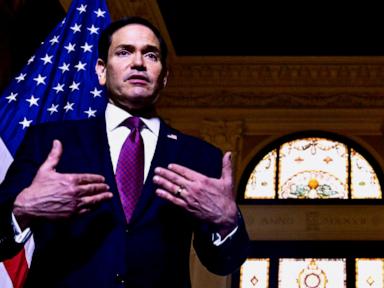
Washington is stuck in 1962. The recent defense of sanctions targeting GAESA (Grupo de Administración Empresarial S.A.) isn't a masterstroke of foreign policy; it is a desperate attempt to use 20th-century siege tactics against a 21st-century shell corporation. Senator Marco Rubio and the beltway hawks argue that by choking GAESA, we starve the Cuban military and "empower the Cuban people."
They are wrong. They are fundamentally misreading the anatomy of authoritarian capital.
When you block a military-run conglomerate from the global banking system, you don't create a vacuum that "private entrepreneurs" magically fill. You create a black market that the military is best equipped to dominate. We aren't starving the beast; we are ensuring it is the only entity in the room with a fork.
The GAESA Fallacy: Choking the Pipeline Only Densifies the Power
The standard argument goes like this: GAESA controls roughly 60% of the Cuban economy, including hotels, retail, and remittance processing. If we stop the flow of dollars to their entities, the regime will collapse or be forced to reform.
This logic is amateurish. It ignores how centralized power responds to scarcity.
When resources become scarce, they don't distribute downward to the "cuentapropistas" (small business owners). They retract to the core. By targeting GAESA, the U.S. has effectively destroyed the only transparent—or even semi-transparent—financial channels left on the island.
I have watched similar "targeted" sanctions play out in various jurisdictions over the last decade. The result is always the same:
- The Informal Pivot: Instead of using traceable bank transfers, the regime moves to crypto-assets and hawala-style informal value transfer systems.
- The Middleman Tax: The Cuban people end up paying a 20-30% premium on basic goods because the "military-run" supply chain now has to bypass three layers of offshore front companies in Panama or the UAE.
- The Consolidation of Loyalty: Only the most loyal regime apparatchiks get access to the remaining "clean" dollar streams.
Stop Calling Them "Targeted" Sanctions
There is no such thing as a "targeted" sanction against a command economy. The Cuban state is not a collection of independent silos where you can bomb the "military" wing and leave the "civilian" wing intact. They are fused at the molecular level.
When Rubio defends sanctions on GAESA-owned hotels, he isn't just hitting a general’s retirement fund. He is killing the janitor’s wage, the local farmer’s only bulk buyer, and the independent taxi driver’s fuel source. The "lazy consensus" assumes that the Cuban people will blame the regime for this hardship. History proves they usually blame the person tightening the noose.
The data on sanctions success rates is abysmal. According to the Peterson Institute for International Economics, sanctions achieve their stated goals less than 35% of the time. In the case of total regime change or fundamental shifts in autocratic behavior, that number drops into the single digits.
The Remittance Trap
One of the most praised aspects of the GAESA sanctions was the crackdown on Fincimex, the entity that processed Western Union transfers. The "pro-democracy" crowd cheered when the flow stopped.
What actually happened?
The money didn't stop flowing. It just went underground. Cubans in Miami started sending cash via "mulas"—human couriers who fly into Havana with suitcases of hundred-dollar bills.
Think about the sheer stupidity of this from a security perspective. We moved from a digital, trackable remittance system to a massive, untraceable cash economy. If you were a high-ranking official in the Cuban Ministry of the Interior, you couldn't have asked for a better gift. You now have a massive influx of physical USD circulating in your territory that the IRS and Treasury Department have zero visibility over.
The Myth of the "Independent" Cuban Entrepreneur
Washington loves the narrative of the scrappy Cuban tech start-up or the boutique bed-and-breakfast owner who just needs the U.S. to "get GAESA out of the way."
Here is the cold, hard truth: In a totalitarian state, there is no such thing as a truly independent business of scale. If you are successful enough to matter, you are already paying "protection" to the state, or your brother-in-law is a colonel.
By sanctioning the "official" military businesses, we are forcing the few genuine entrepreneurs to operate in a shadow economy where they are more dependent on regime favors, not less. They need the regime to look the other way while they smuggle supplies. They need the regime to grant them "exceptions" to ridiculous laws.
Sanctions don't foster independence; they foster a nation of supplicants.
The Geopolitical Vacuum
Nature—and geopolitics—abhors a vacuum. Every time the U.S. pulls back a dollar from Cuba, a ruble or a yuan takes its place.
While we are busy debating which GAESA-linked laundry mat to blacklist, Russia is busy negotiating long-term land leases and China is upgrading Cuba’s signals intelligence facilities. Our sanctions have become a subsidy for our greatest rivals. We provide the "threat," and they provide the "rescue," complete with high-interest loans and digital surveillance infrastructure that makes GAESA’s old-school goons look like toddlers.
A Better Way to Kill GAESA
If you actually want to dismantle GAESA, you don't do it by starving them. You do it by making them irrelevant.
You flood the zone.
Imagine a scenario where the U.S. allowed unrestricted travel and direct investment into non-military Cuban enterprises. The sheer volume of capital and Western influence would overwhelm the regime’s ability to control it. Totalitarianism requires a closed loop. Sanctions help the regime keep that loop closed.
The most effective way to break a monopoly is to introduce competition. By sanctioning GAESA, we are protecting their monopoly. We are telling the Cuban people, "You can only buy from the military’s black market, because we’ve made sure there is no white market."
We need to stop pretending that 60 years of the same failed policy is going to yield a different result tomorrow. Rubio’s defense of these sanctions is a political performance for a domestic audience in Florida, not a serious strategy for democratic transition.
The Brutal Reality of the "Long Game"
The downside to my approach? It’s slow. It’s messy. It involves "engaging" with a regime that has a horrific human rights record. It doesn't provide the immediate dopamine hit of a "tough" press release.
But the current "tough" stance is a fantasy. It is an exercise in moral vanity that achieves nothing but the further impoverishment of 11 million people and the entrenchment of the very generals we claim to oppose.
If you want to hurt the Cuban military, stop trying to block their bank accounts. They’ve already moved the money. Start by making it impossible for them to control the narrative of "Yankee Imperialism" that they use to justify every single failure of their own making.
Stop being the regime's best excuse for why their country is a wreck. Open the gates and let the sheer weight of the global economy crush the GAESA dinosaur.
Anything else is just theater.