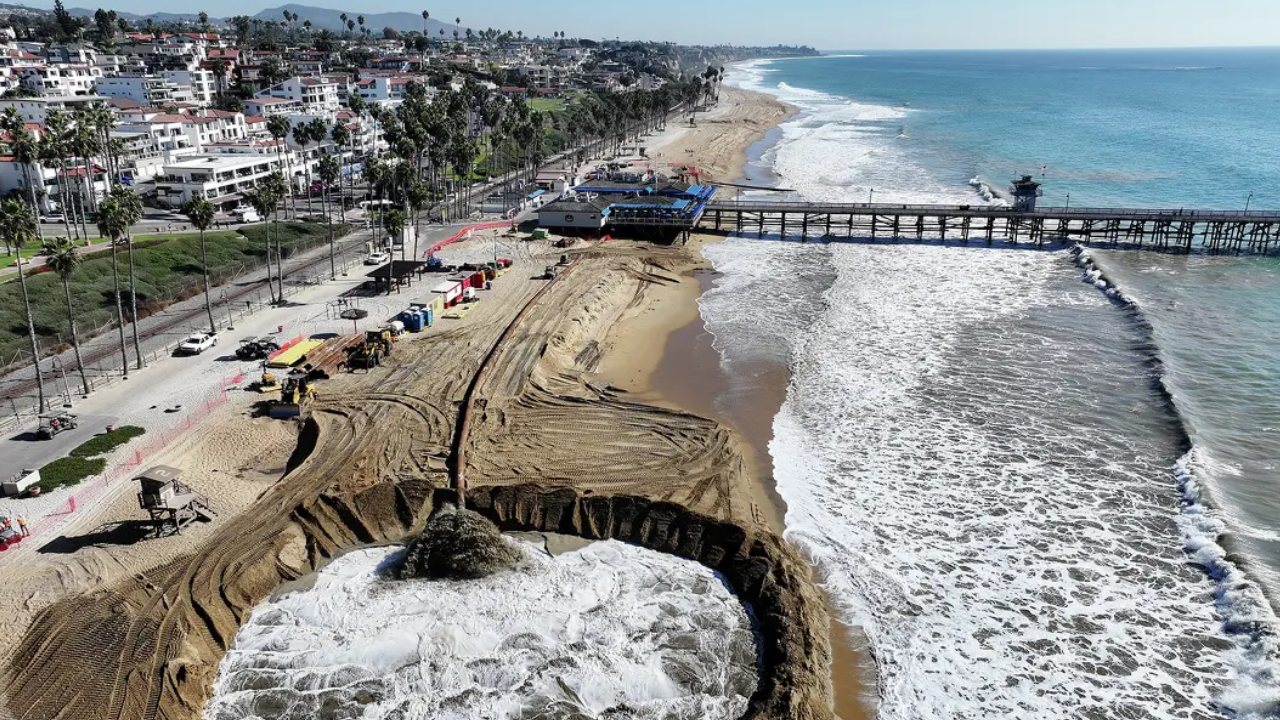
Local officials in San Clemente are currently nursing a massive political hangover, scrambling to explain how a seemingly airtight ballot measure to save the beaches and stop wildfires went down in flames.
The standard municipal playbook was executed to perfection. Step one: point to two existential threats that terrify coastal homeowners—vanishing sand and encroaching brush fires. Step two: propose a half-cent sales tax increase (Measure M) and promise the revenue will go straight toward fixing both. Step three: wait for the applause and the blank check. In other news, take a look at: The Ghost Buzz Above Suffolk That Exposed the Achilles Heel of Modern Air Power.
Except voters didn't applaud. They looked at the fine print, smelled a blank-check slush fund masquerading as an emergency rescue plan, and pulled the plug.
Now, the local press and city hall insiders are peddling the same tired narrative. They claim voters are short-sighted, that the city is trapped in a fiscal corner, and that officials must now "hunt for new funds" to prevent ecological and public safety disaster. That diagnosis isn't just lazy; it gets the economics of municipal finance completely backward. San Clemente doesn't have a revenue problem. It has a structural accountability problem, and killing Measure M was the smartest fiscal move residents could have made. TIME has also covered this fascinating subject in extensive detail.
The General Fund Shell Game
To understand why voters revolted, you have to understand the mechanics of California municipal ballot measures. Specifically, you have to look at the difference between a general tax and a special tax under Proposition 218.
Under California law, a special tax—one where the money is legally restricted to a specific purpose, like beach sand replenishment or fire suppression—requires a two-thirds supermajority (66.67%) to pass. That is a steep hill to climb in any coastal electorate. A general tax, on the other hand, requires only a simple majority (50% plus one).
Here is the catch that municipal consultants hope voters won't notice: revenue from a general tax goes directly into the city's General Fund. Once it lands there, the City Council can legally spend it on whatever it wants. Salaries, pension obligations, administrative bloat, consulting contracts—it is all fair game.
To get around the two-thirds threshold while still claiming the money is for beaches and wildfires, cities routinely pair a general sales tax measure with an "advisory measure" or non-binding spending plan. They run glossy mailers showing burning hillsides and eroded cliffs, implying a binding legal lockbox that simply does not exist.
I’ve watched municipal finance directors and political consultants pull this exact maneuver across dozens of California cities over the last twenty years. They pitch a specific crisis to win a simple-majority general tax, and within three budget cycles, the new revenue is quietly absorbed into baseline operating expenses while the original crisis remains chronically underfunded. Voters in San Clemente aren't stupid. They recognized that handing city hall an unrestricted, permanent half-cent sales tax hike—pushing the local rate to 8.25%—with zero binding legal guardrails was a sucker's bet.
Why Sales Taxes Are the Wrong Tool for Coastal Infrastructure
Even if Measure M had been drafted with ironclad legal restrictions, funding beach sand replenishment and wildfire mitigation through a local retail sales tax makes zero economic sense.
Consider who actually pays a local sales tax versus who benefits from the spending.
- The Regressive Squeeze: Sales taxes are inherently regressive. Working families and local service workers—the exact people commuting into San Clemente to staff its restaurants, hotels, and shops—pay a much higher percentage of their income in sales tax than multimillion-dollar coastal property owners. Asking the cashier at a local grocery store to subsidize sand replenishment that primarily protects the property values of oceanfront estates is a massive upward transfer of wealth.
- Revenue Volatility: Retail sales tax receipts swing wildly with the broader economy. When a recession hits or consumer spending tightens, sales tax revenue drops off a cliff. Beach erosion and fuel load accumulation in the canyons, however, do not take a break during an economic downturn. Tying essential public safety and coastal maintenance to a volatile retail tax guarantees funding shortfalls right when maintenance is needed most.
- The Regional Free-Rider Problem: San Clemente’s beaches are a regional asset used by millions of visitors from across Southern California, including Riverside, San Bernardino, and Los Angeles counties. Visitors drive in, park, use the beach, generate trash, require lifeguard coverage, and drive home—often without spending enough at local retail stores to cover the wear and tear they inflict. Hiking the local sales tax punishes year-round residents buying daily necessities while letting day-trippers off the hook.
Dismantling the "Where Else Will the Money Come From?" Myth
The post-election spin from city officials follows a predictable script: If you won't give us a sales tax, we'll have to cut services or beg for state and federal grants.
This is a false dichotomy designed to manufacture helplessness. When municipal leaders say they are "hunting for new funds," what they really mean is they are looking for ways to avoid making hard choices inside the existing budget.
Before a city asks taxpayers for a single extra dime, it owes them a zero-based audit of current spending. Most municipal budgets run on autopilot, compounding baseline spending year after year without ever questioning whether legacy programs still deliver value. In cities across Orange County, rising personnel costs and unfunded pension liabilities (CalPERS) routinely crowd out capital projects and basic infrastructure maintenance. Instead of confronting those structural cost drivers, councils reach for the easiest lever available: a ballot-box tax hike.
Furthermore, if San Clemente genuinely needs dedicated revenue for coastal preservation and wildfire defense, there are far more equitable, targeted mechanisms available than a blunt-force sales tax:
- Geologic Hazard Abatement Districts (GHADs) or Benefit Assessment Districts: Under California law, property owners who receive a direct, measurable benefit from coastal stabilization or brush clearance can vote to assess themselves based on proximity and risk. The people whose cliffside homes are protected pay the freight—not the renter three miles inland buying kids' shoes.
- User Fees and Dynamic Parking Pricing: Visitors come for the sand; make the sand pay for itself. Implementing dynamic, demand-based parking rates at beach lots and meters during peak summer months shifts the financial burden onto out-of-town visitors rather than local residents.
- Transient Occupancy Tax (TOT) Adjustments: If you want tourists to fund coastal maintenance, target hotel and short-term rental stays. Unlike a general sales tax, a TOT hike hits visitors directly without inflating the cost of living for locals.
What People Are Actually Asking—And the Uncomfortable Answers
Whenever a local tax measure fails, the same frantic questions pop up in community forums and council meetings. Let’s strip away the political PR and answer them directly.
Will San Clemente's beaches disappear without Measure M?
No. Sand replenishment is a multi-agency, state, and federal engineering challenge managed largely through the U.S. Army Corps of Engineers and regional coastal commissions. A local half-cent sales tax was never going to single-handedly defeat Pacific Ocean wave dynamics. The city already has ongoing federal sand nourishment partnerships; what it lacks is disciplined local matching funds carved out of existing revenues, not a permanent retail tax.
Does rejecting the tax put neighborhoods at higher risk of wildfire?
Only if the City Council chooses to prioritize non-essential spending over basic public safety. Brush clearance, fuel modification zones, and Orange County Fire Authority contracts are core municipal responsibilities. They belong at the very top of the General Fund waterfall, funded first before a single dollar goes to discretionary pet projects, aesthetic upgrades, or administrative expansion. If a city claims it cannot afford basic fire prevention out of its existing tax base, that is an indictment of its budget priorities, not its tax rate.
Isn't a half-cent tax barely noticeable to the average shopper?
That is the oldest trick in the municipal playbook—minimizing the cost per transaction while ignoring the cumulative drag. An extra half-cent pushes San Clemente’s rate above neighboring communities, creating a quiet tax penalty for local brick-and-mortar businesses competing against online retailers and nearby cities. Over a decade, a permanent half-cent hike extracts tens of millions of dollars from the local private sector and hands it to a government monopoly with zero performance metrics attached.
The Real Cost of Saying "No" (And Why It's Worth Paying)
Taking the contrarian side here requires admitting an uncomfortable truth: rejecting Measure M will force painful trade-offs in the short term.
Without an easy infusion of new cash, San Clemente's leadership cannot keep everyone happy. Securing federal matching grants for sand projects will take longer and require more aggressive lobbying in Sacramento and Washington. Capital improvement timelines will stretch. Some popular but non-essential community programs may face freezes or reductions while the city reallocates money toward canyon brush clearing and coastal defense.
That friction isn't a failure of democracy. It is the entire point of fiscal discipline.
When you give a city council an easy tax hike, you remove the pressure to reform. You allow leadership to paper over rising pension obligations, bloated vendor contracts, and deferred maintenance with fresh taxpayer money. By starving the General Fund of a new revenue stream, voters forced the exact conversation city hall has been trying to avoid for a decade.
How San Clemente Actually Fixes This
If city officials want to stop "hunting for funds" and actually solve the sand and wildfire problem, they need to abandon the general sales tax playbook permanently and execute four concrete moves:
- Ring-Fence Core Safety in the Existing Budget: Restructure the General Fund so that wildfire mitigation and coastal infrastructure matching funds are treated as non-negotiable fixed obligations, funded ahead of discretionary departmental increases.
- Shift the Burden to Non-Residents: Overhaul beach parking rates and short-term rental enforcement to capture revenue from the millions of regional visitors who use the coastline without paying local property taxes.
- Establish Targeted Assessment Zones: Use benefit assessments so high-value coastal and canyon properties—the assets facing the highest risk and reaping the greatest financial protection—bear a proportional share of the stabilization costs.
- Never Bring Another General Tax to the Ballot Without a Lockbox: If the city ever asks voters for new money again, it must be structured as a strictly defined special tax with an independent citizen oversight committee, a hard 10-year sunset clause, and automatic termination if funds are diverted.
San Clemente voters didn't vote against their beaches, and they certainly didn't vote for wildfires. They voted against a broken municipal financing model that demands permanent taxes for temporary promises. City hall doesn't need to find new money; it needs to earn back the trust it spent trying to pass a blank check.