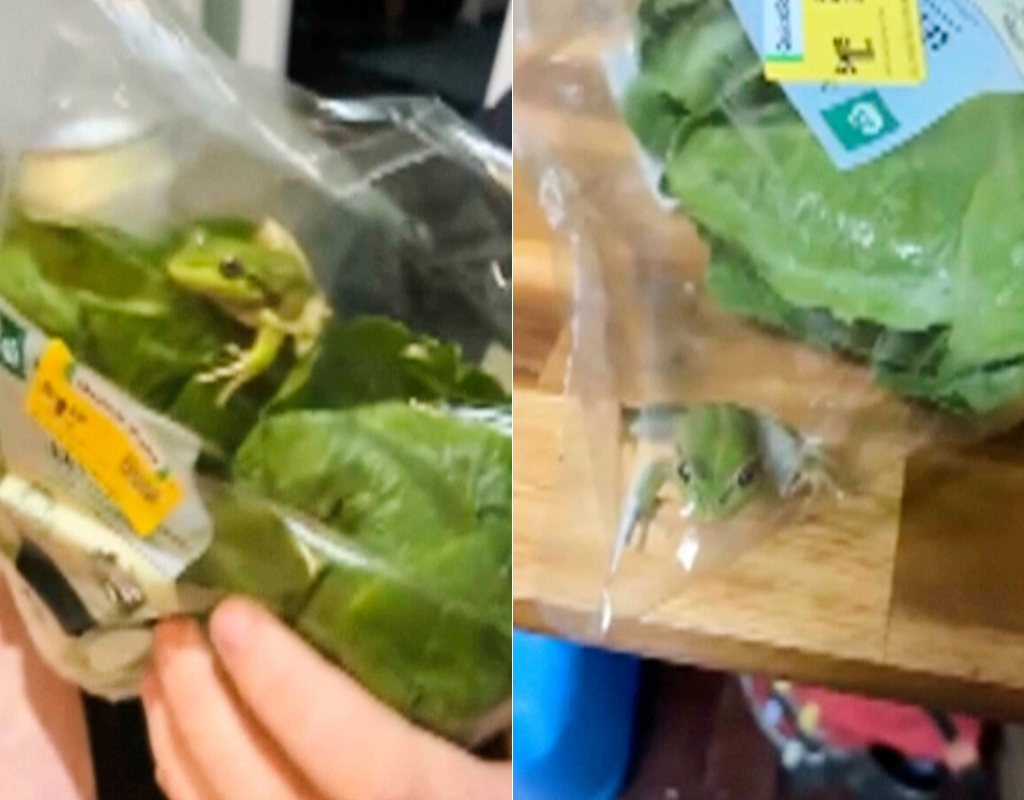
A viral news story makes the rounds every few months like clockwork: horrified housemates open a sealed, store-bought salad bag only to find a tiny, blinking frog staring back at them. The internet reacts with predictable outrage. People threaten lawsuits, demand recalls, and swear off packaged greens forever. The media treats it as a catastrophic failure of industrial food safety.
They are entirely wrong.
Finding a live amphibian in your triple-washed baby spinach is not a sign that the food system is broken. It is definitive proof that the food system is working exactly as it should. The modern obsession with sterile, pristine, insect-free produce is a dangerous delusion that prioritizes cosmetic perfection over actual health. If a frog can survive your supply chain, it means your food is real. If nothing can survive in your food, you should probably stop eating it.
The Toxic Myth of the Sterile Salad Bar
Consumers want a logical impossibility. They demand massive quantities of organic, pesticide-free greens, but they also demand that these greens be completely devoid of any connection to the dirt, ecosystems, or biodiversity they were grown in.
When industrial agriculture attempts to meet this absurd standard, it relies on two primary mechanisms: heavy chemical intervention or aggressive mechanical processing. To ensure zero pests ever reach a grocery shelf, fields are routinely drenched in synthetic chemical cocktails designed to obliterate every living organism within a three-mile radius.
When you purchase a salad bag that is entirely immaculate, you are not buying "clean" food. You are buying a product of a scorched-earth agricultural philosophy. The absence of life is not a benchmark of quality; it is a indicator of chemical sterility.
I have spent years analyzing agricultural supply chains and watching compliance officers lose their minds over minor cosmetic defects. I have seen massive farms discard tons of perfectly nutritious romaine lettuce simply because a harmless beetle was found on a single leaf three fields over. We have incentivized farms to prioritize chemical cleanliness over biological integrity, and the consumer's health is paying the price.
The Mechanics of the Salad Wash
Consider how a standard bagged salad is processed. The industry relies on a massive, mechanized system designed to scrub nature out of the equation.
- Triple-Rinsing: Greens are dumped into massive flume tanks filled with water and sanitizing agents, typically chlorinated water or peracetic acid.
- Centrifugal Drying: The wet greens are spun at high speeds in industrial centrifuges to remove moisture and prolong shelf life.
- Modified Atmosphere Packaging (MAP): The air inside the bag is replaced with a specific mix of gases (usually elevated nitrogen and lowered oxygen) to slow down the aging process of the leaves.
For a small frog or tree toad to survive this gauntlet, it has to dodge the mechanical harvesters, ride out the chlorinated baths, survive the spin cycle, and adapt to a low-oxygen environment inside the sealed bag.
It is a statistical anomaly. According to data from food safety agencies, the incidence rate of vertebrate discovery in packaged produce is a fraction of a percent. It is an occasional glitch in an otherwise highly efficient system. Yet, when that glitch happens, the public treats it like a biohazard rather than what it actually is: a validation that the lettuce came from the earth, not a lab.
Dismantling the Food Safety Panic
Let us address the immediate panic that drives these news stories. The standard response to a frog in a salad bag follows a predictable pattern of flawed assumptions.
"If a frog got in, it means the factory is filthy and full of bacteria."
This completely fundamentally misunderstands how supply chains work. The frog did not hop into a dirty packaging facility in the middle of a city. The frog was in the field where the lettuce grew. It clung to a leaf during harvest because its color matched the vegetation perfectly, allowing it to bypass optical sorting machines designed to detect discolored debris. The presence of a live animal proves the processing facility did not use lethal doses of chemicals that would otherwise contaminate your food.
"The frog will give me salmonella or a horrific disease."
While amphibians can carry pathogens like Salmonella, the risk of contracting a severe illness from a live, intact frog sitting on top of your lettuce is vastly overstated compared to the actual, invisible threats in the food industry. You are far more likely to get sick from microscopic E. coli contamination caused by agricultural runoff from a neighboring cattle ranch—a threat that no amount of visual inspection will catch. A live frog is a macroscopic organism. You can see it. You can remove it. It is the invisible pathogens thriving on improperly chilled, decaying leaves that should keep you up at night.
Why Dead Food is Worse Than Alive Food
The real danger to public health is the systemic sanitization of our diet. By demanding that our food supply be entirely divorced from biology, we have created a market that rewards over-processed, chemically preserved goods.
| Characteristic | The Sterile Standard | The Biological Reality |
|---|---|---|
| Pest Control | Heavy synthetic pesticides and systemic insecticides. | Integrated pest management, natural predators, and biodiversity. |
| Nutrient Density | Often lower due to soil depletion from intensive chemical farming. | Higher, as living soil ecosystems transfer more micronutrients to plants. |
| Consumer Risk | Chronic exposure to trace chemical residues. | Acute, easily manageable contact with native wildlife. |
When we treat a harmless tree frog as a public relations crisis, we force agricultural companies to double down on harsher sanitization methods. They use stronger chemical rinses. They implement more aggressive mechanical sorting that bruises the greens and accelerates decay. They choose synthetic inputs over natural farming methods because chemicals do not hide under leaves when the harvester rolls by.
We are actively trading a minor, easily managed inconvenience for long-term chemical exposure. It is a terrible trade-off.
Stop Demanding Perfection from the Dirt
If you open a bag of salad and find a live frog, you have won the agricultural lottery. You have received definitive, empirical proof that the greens you are about to put into your body were grown in an environment that can actually support life.
Wash the greens yourself in cold water. Put the frog outside in the garden. Move on with your day.
The alternative is a food system that is completely sterile, completely dead, and completely devoid of any nutritional or ecological value. If you want to eat food that comes from the earth, you have to accept that the earth is full of living things. Stop looking for reasons to sue the grocery store and start worrying when your fresh produce looks so unnaturally perfect that even the bugs refuse to touch it.