The wind in northern Sudan does not merely blow; it erases.
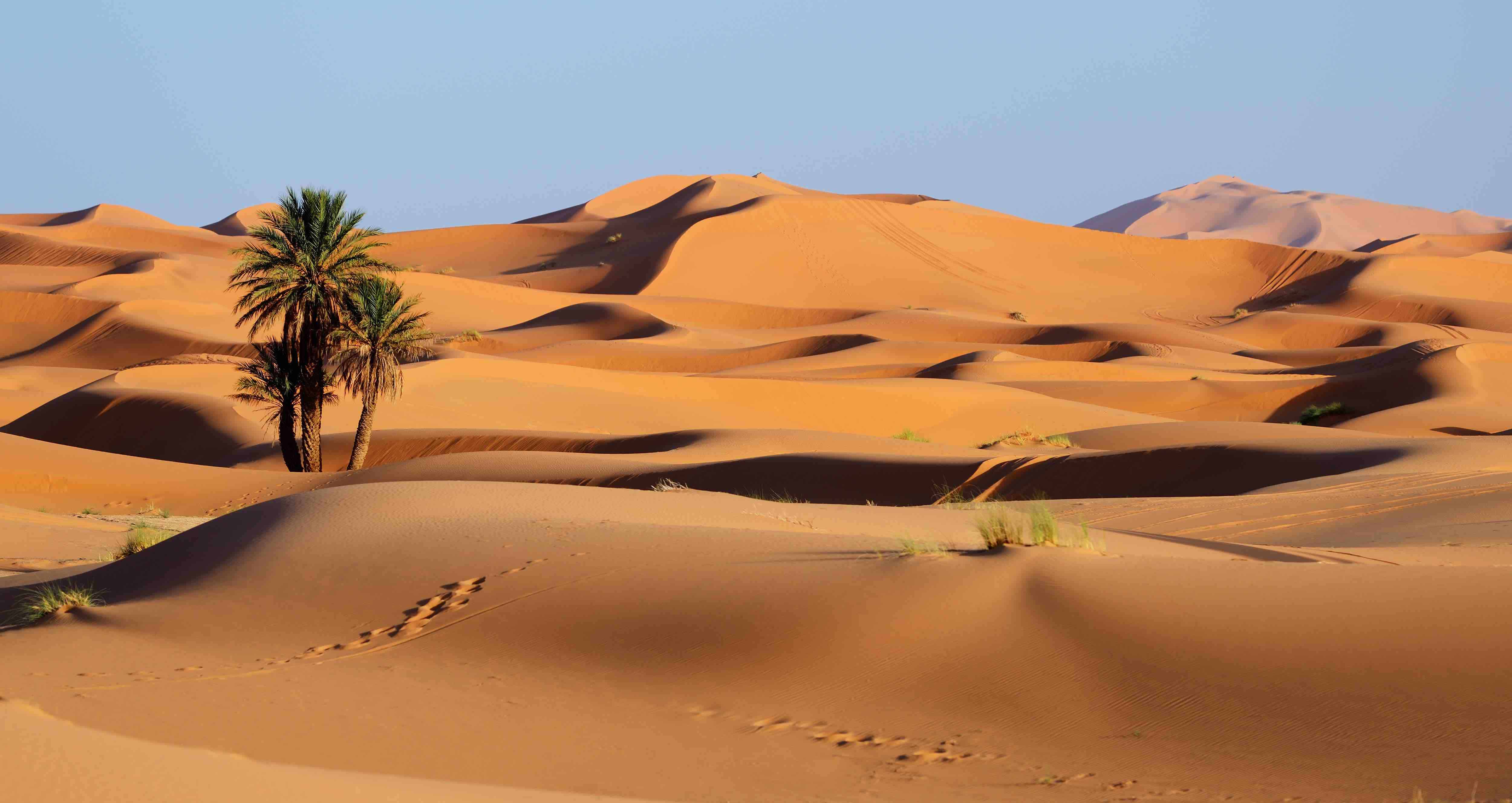
If you stand at the edge of Old Dongola, roughly three hundred miles north of Khartoum, the Sahara does not look like the rolling, romantic dunes of a travel brochure. It looks like a relentless, ochre tide creeping millimeter by millimeter over stone, mudbrick, and memory. For centuries, that tide won. It swallowed palaces. It choked irrigation canals. It turned the bustling capital of a powerful African kingdom into a quiet expanse of gravel and wind-scoured ruins.
Then, a brush struck plaster.
In early 2021, a team of Polish archaeologists working at the site of Old Dongola—the ancient seat of the Christian Kingdom of Makuria—cleared away layers of accumulated desert sand and rubble. Beneath the dust, they uncovered the apse of a monumental medieval church. Not a modest chapel. Not a forgotten outpost. They found a vast brick structure whose apse alone measured roughly six meters across, decorated with vivid wall paintings of two monumental figures, likely representing a Makurian king or dignitary protected by an archangel. Alongside the walls lay the remains of a massive dome and a floor system that belonged to what researchers believe could be the largest medieval church ever discovered in Nubia—the cathedral of Old Dongola itself.
Silence.
That is the first thing you notice when you look at photographs of the excavation. You see the blinding white glare of the Sudanese sun hitting the trenches, the delicate, faded pigments of ochre and dark red clinging to lime plaster, and the sheer, startling scale of the masonry. For a moment, the modern world drops away, and you are forced to confront an uncomfortable truth about how most of us were taught history.
We were taught a story with huge, convenient holes in it.
The Map We Forgot How to Read
Ask the average person in London, New York, or Tokyo to picture medieval Christianity, and their mind immediately defaults to Europe. They see the gothic spires of Chartres, the stone monasteries of Ireland, or the mosaics of Ravenna. When they picture medieval Africa, their mental map often shrinks to the Mediterranean coast, the gold trade of Mali, or the rock-hewn churches of Ethiopia. The vast stretch of the Nile Valley south of Egypt—ancient Nubia—rarely registers at all.
That omission is not an accident of geography. It is a failure of imagination.
Between the sixth and fourteenth centuries, while Europe was fracturing into feudal fiefdoms and struggling to rebuild after the fall of Rome, three Christian kingdoms flourished along the Nile in what is now Sudan: Nobadia, Makuria, and Alodia. Makuria, with its capital at Old Dongola, was no backwater province. It was a sovereign, sophisticated empire that held off Arab armies in the seventh century, negotiated a famous 600-year peace treaty known as the Baqt, and maintained diplomatic ties stretching from Cairo to Constantinople.
Consider a hypothetical scene—purely an imaginative reconstruction to help us feel the texture of that lost world—set inside this very cathedral around the year 1050 AD.
Picture a young Nubian scribe named Petros stepping out of the searing midday heat into the cool, cavernous shadow of the sanctuary. Outside, the Nile is rising, bringing life to the narrow green ribbon of farmland hemmed in by endless desert. Inside, the air smells of frankincense, beeswax, and damp river clay. Above Petros, rising high into the dim light, the massive central dome catches the glow of oil lamps, illuminating painted saints with dark Nubian features dressed in Byzantine imperial robes. When the choir chants in Old Nubian—a written language with its own alphabet adapted from Greek and Coptic—the sound does not dissipate into thin air. It rebounds off brick vaults and polished floors, vibrating in the ribs of everyone standing beneath it.
To Petros, this building is not an archaeological curiosity. It is the beating heart of his civilization. It is proof that his kingdom sits at the center of the world, not its margins.
When we reduce discoveries like the Old Dongola cathedral floor and apse to dry academic headlines, we flatten Petros’s world back into dust. We treat human devotion, political power, and architectural audacity as mere catalog entries.
Beneath the Rubble of an Empire
Walking through an active archaeological dig in the middle of the Nubian desert is a humbling, slightly disorienting experience. Having spent years reporting on heritage preservation across North Africa and the Middle East, I have learned that discovery rarely looks like a movie. There are no dramatic torches, no sudden shafts of light illuminating golden idols. Instead, there is heat that bakes through the soles of your boots, fine dust that settles into your teeth and camera lenses, and days of painstaking, monotonous scraping with trowels and soft brushes.
You doubt yourself constantly out there. You look at a mound of collapsed mudbrick and wonder how anyone could ever tell a royal palace from a granary, or a cathedral from a fortress.
That is precisely why the Polish Centre of Mediterranean Archaeology (PCMA) at the University of Warsaw—which has been excavating Old Dongola since 1964—approached this site with such methodical patience. Led by Dr. Artur Obłuski, the team was investigating the citadel of Old Dongola, a fortified royal complex overlooking the Nile. Earlier excavations at the site had already uncovered several important churches, including the famous Church of the Granite Columns, long assumed to be the city’s primary cathedral.
But the ground kept hinting at something bigger.
Beneath a layer of later residential buildings—houses built centuries after the Christian kingdom had declined and the city had transitioned into an Islamic center—the team began uncovering thick fired-brick walls. As they cleared the debris, the curve of an apse emerged. The proportions were staggering. Measuring roughly six meters in diameter, the apse was twice the size of the one in the Church of the Granite Columns. Beside it stood a adjacent room topped by a large dome, and beneath the layers of sand and collapsed masonry lay the structural footprint and floor levels of a basilica on an unprecedented scale for medieval Nubia.
Think of the architectural challenge this represents. Building a dome and high brick vaults in the middle of the Sahara without modern steel or concrete is like trying to balance a stone bridge on stacks of dried river mud. Every millimeter of weight distribution matters. If the foundation shifts in the sandy soil, the entire structure shears apart. Yet the medieval Nubian engineers solved those physics problems with fired brick, lime mortar, and sheer mathematical confidence.
And then there were the paintings.
On the curved wall of the apse, the archaeologists found preserved plaster bearing the lower halves of two monumental figures. One figure was dressed in rich, intricate garments typical of Nubian royalty or high clergy, while a second figure—bearing wings—stood behind in a classic gesture of divine protection. In Nubian iconography, archangels were frequently depicted shielding kings and bishops, a visual declaration that the ruler’s authority came directly from heaven. Even damaged by time and collapse, the brushstrokes carried an unmistakable authority.
Why Old Dongola Refuses to Stay Quiet
You might wonder why a medieval floor and a half-preserved wall painting thousands of miles away should matter to someone checking their phone on a commuter train today. After all, empires rise and fall every few centuries. Stone crumbles. Sand covers everything eventually.
Here is why it matters: history is never just about the past. It is the permission slip we give ourselves for the future.
When an entire region’s medieval achievements are erased from popular memory, a subtle distortion takes hold. People begin to believe that architectural grandeur, complex statecraft, and cosmopolitan culture were monopolies held by Europe or the Near East, while sub-Saharan Africa waited passively on the sidelines of global history. That distortion shapes everything from how textbooks are written to how international funding is allocated for heritage protection.
Consider what happens when a monument like the Old Dongola cathedral comes back into the light. Suddenly, the map of the medieval world has to be redrawn. Old Dongola was not isolated; it was a crossroads. Archaeologists working at the site have found amphorae from Palestine, fine pottery from Egypt, and artistic motifs influenced by Constantinople, all blended seamlessly with indigenous African traditions. The cathedral stood at the center of a cosmopolitan metropolis where Greek, Coptic, Old Nubian, and Arabic were spoken in the streets and markets.
Yet uncovering these treasures comes with a terrifying catch.
As long as the cathedral floor and painted walls remained buried under meters of dry desert sand, they were sealed in a stable, dark microclimate. The moment an archaeologist’s brush sweeps away that protective blanket, the clock starts ticking. Harsh ultraviolet sunlight bleaches ancient pigments. Sudden temperature swings between scorching days and chilly nights cause lime plaster to expand, crack, and flake away. Wind-blown sand acts like sandpaper against exposed brick.
Every excavation is a race against the very air that lets us see what we have found.
The Fragility of Stone and Memory
I remember standing once inside a partially excavated mudbrick structure along the upper Nile, watching a conservator work with a syringe the size of a pencil. Drop by drop, she was injecting a consolidating solution behind a blister of painted plaster no bigger than my thumbnail. If she pressed too hard, the plaster would shatter onto the floor. If she waited too long, the dry breeze blowing off the desert would peel it away before afternoon.
Watching her, I realized that archaeology is not really about conquering the past. It is an act of triage.
In Sudan, that triage has grown infinitely more urgent in recent years. Political instability, economic hardship, and violent conflict have battered the country, threatening both its living citizens and the irreplaceable heritage beneath their feet. While international headlines focus—rightly—on human displacement and crisis, the quiet vulnerability of sites like Old Dongola sits just beneath the surface. Museums in Khartoum have faced looting and damage; remote archaeological sites along the Nile are exposed to agricultural expansion, gold-mining prospectors, and the relentless encroachment of desert dunes.
When a country is fighting to survive the present, protecting a thousand-year-old cathedral floor can feel like an impossible luxury.
Yet ask any Sudanese historian, student, or local resident living near Old Dongola what those ruins mean, and you will hear a very different story. To them, those fired-brick walls are anchors. They are tangible proof that Sudan has been a cradle of resilient, inventive civilizations for millennia—long before modern borders were drawn with rulers in colonial offices.
Let us return for a second to the physical mechanics of what the Polish team found beneath the sand. In medieval Nubian churches, the floor was more than a surface to walk on; it was a liturgical map. Processions moved along specific axes from the western entrances toward the eastern sanctuary, passing beneath painted saints and architectural arches designed to draw the eye upward. The layout of the Old Dongola cathedral—with its massive apse, domed side chambers, and monumental scale—suggests it served as the seat of the Archbishop of Dongola, the spiritual leader of the entire kingdom.
Imagine the sheer logistics required to build it. Tens of thousands of bricks had to be molded from Nile silt, dried in the sun, and fired in kilns fueled by precious desert scrub and acacia wood. Lime had to be quarried, burned, and slaked to create gleaming white plaster that would reflect light inside the dim interior. Master painters—trained in traditions linking Nubia to the wider Byzantine world—had to grind mineral pigments into vibrant reds, yellows, and blacks.
None of this happened by accident. It required taxation, trade networks, specialized guilds, agricultural surpluses, and centuries of relative peace.
What Survives When the Wind Stops
There is a temptation, whenever we confront ancient ruins, to turn them into melancholy lessons about the futility of human ambition. We quote Shelley’s Ozymandias, sigh at the rubble, and move on.
That reading misses the point entirely.
The real miracle of Old Dongola is not that the empire fell; every empire falls eventually. The miracle is that the work of those builders, painters, and stonecutters was solid enough to endure seven centuries of desert storms, collapsed roofs, and shifting civilizations—and still speak clearly when the sand was finally brushed aside.
Think about the things we build today. Our server farms will corrode into unreadable silicon within decades. Our glass-and-steel towers require constant electrical life support just to remain habitable. Even our concrete bridges begin crumbling within a human lifetime if left untended.
Meanwhile, six meters of curved fired brick and lime plaster sat quietly beneath the Sahara for hundreds of years, holding onto the image of an archangel’s wing until human hands came back to find it.
As the dust settles over the trenches at Old Dongola and conservators work to stabilize the fragile pigments and masonry against the desert sun, the discovered cathedral stands as a quiet challenge to anyone who still views Africa’s past as a blank space on the map. The sand tried to erase it. Time tried to flatten it. Neither succeeded.
Somewhere beneath the remaining dunes of Old Dongola, more walls are still waiting in the dark.