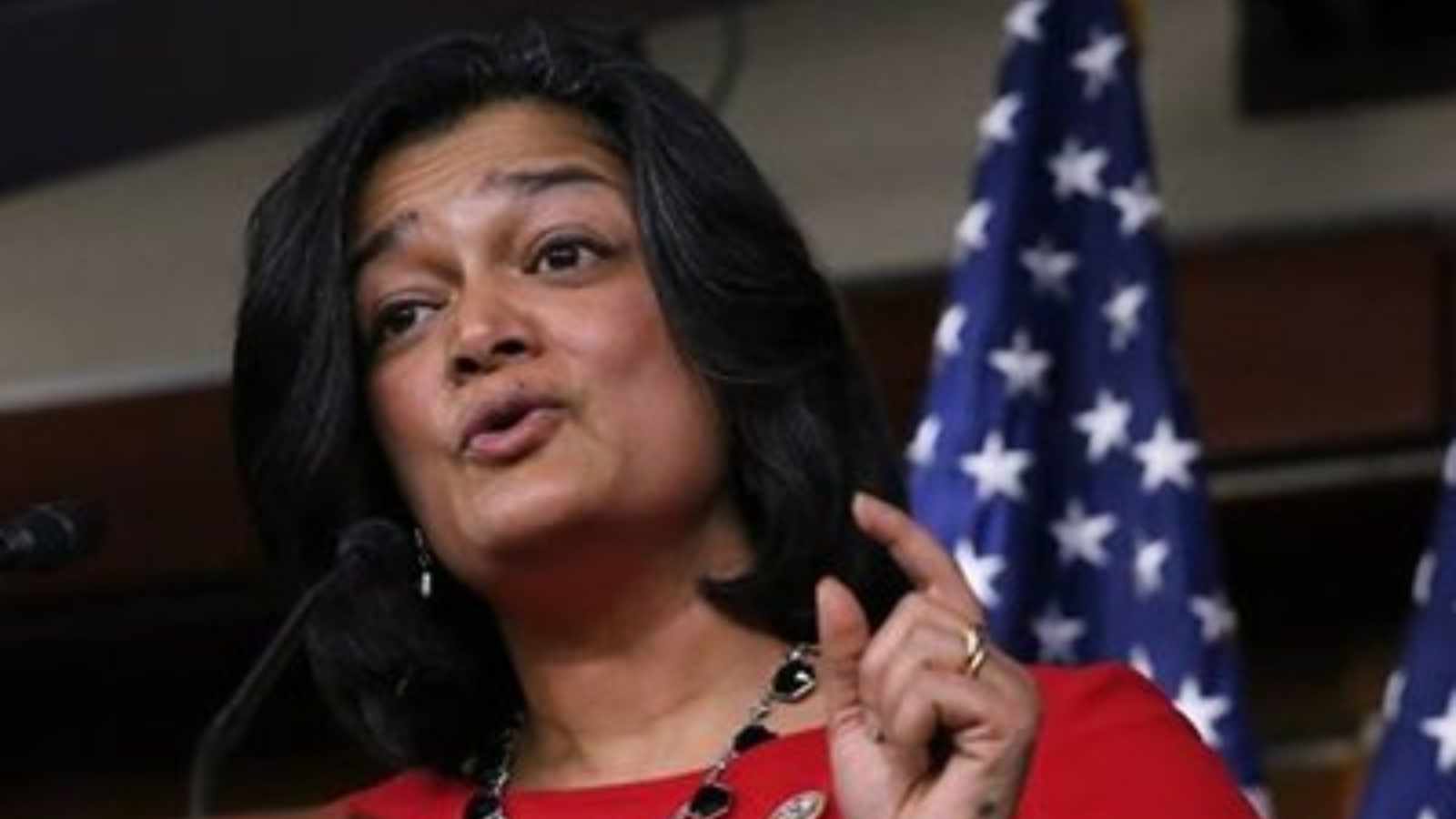
In Seattle, a public Diwali celebration meant to mark the Hindu festival of lights was abruptly interrupted by coordinated political demonstrations, prompting U.S. Representative Pramila Jayapal to publicly condemn what she described as a hateful display. The incident immediately exposed deep fault lines within the Pacific Northwest's rapidly growing South Asian diaspora, turning a community cultural gathering into a flashpoint over religious freedom, civic space, and geopolitical grievances. While local headlines focused on the disruption itself and the swift political denunciations that followed, the confrontation reflects a broader, calculated pattern of targeting diaspora cultural events to force international political disputes onto American municipal stages.
The Anatomy of a Diaspora Flashpoint
Public cultural festivals operate on an unspoken civic contract. Municipalities grant permits, local businesses sponsor stages, and families gather under the assumption that heritage celebrations remain insulated from aggressive political theater. When demonstrators breach that boundary at a Diwali event in Seattle, the disruption achieves maximum visibility with minimal logistical overhead.
Organizers of civic Diwali events across the Puget Sound region spend months coordinating with city officials, security vendors, and local arts councils. These gatherings are designed to showcase classical dance, traditional music, regional cuisine, and community solidarity—not to serve as forums for foreign policy debates. Yet protesters increasingly view religious and cultural festivals as high-value targets precisely because the attendees represent a concentrated demographic whose identity is tied to a specific region of the world.
It is a simple equation. High foot traffic plus emotional resonance equals guaranteed media coverage.
By staging a confrontation inside or immediately adjacent to a Diwali venue, agitators force local leaders into an immediate binary choice. Politicians must either denounce the intrusion to protect local constituents' right to peaceful assembly, or remain silent and risk alienating a vital voting bloc. Representative Jayapal, whose district encompasses Seattle and who has long positioned herself at the intersection of progressive politics and Indian American representation, chose rapid condemnation. Her characterization of the incident as a hateful display signaled an effort to draw a hard line between legitimate political protest and targeted harassment of a religious minority celebrating its most significant annual holiday.
Why Cultural Festivals Are Replacing Embassies as Protest Targets
For decades, geopolitical protests in the United States followed predictable choreography. Demonstrators marched outside consulates, federal buildings, or diplomatic missions, directing their anger at state institutions rather than private citizens. Over the past several years, that boundary has eroded significantly.
Community centers, university cultural nights, temple grounds, and municipal Diwali festivals have increasingly absorbed the brunt of transnational political activism. The shift is tactical. Consulates are heavily fortified, legally insulated, and staffed by diplomats trained to ignore street-level noise. A local Diwali celebration in a Seattle park or civic hall lacks diplomatic security, relies on volunteer coordinators, and brings together multigenerational families who are unprepared for organized ideological confrontation.
When activists target a Diwali festival, they deliberately conflate a global religious tradition with the policies of a foreign government. Diwali is observed by hundreds of millions of Hindus, Sikhs, Jains, and Buddhists worldwide, including vast communities across the United States who have no direct political voice in South Asian governance. Treating a Seattle Diwali gathering as an extension of a foreign state apparatus flattens a complex diaspora into a monolithic political target.
This tactic also exploits the legal gray zones surrounding public forum doctrine under the First Amendment. When a cultural event takes place on municipal property or in a publicly accessible plaza, law enforcement officers face strict constitutional limits on how quickly they can remove demonstrators who claim to be exercising free speech. Protesters understand these thresholds intimately. They know how close they can get to a stage, how loud their bullhorns can be before triggering noise ordinances, and how to provoke emotional reactions from attendees without crossing the line into physical assault.
The Political Tightrope for Representatives Like Pramila Jayapal
Few lawmakers in Congress occupy a more complicated position regarding South Asian diaspora politics than Pramila Jayapal. As the first South Asian American woman elected to the U.S. House of Representatives, she commands national visibility on civil rights, immigration, and foreign policy. At the same time, her progressive platform has frequently placed her at odds with different factions within the Indian American community.
In Washington's 7th Congressional District, the South Asian electorate is neither ideologically uniform nor easily pacified. Tech workers in the broader Seattle metro area, small business owners, student organizations, and long-standing religious institutions hold sharply divergent views on both domestic policing and international affairs. When a Diwali event in Seattle is disrupted, every word issued by the district's representative is scrutinized for ideological bias.
Jayapal's condemnation of the hateful display was a direct response to the nature of the disruption, which crossed from policy critique into derogatory rhetoric aimed at attendees. Yet even a clear-cut denunciation rarely settles the political dust. Critics from one side argue that delayed or overly broad condemnations fail to address the specific anti-Hindu sentiment underlying such disruptions. Critics from the other side contend that framing disruptive protests around cultural events as hate speech risks chilling political dissent on sensitive international issues.
Politicians cannot win this argument cleanly. Every statement becomes ammunition for an opposing faction.
What makes the Seattle incident particularly instructive is how quickly local civic cohesion fractures when national politicians are forced to referee cultural disputes. Instead of focusing on municipal safety protocols or permit enforcement, the public conversation immediately pivots to ideological litmus tests, leaving local event organizers stranded in the middle of a media storm they never asked to join.
How Municipal Permitting Fails Diaspora Organizers
Behind the political headlines lies a mundane bureaucratic failure that leaves community events exposed. City permitting frameworks across major American metros—including Seattle—were written for parades, farmers markets, and neighborhood block parties, not for events vulnerable to coordinated transnational protest campaigns.
When a community group applies for a special event permit in Seattle, the city evaluates standard logistics: crowd capacity, traffic impact, sanitation, noise limits, and basic private security ratios. Threat assessments rarely account for geopolitical flashpoints unless a visiting foreign dignitary is scheduled to speak. Because Diwali festivals are categorized as benign cultural programming, they receive baseline municipal support rather than specialized crowd-management planning.
The Gap Between Free Speech Zones and Event Security
Once a permit is issued for a public park or civic center, the legal status of the surrounding perimeter becomes contested territory. Private security guards hired by festival organizers have zero authority to detain or remove protesters standing on adjacent public sidewalks. Meanwhile, municipal police departments operate under strict departmental policies regarding crowd control, especially in cities like Seattle where law enforcement responses to demonstrations face intense civic oversight and historical scrutiny.
This creates an operational vacuum:
- Volunteer organizers are left acting as de facto crowd negotiators without training in de-escalation.
- Private security personnel can only guard physical entry points, leaving perimeter walkways open to megaphone disruption.
- Municipal police often adopt a hands-off posture until a physical altercation occurs, meaning the event itself can be thoroughly derailed long before officers intervene.
Organizers frequently discover too late that their event insurance covers slip-and-fall accidents and property damage, not the financial or reputational fallout of a political disruption. Ticket refunds, canceled vendor contracts, and traumatized families become the sole responsibility of the nonprofit cultural association that booked the venue.
The Psychological Toll on Immigrant and First-Generation Communities
Discussions about free speech and political protest often overlook the human reality inside the venue when a celebration is hijacked. For many immigrant families in the Pacific Northwest, public Diwali celebrations are not merely social outings; they are hard-won markers of civic belonging.
For decades, South Asian immigrants celebrated Diwali quietly in living rooms and rented school gymnasiums, far removed from mainstream municipal life. Securing prominent public venues in Seattle, winning official city proclamations, and seeing local elected officials light ceremonial lamps represented decades of community integration. When those spaces are invaded by hostile demonstrations, the message received by ordinary families is unmistakable: your cultural visibility is conditional, and your public celebrations carry an inherent risk of confrontation.
Parents bring young children to Diwali events so they can experience their heritage in an environment of pride and safety. When an evening of classical music and traditional dress is interrupted by shouting, aggressive signage, or derogatory chants, the immediate instinct for many families is withdrawal. Community leaders across the country have quietly noted a troubling trend following similar incidents: attendance drops at public festivals, volunteers step back from organizing committees, and smaller cultural groups retreat back into private, unadvertised venues to avoid trouble.
That retreat is a direct loss for civic pluralism. A city that claims to celebrate diversity cannot sustain that reputation if minority communities feel compelled to hide their major festivals behind closed doors to guarantee basic peace of mind.
Counter-Arguments and the Boundaries of Legitimate Dissent
Any honest examination of the Seattle Diwali disruption must confront the counter-argument raised by free speech advocates and activist groups. In a constitutional democracy, public spaces are inherently contested arenas, and political expression is not required to be polite, convenient, or comfortable for bystanders.
Activists who stage demonstrations outside cultural events often argue that community organizations themselves blur the line between culture and politics. They point out that some diaspora associations invite political figures, accept sponsorships from entities tied to foreign interests, or pass resolutions on international matters during cultural gatherings. From their perspective, if an organization engages in political signaling, it forfeits the right to claim pure cultural neutrality when protesters show up at the door.
There is a kernel of truth in that critique, and ignoring it weakens any serious analysis of diaspora politics. Certain large-scale cultural organizations across North America have indeed allowed political agendas to seep into religious and heritage programming, creating legitimate grounds for public debate.
However, there is a vast operational and ethical difference between protesting a specific political speaker and disrupting an entire community's religious holiday. When demonstrators target a general Diwali festival—where the overwhelming majority of participants are local residents celebrating a sacred calendar event—the protest ceases to be targeted political critique and becomes collective intimidation. Holding an entire demographic group accountable for geopolitical disputes simply because of their shared heritage is the textbook definition of prejudice, regardless of the political slogans printed on the banners.
What Event Organizers and Cities Must Change Now
Waiting for national political temperatures to cool is not a viable strategy for community leaders planning future cultural festivals. If Seattle and other major metropolitan areas want to prevent cultural celebrations from turning into recurring flashpoints, both municipal agencies and diaspora organizations need to overhaul how public events are structured and secured.
First, city permitting offices must update their risk-assessment protocols for heritage and religious festivals. Organizers should not have to beg for adequate perimeter management when hosting high-profile cultural events. Establishing clear, legally defensible buffer zones—standard practice for everything from reproductive health clinics to sporting venues—allows demonstrators to exercise their First Amendment rights within sight and sound of a venue without physically obstructing entrances or drowning out stage programming.
Second, cultural associations must enforce strict governance over their own programming. If an organization wants the civic protection of a non-political cultural festival, it must keep partisan agendas and foreign political endorsements off the stage. Clear bylaws prohibiting political speeches during religious observances protect the integrity of the festival and strip agitators of the excuse that they are merely responding to political provocation.
Third, municipal leaders must move beyond reactive statements issued after an incident has already gone viral. Condemning a hateful display on social media costs nothing and fixes nothing. Real institutional support requires pre-event coordination between local law enforcement liaisons, city council offices, and festival boards to establish clear rules of engagement before the first guest arrives.
The lights of Diwali are meant to symbolize the triumph of knowledge over ignorance and order over chaos, yet the reality on the streets of Seattle proves that keeping those lights burning in public spaces now requires deliberate legal protection, disciplined community governance, and the civic courage to separate sacred heritage from political warfare.