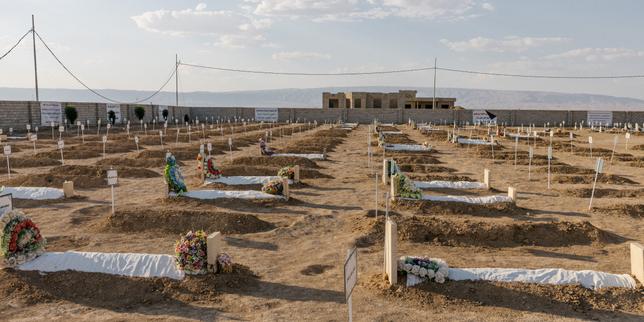
French courtrooms are currently vibrating with the self-congratulatory hum of "historic" justice. As Sabri Essid stands trial for genocide and crimes against humanity, the media is busy polishing a narrative of moral reckoning. They want you to believe that checking a box in a Parisian courtroom somehow balances the scales for the 2014 Yezidi slaughter in Sinjar.
It doesn't.
This trial isn't the breakthrough the headlines claim. It is a late, performative attempt to retrofit a complex geopolitical collapse into a manageable criminal case. We are watching the legal system attempt to use a scalpel on a wound that required a total reconstruction years ago. The French justice system is finally "leaning in" to the Yezidi genocide, but it is doing so with the agility of a glacier and the impact of a post-it note.
The Myth of Judicial Closure
The mainstream argument suggests that convicting a high-profile figure like Essid—a man already synonymous with ISIS propaganda—provides a definitive legal record of the genocide.
Logic dictates otherwise. A criminal trial is designed to prove the guilt of an individual, not to heal a shattered culture or reconstruct a destroyed region. When we frame these trials as "justice for the Yezidis," we are lying to the victims and ourselves. True justice for a genocide requires repatriation, the clearing of landmines, the rebuilding of shrines, and the physical return of thousands of missing women and children.
A life sentence in a French prison for a man who already considers himself a martyr is a bureaucratic footnote, not a victory.
Essid is a convenient villain. He represents the "French connection" to the caliphate. By focusing on his specific crimes—enslavement of a Yezidi woman and her child—the state gets to perform its moral duty without addressing the systemic failures that allowed thousands of French citizens to transit to Syria in the first place. We are treating the symptom and calling it a cure.
Genocide is Not a Marketing Catchphrase
The legal definition of genocide, as established by the 1948 UN Convention, requires proving the "intent to destroy, in whole or in part, a national, ethnical, racial or religious group."
In the Essid case, the prosecution is finally using the "G-word." For years, French courts played it safe with "terrorist conspiracy" charges because they are easier to prove. Moving to genocide charges now feels like a branding exercise. It ups the stakes for the evening news, but it complicates the legal mechanics to a point where the core crimes—rape, kidnapping, murder—can sometimes get lost in the academic debate over "intent."
I have sat in rooms where legal experts debated the nuance of specific intent for hours while the actual survivors waited in hallways, invisible to the process. These survivors don't need a judge to tell them it was genocide; they lived it. What they need is a global effort to track the money and the state actors that fueled ISIS, not a decade-late deep dive into one man’s radicalization.
The Geography of Irrelevance
Why are we doing this in Paris?
The principle of universal jurisdiction is a noble idea on paper. It suggests that certain crimes are so heinous that any state can prosecute them. In practice, it often becomes a form of judicial tourism. We take the trauma of the Middle East, package it into a European courtroom, and process it through a lens that the victims barely recognize.
Imagine a scenario where a foreign power took a domestic tragedy from your country, flew one perpetrator to a city five thousand miles away, and conducted a trial in a language you don't speak, under a legal code you don't use. Would you feel "justiced"?
The Yezidi community remains largely displaced. Sinjar is still a playground for competing militias. The "justice" being served in France is a luxury product for European consumption. it allows the French state to signal its virtues while the actual site of the genocide remains a vacuum of security and infrastructure.
The "Lone Wolf" Fallacy
The competitor's narrative treats Essid as a primary architect of misery. This is a tactical error in understanding how ISIS functioned.
ISIS was a machine. Essid was a gear. By focusing so heavily on these individual trials, we ignore the industrial scale of the slave markets. We ignore the fact that the "genocide" wasn't just a series of individual choices by guys like Essid; it was a state-sponsored administrative policy of the Daesh caliphate.
When we prosecute one man for genocide, we run the risk of suggesting the genocide begins and ends with him. It creates a "bad apple" theory for an entire forest of rot. The focus should be on the corporate and state-level enablers who allowed the ISIS economy to thrive. Where are the trials for the banks? Where are the trials for the regional intelligence agencies that looked the other way?
They don't exist, because those trials would be inconvenient. It is much easier to put a bearded man in a glass box and call him the face of evil.
The Cost of Performance
These trials are astronomical in cost. Millions of euros are funneled into investigative judges, international commissions, and high-security transport.
If you offered the Yezidi survivors in Khanke or Rwanga camps a choice between the Essid conviction and ten million euros in direct aid for schools and trauma centers in Sinjar, what do you think they would choose?
We are spending the "justice budget" on the process, not the people. We are obsessed with the aesthetics of the courtroom—the robes, the gavels, the somber faces of the journalists—at the expense of the material reality of the victims.
This isn't to say Essid should go free. He should rot. But we must stop pretending that his trial is a transformative moment for the Yezidi people. It is a housekeeping task for the French Ministry of Justice.
Dismantling the Victim Narrative
The media loves a "broken" survivor. The narrative around these trials usually features a Yezidi woman, veiled or shadowed, speaking through a translator about her "shame."
This is a patronizing, Western-centric view that serves the prosecution’s emotional arc but strips the Yezidis of their agency. The Yezidis are not just victims; they are a resilient religious minority that has survived 74 attempted genocides (firman). They don't need our pity, and they certainly don't need us to "give them a voice." They have voices. We just choose to listen only when they are testifying against someone we already wanted to convict.
The focus on Essid’s "slaves" treats these women as evidence, not as political actors. If we actually cared about their status, we would be discussing their right to self-defense and their political autonomy in Iraq, not just their trauma in a French witness box.
The Dangerous Precedent of "First Times"
The competitor article highlights that this is the "first time" France is looking at the Yezidi genocide.
Being first doesn't mean being right. Being first often means being the most experimental. The danger of this trial is that it sets a low bar for what constitutes "addressing genocide." If Essid is convicted, the international community will pat itself on the back and move on to the next crisis.
"We did the Yezidi trial," they will say.
But what about the thousands of other ISIS members currently sitting in camps in Northern Syria? What about the European "brides" who were just as complicit in the domestic enslavement of Yezidi girls? By focusing on a "big fish" like Essid, we provide a release valve for the pressure to prosecute the thousands of "small fish" who are arguably more dangerous because they are being reintegrated without any scrutiny at all.
Stop Applauding the Bare Minimum
The French justice system is doing its job. That’s it. There is no "glory" in finally prosecuting genocide ten years after the fact.
We need to stop treating these trials as moral milestones. They are administrative necessities. When we over-inflate the importance of a single conviction, we allow the people responsible for the wider failure—the politicians who ignored the warnings in 2014, the weapons contractors, the border security failures—to slip away in the shadows of the "historic" courtroom.
The Sabri Essid trial is a distraction from the uncomfortable truth: the world watched a genocide happen in real-time on Twitter and did nothing until it was too late to save the victims. No amount of legal theater in Paris can change that.
If you want to support the Yezidis, stop reading about trials and start demanding the de-mining of Sinjar. Stop celebrating a verdict and start questioning why the ISIS financial networks are still breathing.
The courtroom is a stage. The trial is a script. The ending is already written. And the only ones not benefiting from the standing ovation are the people the trial claims to serve.
Demand a better version of justice, or stop using the word entirely.
Would you like me to analyze the specific legal precedents of universal jurisdiction used in recent European ISIS trials?