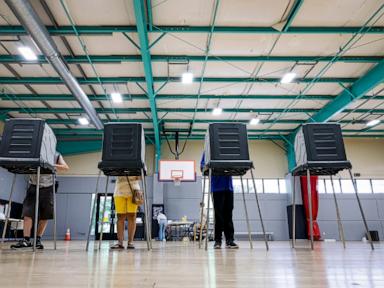
When millions of citizens head to the ballot boxes during a Russian presidential cycle, the atmosphere outside polling stations tells a story of civic routine mixed with quiet resignation. You see traditional accordion players outside school gymnasiums repurposed as voting booths. You smell cheap cafeteria pastries sold at folding tables. Yet beneath the local pageantry, everyone understands the fundamental truth of the exercise. The outcome was baked into the political landscape months before the first ballot paper was ever printed.
Electoral politics in Moscow don't function like they do in western democracies. They aren't designed to produce surprise upsets or dramatic transfers of power. Instead, these massive national events operate as a stress test for state machinery, a loyalty gauge for regional governors, and a public relations broadcast designed to manufacture domestic consent. If you look closely at how the modern Russian state manages its political calendar, you realize that elections serve as a ritual of confirmation rather than a mechanism of choice.
The Architecture of Pre-Determined Outcomes
You can't understand modern Russian governance without looking at how opposition is managed. True systemic rivals don't materialize on election night. They are filtered out long before campaigns kick off.
The Central Election Commission wields bureaucratic tools with surgical precision. Technicalities regarding signature collection requirements, complex paperwork filings, and minor financial disclosure errors routinely disqualify independent contenders or genuine anti-system figures. What remains on the ballot is a carefully curated selection of candidates. You have the incumbent, joined by loyalist opposition figures from parties like the Communists or the Liberal Democrats. These figures occupy parliamentary seats and provide a veneer of pluralism, but they rarely pose an existential threat to the ruling administration.
State media acts as the primary accelerator for this managed environment. Major television channels dominate the information space, offering wall-to-wall coverage of the Kremlin's daily agenda while marginalizing alternative viewpoints. When dissenting voices do break through online or via independent outlets, administrative pressure, asset freezes, or foreign agent designations quickly neutralize their reach. By the time voters mark their ballots, the information ecosystem has already shaped public perception to view the incumbent as the only viable custodian of national stability.
Why the Kremlin Still Needs the Ballot Box
If the result is locked down well in advance, why bother with the immense expense and logistical headache of a nationwide vote? The answer comes down to legitimacy.
Authoritarian systems face a unique vulnerability. They can't rely entirely on brute force to maintain control indefinitely; coercion is expensive and wears out its welcome. Modern governance requires an active display of popular mandate. A high voter turnout paired with a commanding majority gives the administration a powerful narrative. It signals to domestic elites, regional oligarchs, and foreign adversaries that the political core remains intact and unchallenged.
Governors and regional bureaucrats understand this dynamic acutely. Their personal job security depends on mobilization metrics. Local officials are often judged by how efficiently they can drive voters to the polls and deliver targeted percentage outcomes for the ruling party. This structural pressure turns local election administration into a numbers game, where turnout targets supersede spontaneous civic participation. When administrative workers, state employees, and university students face subtle or overt cues to cast their ballots, the distinction between civic duty and compliance blurs completely.
The Psychological Toll on the Electorate
For the average citizen, navigating this political reality breeds a deep sense of apathy. When you feel your vote carries zero weight in determining national leadership, political engagement shifts from a tool of change to a meaningless chore.
Many people still vote out of habit, social pressure, or a genuine desire for predictability. Decades of economic turbulence in the post-Soviet era taught millions of Russians to value stability over political upheaval. The state capitalizes on this collective memory. State messaging constantly contrasts the current administration with the chaotic, impoverished years of the 1990s. The implicit contract offered to the public is simple: you trade political competition for economic and social stability.
Still, dissent doesn't vanish entirely; it merely changes shape. When public protests are restricted and ballot box opposition is blocked, discontent finds other outlets. You see it in sudden spikes of social media solidarity, subtle protest voting where permitted, or simply a quiet withdrawal from public life.
The Broader Geopolitical Message
Beyond domestic borders, these choreographed electoral cycles serve a distinct diplomatic purpose. Moscow uses them to project strength outward.
When western critics question the democratic credentials of the process, state messaging pivots to framing western democratic systems as equally flawed, corrupt, or chaotic. By pointing to polarized politics, contested elections, and social unrest abroad, the apparatus constructs a counter-narrative: all political systems manage democracy to serve entrenched interests, so why trade proven stability for foreign-style experiments?
Ultimately, these votes remain a masterclass in political control. They demonstrate how modern authoritarian regimes can utilize democratic forms while entirely hollowing out democratic substance. The ballot boxes are real, the ink is real, and the counting happens down to the last decimal point. But the destination was mapped out years ago.