The arithmetic of global fuel markets is unforgiving. When commentators suggest that redirecting Russian diesel shipments toward American shores could provide meaningful relief at the pump, they are ignoring the structural mechanics of how petroleum actually moves across oceans. Pumping Russian middle distillates into the United States supply chain will do virtually nothing to lower retail prices for drivers. The global crude market is a single, interconnected pool, and regulatory sanctions combined with logistics costs create insurmountable barriers that clever financial engineering cannot bypass.
Understanding why this policy pipe dream fails requires looking past the political noise and examining the physical reality of refining, shipping logistics, and compliance penalties.
The Illusion of Direct Relief
Retail fuel prices in the United States are tied to domestic inventories, regional refining margins, and the global benchmark for Brent and West Texas Intermediate crude. Diesel is not a uniform commodity that can simply be swapped out overnight. Different regions require specific sulfur content specifications, seasonal additives, and distribution pathways.
When a tanker carrying diesel leaves a port, its destination is dictated by netback pricing—the market value at the delivery port minus transport costs. If secondary sanctions, compliance insurance bans, and complex import tariffs are applied, the cost of moving a barrel of diesel from a Russian refinery to an American distribution terminal multiplies rapidly. By the time that fuel clears customs, insurance, and regulatory hurdles, any discount inherent in sanctioned or grey-market petroleum has evaporated.
Refiners operate on tight margins. They do not pass deep discounts along to consumers out of charity. If acquiring alternative supply requires jumping through expensive compliance hoops, wholesalers simply absorb those costs or look elsewhere.
The Global Shell Game of Sanctions
Energy markets abhor vacuums. Since the imposition of Western restrictions on Russian energy exports, global trade flows have simply remapped. Russian diesel that once fed European markets now flows toward Latin America, Africa, and the Middle East. Meanwhile, the United States and Europe pull diesel from alternative producers in the Middle East and Asia.
This creates a global shell game.
Imagine two isolated ponds connected by a series of narrow pipes. If you pour water into one end while blocking a direct channel, the overall water level across the interconnected system adjusts based on total volume and flow resistance, not on the label attached to the bucket. Importing Russian diesel directly into the United States would merely displace barrels currently going to other buyers, forcing those buyers to outbid American importers for non-Russian supplies elsewhere. The net global supply of diesel remains entirely unchanged. Price is a function of total global supply versus total global demand. Shuffling the paperwork on a bill of lading alters nothing about the underlying scarcity.
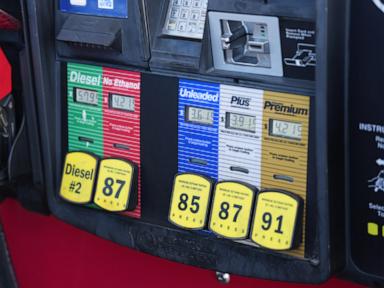
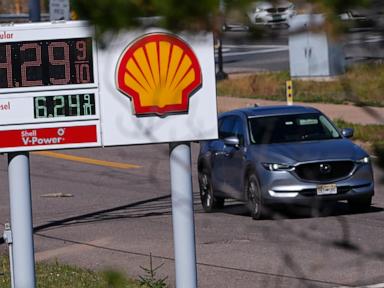
Furthermore, domestic refiners on the US Gulf Coast export millions of barrels of diesel daily because international markets frequently offer superior margins. Diverting foreign barrels inward while domestic producers continue exporting for profit is a logistical contradiction. Refiners ship fuel where the return is highest. Unless domestic demand destruction or a sudden collapse in global industrial activity occurs, localized supply tweaks via sanctioned imports remain mathematically irrelevant to the price blinking on roadside LED signs.
The Invisible Toll of Logistics and Compliance
Moving petroleum across international boundaries involves an army of insurers, maritime registries, financing institutions, and compliance officers. The price cap architecture and secondary enforcement mechanisms implemented by the G7 coalition impose severe penalties on any entity facilitating the transport of Russian oil above established thresholds or without proper vetting.
Compliance is expensive. Maritime insurance providers must verify the provenance of every molecule in a cargo hold. If a trading desk attempts to blend Russian diesel with other origins to obscure its pedigree, the cost of forensic tracking, legal indemnification, and specialized storage climbs.
Tankers capable of handling dirty or grey-market logistics demand premium charter rates due to the perceived risk of asset seizure or regulatory blacklisting. These frictional costs dwarf any initial price discount offered by a seller desperate to clear inventory in Murmansk or Primorsk.
Structural Realities at the Refinery Gate
The American refining apparatus was engineered over decades to process specific grades of crude, predominantly heavy sour varieties from domestic shale, Canada, and Latin America. While finished product imports like diesel bypass the primary distillation units, they still must integrate into regional storage terminals and pipeline networks operated by conglomerates bound by strict federal oversight.
Major pipeline operators enforce stringent quality control guidelines. Introducing fuel stocks with questionable origin verification or non-standard additive packages risks contaminating entire regional trunk lines. The legal liability for a pipeline operator accepting non-compliant product is catastrophic. Consequently, risk-averse midstream companies maintain high compliance walls that effectively screen out opportunistic trading schemes.
The political appeal of finding a quick fix for high energy costs is perennial. Leaders under pressure from voters facing sticker shock at the pump naturally gravitate toward announcements that promise hidden reservoirs of cheap fuel. Yet the commodities market operates outside the reach of political wishful thinking.
Energy prices reflect the hard physics of extraction, the friction of global trade barriers, and the inescapable balance sheet of supply and demand. Russian diesel will continue to find homes in less-regulated markets, lubricating industrial machinery and transport fleets far from American shores, while US prices will continue to dance to the tune of domestic inventory draws, hurricane seasons in the Gulf of Mexico, and the broader macroeconomic pulse of global industrial demand.