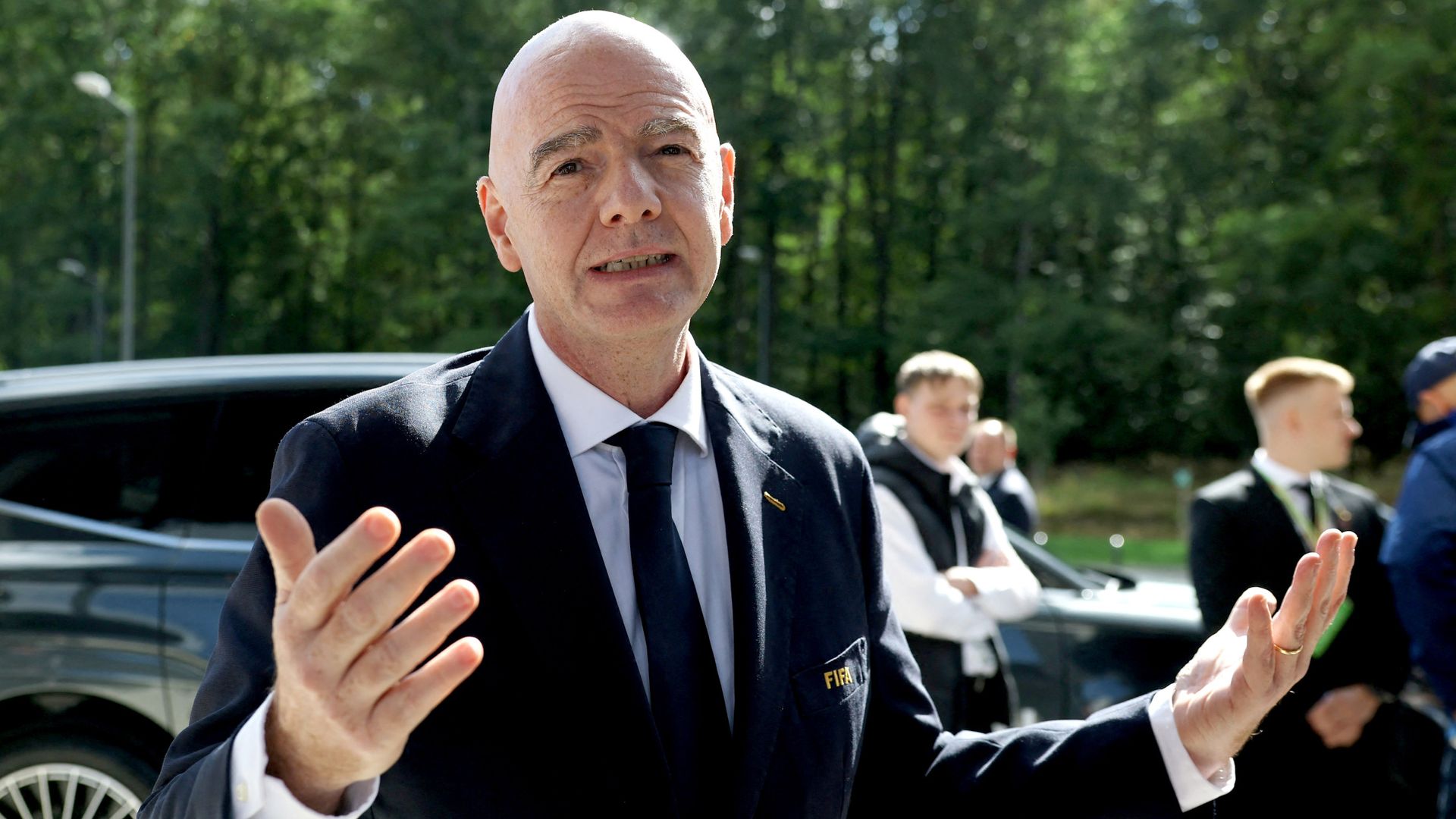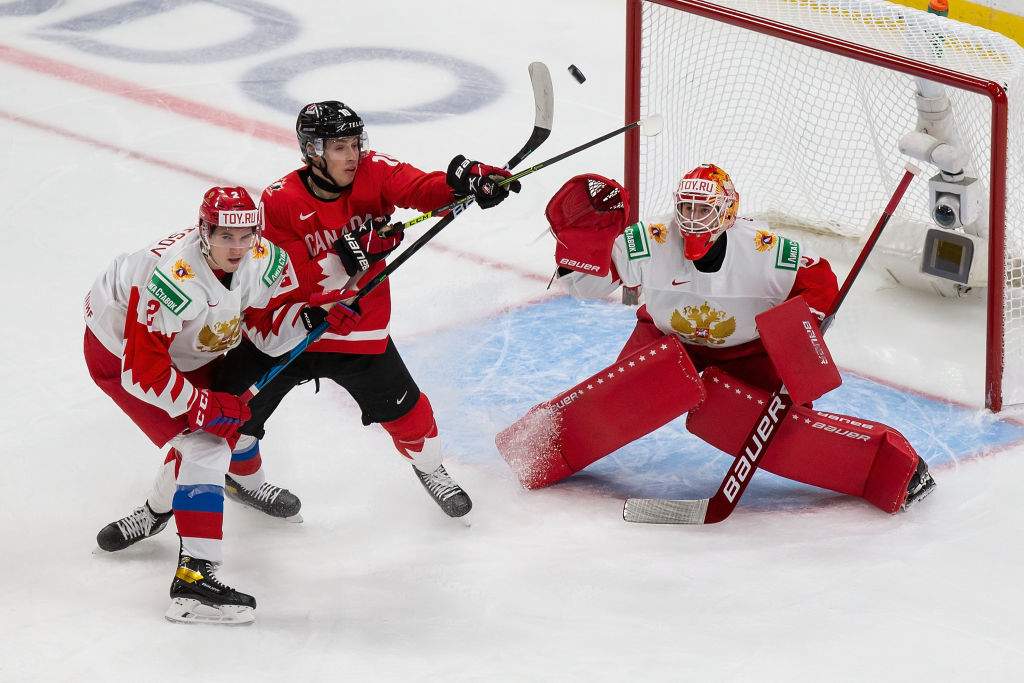
Sports media loves a predictable villain and an easy outrage cycle. When Russian hockey officials demand "consequences" for Canada over the ongoing International Ice Hockey Federation ban at the World Junior Championship, the press box reacts on autopilot. Canadian outlets frame it as desperate geopolitical theater from an isolated federation. Russian state media frames it as Western hypocrisy weaponizing youth sports.
Both narratives are lazy. Both miss the structural rot eating international hockey from the inside out. Learn more on a related topic: this related article.
If you look past the press releases and the patriotic chest-thumping, Russia’s complaints are not really about justice, sportsmanship, or even the athletes. And Canada’s silence is not about moral superiority. This standoff is a financial and developmental ticking clock that hurts the exact product Hockey Canada and the NHL claim to protect.
The Illusion of the Moral High Ground
Let’s strip away the diplomatic jargon. The IIHF Council suspended Russian and Belarusian national teams in early 2022 following the invasion of Ukraine, citing safety and security concerns for players, officials, and fans. Since then, that suspension has been extended year after year, keeping one of the world’s premier hockey powerhouses out of the marquee under-20 tournament. More analysis by CBS Sports delves into similar perspectives on the subject.
Russian officials—from federation executives to former NHL stars turned politicians—regularly single out Canada, accusing Hockey Canada of pulling the strings behind closed doors to keep a top rival off the ice. They demand sanctions, bans, or retaliatory measures against Canadian hockey leadership.
Mainstream coverage dismisses this as empty noise. After all, Russia has zero administrative enforcement power over Hockey Canada or the IIHF’s tournament hosting rights. You cannot impose "consequences" when you are locked outside the building.
That dismissal ignores how international sports governance actually functions.
Federations do not operate on pure idealism; they operate on leverage, broadcast rights, and competitive legitimacy. When a governing body keeps a top-three global superpower out of a tournament for half a decade under the banner of "logistics and safety"—while Russian athletes compete nightly in the NHL, the NBA, the ATP Tour, and the UFC—the credibility gap widens.
Calling out that contradiction is not propaganda. It is basic observation.
What the Headlines Miss About Hockey’s Business Model
I have spent years watching sports executives and tournament organizers burn millions in long-term brand equity to protect short-term political comfort. In international hockey, the bill is coming due.
The World Junior Championship is not the Olympics. It does not have fifty different sports to absorb a missing powerhouse. Outside of Canada, the tournament’s commercial survival depends on razor-thin margins and a small handful of elite rivalries. Take away Russia, and you remove one-half of the most lucrative, emotionally charged rivalry in the history of the sport.
Look at the real mechanics of the tournament:
- Competitive Dilution: Without Russia, the tournament’s medal rounds routinely feature lopsided blowouts until the final two games. When a quarterfinal or semifinal lacks a legitimate heavyweight contender, casual viewers change the channel.
- Scouting Blind Spots: NHL general managers rely on the World Juniors as a high-pressure crucible to evaluate draft-eligible and drafted prospects against elite peers. Removing the Russian cohort creates a massive data vacuum. Scouts are forced to project talent based solely on domestic KHL or MHL tape, which distorts draft boards and player development pipelines.
- Broadcast Valuation: TSN and NHL Network print money when Canada plays Russia on New Year’s Eve or in a gold-medal game. Replace that matchup with a blowout against a second-tier European nation, and the ad inventory loses its premium edge.
Canadian hockey executives know this. IIHF President Luc Tardif knows this. Yet the public conversation remains trapped in a binary loop of "Russia bad" versus "Canada unfair."
Dismantling the Common Myths Around the Ban
When fans and analysts search for updates on the IIHF ban and Russia’s threats toward Canada, they usually ask the wrong questions. They treat this like a legal dispute with a clear winner and loser, rather than a slow-motion market distortion.
Does Russia actually have the power to punish Canada?
No. Not directly. Russia cannot strip Canada of hosting rights, fine Hockey Canada, or block Canadian players from international ice. Any talk of formal "consequences" from Moscow is domestic political theater aimed at an internal audience. However, Russia does possess indirect leverage: the Kontinental Hockey League. By tightening rules on foreign imports, restricting player transfers, or refusing to honor historical development agreements, Russian hockey can disrupt the global talent ecosystem that Canadian agents and NHL clubs rely on.
Is the ban still strictly about tournament security?
Not anymore. In 2022, the immediate chaos of the invasion created genuine, acute security risks for traveling teams and host cities. Years later, continuing to frame the ban purely around arena security strains logic. NHL arenas in Toronto, Montreal, New York, and Boston host Russian superstars like Alex Ovechkin, Nikita Kucherov, and Kirill Kaprizov every single week without incident. The IIHF’s position is no longer a security protocol; it is a political consensus maintained because no European federation wants to be the first to blink and face domestic backlash.
Does Canada secretly want Russia banned to win more gold medals?
This is the favorite conspiracy theory in Moscow, and it collapses under five seconds of scrutiny. Hockey Canada’s entire brand is built on conquering the best. Winning a gold medal in a tournament missing its fiercest rival carries an unspoken asterisk among purists. Worse, Hockey Canada has been drowning in its own domestic governance scandals, sponsor exodus, and declining youth registration numbers. The last thing Canadian executives want is a weakened flagship tournament that generates less excitement at home.
The Uncomfortable Reality of Sports Sanctions
Here is the flaw in the contrarian view that many critics refuse to admit: lifting the ban tomorrow would be an administrative nightmare.
If the IIHF reinstated Russia next season, several European federations—most notably Finland, Sweden, and Czechia—would face intense pressure from their own governments and sponsors to boycott the games. A tournament without Sweden and Finland is just as broken as a tournament without Russia. The IIHF is trapped in a prisoner's dilemma where any move triggers a partial collapse of the field.
That is why Russia’s demands for "consequences" against Canada are so misguided. Attacking Canada targets the wrong actor. Hockey Canada does not hold a unilateral veto over the IIHF Council, where European voting blocs dictate the agenda. By turning this into a bilateral shouting match with Ottawa and Toronto, Russian officials guarantee that Canadian executives cannot publicly advocate for a path back—even if they wanted to for the sake of tournament revenue.
How International Hockey Actually Fixes This
If governing bodies want to stop bleeding relevance and stop letting politicians dictate the roster of a junior hockey tournament, they need to abandon the all-or-nothing posturing.
- Separate State Symbols from Athlete Eligibility: The International Olympic Committee already laid out the blueprint for neutral participation. Strip the flags, the anthems, and the state-sponsored branding. Let vetted under-20 players compete under a neutral banner. Fans get elite hockey; governments get denied a propaganda stage.
- End the "Safety" Excuse: Governing bodies lose trust when they hide behind bureaucratic euphemisms. If a federation is excluded for geopolitical reasons, state the exact criteria required for reinstatement. Clear benchmarks remove the accusation of arbitrary bias.
- Decentralize Hosting Risk: If specific European nations refuse to host teams with neutral Russian athletes, award the tournaments to North American markets—like Buffalo, Minneapolis, or secondary Canadian cities—where NHL infrastructure already manages Russian athletes seamlessly every night of the week.
Russia will keep demanding consequences that will never materialize. Canada will keep offering polite, non-committal diplomatic deflections. Meanwhile, an entire generation of elite hockey talent is aging out of junior hockey without ever facing each other on the sport’s biggest developmental stage.
You do not protect the integrity of a sport by hollowing out its competition and pretending nobody notices the empty ice.