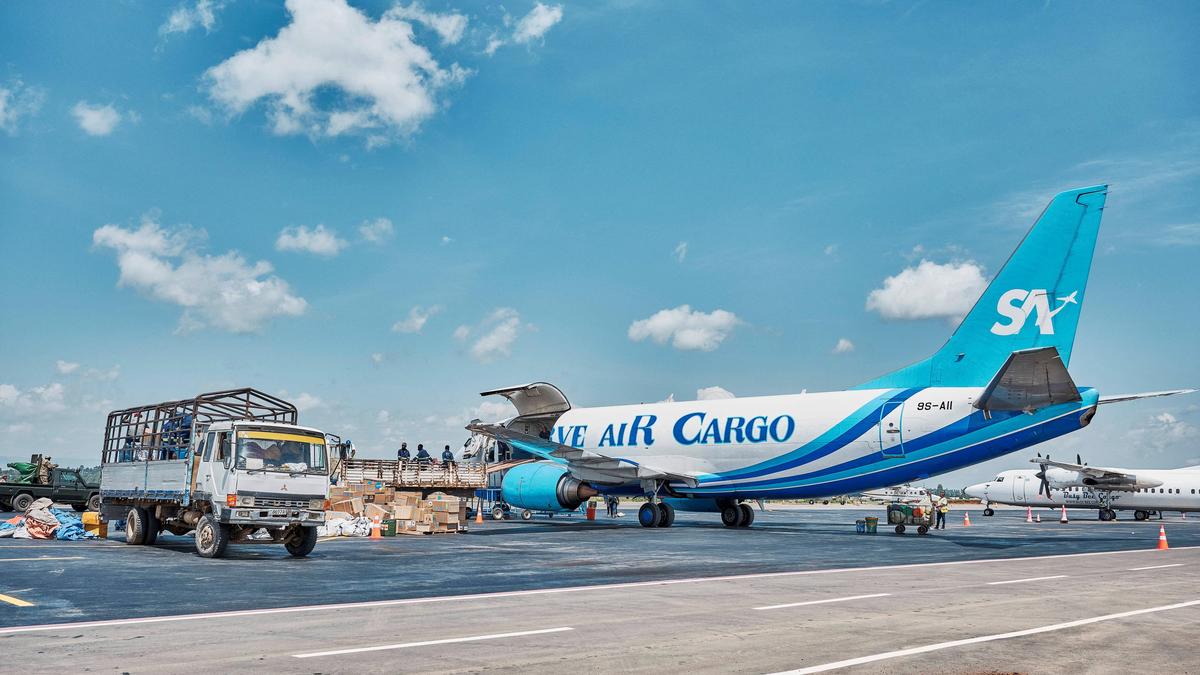
The red dirt of Mbandaka does not merely sit on the earth. It stains. It climbs up the hems of trousers, cakes the tires of humanitarian white 4x4s, and hangs in the humid air like a permanent rust-colored mist. For months, this dirt was the only thing moving at the edge of the city’s tarmac. The engines had gone quiet. The sky was empty.
When an airport closes in the Democratic Republic of Congo, the silence is heavy. It is not like a delayed flight at Heathrow or O’Hare, where travelers drink overpriced coffee and scroll through their phones. Here, the grounding of an aircraft cuts a literal lifeline. Mbandaka sits on the banks of the sweeping Congo River, tightly hugged by dense, suffocating rainforest. Roads are mostly a myth, swallowed by mud and neglect. If you want to get life-saving medicine, doctors, or specialized gear into Equateur Province quickly, you fly. Meanwhile, you can read other events here: Inside the Pakistan Security Crisis Nobody is Talking About.
Then came the fever.
When Ebola flared up in the region, the world did what it always does: it retracted. Fear is a rational response to a virus that liquefies internal organs, but fear also builds walls. To contain the invisible killer, authorities clamped down. The airport at Mbandaka, the beating heart of the local economy and the gateway for medical logistics, was shuttered to commercial traffic. To explore the bigger picture, check out the detailed analysis by Associated Press.
Now, the gates are swinging open again. The government has declared the runway safe, the outbreak sufficiently contained to allow the metal birds to land once more. On paper, it is a triumph of public health administration. It is a bullet point in a ministry report.
But talk to the people standing just beyond the perimeter fence, and you realize the story is far more complicated than a simple reopening.
The Cost of the Invisible Wall
Consider a woman like Marie-Jeanne. She is a fictional composite, but her reality is shared by thousands across the province. Marie-Jeanne sells dried fish and smoked bushmeat at the central market. Her supply chain does not rely on sophisticated logistics software; it relies on the daily turboprop flights that bring traders, cash, and supplies from Kinshasa, hundreds of miles to the south.
When the airport closed, Marie-Jeanne’s world shrank to the radius of a bicycle ride.
Prices for basic necessities skyrocketed. Salt, soap, and clean cooking oil became luxury items overnight. The local economy did not just slow down; it curdled. The irony of a quarantine is that while it protects the body from a pathogen, it starves the stomach. People in Mbandaka were not just terrified of bleeding from the eyes; they were terrified of not being able to feed their children.
This is the hidden ledger of an epidemic. The official tallies track the infected, the recovered, and the dead. They rarely count the businesses that collapsed, the children pulled from school because tuition fees dried up, or the non-Ebola patients who died in silence because the local clinic ran out of basic antibiotics that used to arrive by air.
The virus isolates before it destroys. By cutting off Mbandaka from the rest of the country, the response team managed to cage the outbreak, but they also trapped a population in economic amber.
Anatomy of a Panic
To understand why the reopening of a single runway matters so deeply, you have to understand the specific terror that Ebola evokes. It is not malaria, which kills quietly and predictably every single day across the continent. Ebola is cinematic in its horror. It turns loved ones into vectors of biological hazard. It transforms a traditional burial—a sacred, communal act of grief—into a biohazard operation conducted by strangers in terrifying white spacesuits.
During the height of the restrictions, the airport became a symbol of betrayal.
To the locals, the planes that did land—the chartered UN flights, the humanitarian helicopters—brought only bad news. They brought foreign experts who spoke different languages, heavily armored vehicles, and strict directives to stop touching each other. The runway became a one-way valve: resources came in to fight the virus, but the people living there could not leave.
Trust broke down. When health workers arrived in villages, they were sometimes met with rocks, not gratitude. Rumors spread like wildfire through the forest. Some believed the virus was an invention to attract foreign aid money; others thought the white suits were harvesting organs.
It sounds absurd from the comfort of a climate-controlled office in Geneva or Washington. But put yourself in the shoes of someone who has watched their government ignore them for decades, only to suddenly witness an influx of multimillion-dollar medical infrastructure precisely when a deadly disease appears. Why wouldn't they suspect the motives?
The airport closure cemented this alienation. It told the population that they were a threat to be contained, rather than citizens to be protected.
The Turning of the Key
The decision to resume flights is not just a logistical adjustment. It is a psychological pivot.
When the first commercial turboprop finally touches down on the tarmac, kicking up that omnipresent red dust, it signals more than just the arrival of passengers. It signals that the siege is over. It tells the community that they are once again part of the world, that they are no longer viewed purely as a biohazard zone.
But the relief is seasoned with deep anxiety.
Ebola is a master of disguise. It lingers in animal reservoirs, hiding in fruit bats and forest creatures, waiting for the perfect moment of human contact to spark the cycle anew. Opening the airport means restoring commerce, but it also means restoring mobility to a virus that thrives on human connection.
The health screeners at the terminal are now the front line of defense. They stand with digital thermometers pointed like pistols at the foreheads of arriving and departing travelers. They watch for the telltale signs: the glassy eyes, the sluggish step, the sheen of sweat that indicates a fever. Plastic buckets filled with chlorinated water sit at every entrance, a stark reminder that the price of freedom is eternal vigilance.
The system is fragile. It relies on low-paid workers staying sharp during eight-hour shifts in blistering heat. It relies on travelers being honest about their symptoms, rather than swallowing paracetamol to mask a fever just to board a flight to see their families.
The Rhythm of the River
As the engines whine and the propellers begin to spin again in Mbandaka, the city holds its collective breath. The market stalls near the port are already seeing a shift. The air feels lighter, even if the pockets are still empty.
We often view global health as a series of medical battles fought with vaccines, contact tracing, and isolation wards. But the true battleground is always human dignity. You cannot heal a community by treating it like a plague colony. You cannot save lives by destroying livelihoods indefinitely.
The reopening of the airport is a calculated gamble, a wager placed on the belief that surveillance can match the speed of contagion. It is a recognition that isolation is a temporary shield, not a permanent strategy.
Down at the riverbank, the massive wooden barges still push through the brown, swirling waters of the Congo River, moving at a glacial pace that has not changed in centuries. But above them, the sky belongs to the modern world again. The drone of an approaching aircraft breaks the midday heat, a sound that used to bring dread, but today brings the messy, imperfect, and desperately needed return of ordinary life.