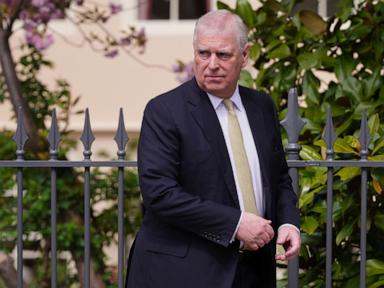
Every major newsroom just tripped over itself to print the exact same lazy headline. They want you to believe that serving a witness summons to Andrew Mountbatten-Windsor marks a historic, earth-shattering collapse of royal immunity. It makes for great clickbait. It sells papers. It is also a massive distraction from what actually happens inside a civil courtroom.
The media fixation on the "156-year precedent" treats a routine procedural filing like a public execution. When reporters obsess over the last time a senior British royal took the stand—Edward VII, then Prince of Wales, testifying in an 1870 divorce trial—they completely misunderstand how modern civil litigation works. A witness summons is not a verdict. It is not even a guarantee that a single word will ever be spoken under oath in front of a jury.
I have spent twenty years watching high-profile civil disputes play out behind closed doors, and I have seen clients blow millions chasing symbolic courtroom moments that never materialize. When you strip away the palace intrigue and the breathless historical trivia, this summons reveals a much colder, purely transactional legal reality.
The Myth of the Royal Shield
To understand why the current coverage is so flawed, you first have to dismantle the premise that British royals enjoy blanket legal immunity. They do not.
Under UK constitutional law, sovereign immunity applies strictly to the reigning monarch. Charles III cannot be sued or compelled to give evidence in his own courts because, technically, justice is administered in his name. Everyone else in the family—stripped of titles or not—is legally a private citizen.
The reason you rarely see royals in the witness box has nothing to do with an invisible legal forcefield. It comes down to two things: aggressive out-of-court settlements and basic evidentiary relevance. High-net-worth individuals settle civil claims precisely to avoid the discovery phase and live testimony. When a party actually issues a witness summons, it is rarely a triumphant victory lap. More often, it is a calculated pressure tactic designed to force a settlement check before the trial date arrives.
The press loves to frame this as a clash between ancient privilege and modern accountability. In reality, it is standard litigation warfare. Lawyers use compulsory process—known in the UK as a witness summons and in the US as a subpoena—every single day to drag reluctant third parties into disputes. Treating this as a constitutional crisis insults the intelligence of anyone who has ever read a civil procedure manual.
What a Witness Summons Actually Means
Let us look at the actual mechanics of what just happened, because the terminology gets butchered constantly in mainstream coverage.
A witness summons is a court-issued document ordering an individual to attend court to give evidence or produce specific documents. It does not mean the recipient is accused of a crime. It does not even mean they are a defendant in the civil suit. It simply means one of the litigating parties convinced a court clerk or judge that this person possesses information material to the case.
Here is the part the headlines bury: a summons is just the opening salvo in a procedural trench war. Receiving one triggers an immediate set of counter-moves:
- Applications to Set Aside: The recipient's legal team immediately files a motion arguing the summons is oppressive, overly broad, or constitutes a "fishing expedition." Judges routinely toss out summonses if the requesting party cannot prove the witness has unique, indispensable facts that cannot be obtained elsewhere.
- Jurisdictional Friction: When cross-border elements are involved—such as US civil proceedings attempting to compel testimony from a UK resident via the Hague Evidence Convention—the timeline stretches from months into years. Foreign courts do not simply rubber-stamp American discovery requests, which are notoriously broader than British equivalents.
- Scope Limitation: Even if a judge upholds the summons, the court will heavily restrict the exact questions allowed. Lawyers do not get to put a high-profile figure on the stand and ask them about their entire life story. Every line of questioning must tie directly to the pleaded facts of the specific civil claim.
Imagine a scenario where a plaintiff's legal team knows a high-profile witness will never survive the PR fallout of a public cross-examination. Does that legal team actually want the witness on the stand? Rarely. Live witnesses are unpredictable. Even hostile ones can hurt your case if they come across as sympathetic or if their testimony inadvertently corroborates the defense. What the lawyers actually want is the threat of the testimony to drive up the settlement value.
Answering the Wrong Questions
If you look at what the public is searching for right now, the confusion is obvious. People are asking whether this means criminal charges are next, or whether refusing to show up leads to immediate jail time. Both questions miss the mark entirely.
Does a civil witness summons lead to criminal prosecution?
No. Civil courts adjudicate private disputes—usually over money, contracts, or torts—using a lower standard of proof called the balance of probabilities (or preponderance of the evidence). Criminal courts require proof beyond a reasonable doubt. Being forced to answer questions in a civil lawsuit does not magically trigger a criminal indictment. In fact, witnesses in both the UK and the US retain strict protections against self-incrimination. If a question risks exposing the witness to criminal liability, they can invoke their legal privilege to stay silent on that specific point.
What happens if a royal simply ignores the summons?
If the summons is legally valid and survives all challenges to set it aside, ignoring it constitutes contempt of court. In theory, a judge can issue a bench warrant or impose heavy fines. In practice, high-profile figures never simply ghost a valid court order. They do not need to. They hire elite solicitors to tie the order up in procedural knots until the underlying lawsuit settles, gets dismissed, or runs out of funding.
The Heavy Hitters Know Better
If you want to understand how power actually operates in these situations, look at the precedent set by top-tier litigators rather than royal historians.
When Lord Bingham, one of the most influential British judges of the modern era, wrote extensively on the Rule of Law, he emphasized that equality before the law means the rules apply uniformly, regardless of status. Yet in the trenches of commercial and civil litigation, veteran practitioners know that procedural rules are tools of leverage, not moral crusades.
Consider how major corporate defendants handle executive depositions. In landmark US cases, courts apply the Apex Doctrine—a legal principle that shields high-level executives from being deposed unless the requesting party proves the executive has unique, first-hand knowledge and that all less intrusive discovery methods have been exhausted. While British courts do not formally use the term "Apex Doctrine," UK judges apply the exact same logic when deciding whether a witness summons is an abuse of process. They hate theater. If a lawyer summons a famous name purely to generate headlines and embarrass the other side, the judge will squash the summons and stick the requesting lawyer with a massive bill for wasted legal costs.
I will admit the downside to this cynical, strictly procedural view: sometimes, a case genuinely hinges on a single conversation behind closed doors where only two people were present. In those rare instances, no amount of document discovery can replace putting that specific person under oath. If the plaintiff here can prove to a judge that no other human being can verify a critical fact, the summons will stick, and the theatrical circus the media wants will actually happen.
Stop Watching the Spectacle
The obsession with counting the years since 1870 is a symptom of modern media illiteracy. It turns a dry, technical step in civil procedure into a soap opera.
If you want to know what is actually going to happen next, stop reading royal correspondents. They are looking for crowns, scandals, and historical trivia. Start watching the court docket for motions to strike, jurisdictional challenges, and quiet filings indicating that the parties have entered mediation.
In civil law, the loudest headlines almost always precede the quietest settlements. The summons is not the climax of this story; it is just the opening bid at the negotiating table.