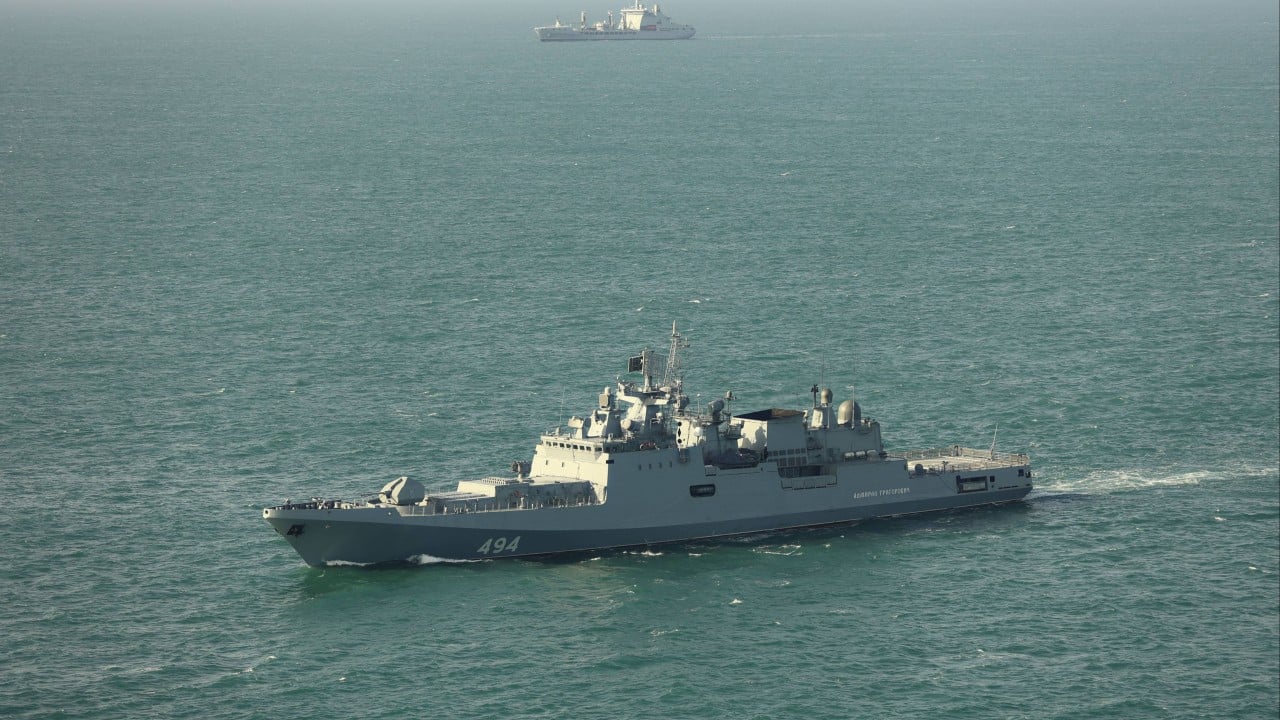
A British civilian sailing vessel recently found itself in the crosshairs of geopolitical signaling when a Russian warship fired warning shots near the yacht within the English Channel. This aggressive encounter marks a sharp escalation in Moscow's maritime posturing, moving beyond routine surveillance into active intimidation inside one of the world's busiest shipping lanes. While the immediate danger to the crew has passed, the incident exposes a wider, more troubling reality. The Royal Navy is facing a severe fleet shortage that limits its ability to police domestic waters and deter increasingly bold incursions by foreign state actors.
The confrontation follows years of predictable patterns. For over a decade, Russian surface vessels and submarines have regularly transited the English Channel while traveling between the Northern Fleet bases in Murmansk and the Mediterranean or Baltic seas. Traditionally, these transits adhered strictly to international maritime law under the principle of innocent passage. Royal Navy warships routinely shadowed these vessels, maintaining a polite but firm presence to ensure the foreign warships behaved themselves.
That baseline of professional restraint has eroded.
By discharging weapons in the vicinity of a civilian leisure craft, the Russian crew violated long-standing maritime safety conventions. Investigative tracking of the warship's previous deployments suggests this was not an accidental discharge or a crew panic. It was a calculated display of deniable aggression. Moscow is testing the response times, political will, and operational readiness of Western maritime forces during a period of intense diplomatic friction.
The Anatomy of a Channel Incursion
Understanding how a military vessel can safely fire weapons near a civilian craft requires looking at the specific rules governing international straits. The English Channel is an international waterway, meaning foreign navies possess the right of transit passage. They cannot be legally blocked unless they engage in direct acts of hostility against the coastal state.
Firing warning shots sits in a dangerous gray zone. The Kremlin can easily claim the warship was conducting a pre-scheduled live-fire exercise in international waters, blaming the civilian yacht for straying into an active training sector. This tactic provides the Russian government with plausible deniability while still delivering a clear message of intimidation to the British public.
The mechanics of these encounters rely heavily on psychological pressure. A massive, heavily armed corvette or destroyer maneuvering close to a small fiberglass hull creates immediate tactical dominance. When you add the auditory shock of deck guns or heavy machine guns clearing their barrels, the message is unmistakable. Moscow wants to demonstrate that it views the waters right outside British ports as its own playground.
The Royal Navy Availability Crisis
The most critical question raised by this encounter is not why the Russians acted aggressively, but why a British civilian vessel was left unprotected in the first place. Historically, a Russian transit of the Channel triggered an immediate escort deployment by a Royal Navy frigate or destroyer.
Today, the numbers tell a different story.
The surface fleet of the Royal Navy has shrunk to a historic low. With multiple Type 23 frigates undergoing extended maintenance and the newer Type 26 platforms still years away from full operational status, the Ministry of Defence is forced to make difficult choices. Ships cannot be in two places at once. If a Type 45 destroyer is deployed to the Red Sea to protect commercial shipping from missile attacks, it is unavailable to patrol the coast of Kent or Devon.
- Type 23 Frigates: Many are reaching the end of their operational lifespans, requiring longer, more expensive refits just to remain seaworthy.
- Type 45 Destroyers: While technologically advanced, the fleet has suffered from chronic propulsion issues that frequently keep hulls tied to the docks in Portsmouth.
- River-class Patrol Vessels: These smaller ships are increasingly used to shadow foreign warships. While capable of monitoring transitions, they lack the heavy weaponry needed to project credible deterrence against an aggressive foreign combatant.
This deficit leaves gaps in situational awareness and response capability. When a foreign warship enters the Channel, British command centers rely heavily on land-based radar and automated identification systems. If a physical hull is not available to shadow the intruder, the maritime domain becomes vulnerable to wild-card actions like the warning shots fired at the civilian yacht.
Psychological Warfare on the High Seas
The strategic objective behind these maritime provocations extends far beyond the English Channel. Russia utilizes its naval assets as tools of asymmetric political warfare. By creating a sense of insecurity in home waters, Moscow aims to project an image of unstoppable global reach while exploiting perceived Western weaknesses.
This strategy relies on the domestic media coverage that inevitably follows such incidents. Images of Russian warships dominating the horizon near British beaches generate anxiety and fuel political debates regarding defense spending. It creates a narrative that the United Kingdom is incapable of securing its own borders, a powerful talking point for foreign disinformation campaigns.
Furthermore, these actions serve as a counter-signal to British military aid to Ukraine. Every time London pledges hardware or training to Kyiv, Moscow responds with a localized display of force closer to home. The warning shots near the yacht are a direct physical manifestation of this ongoing diplomatic chess match.
Hard Choices for Maritime Defense
Fixing the security gap in the Channel requires more than just political condemnation or strongly worded diplomatic notes. The United Kingdom must address the structural reality of its naval procurement pipeline. Building warships takes time, and the current pace of construction is failing to match the speed of rising geopolitical threats.
One immediate option is the greater utilization of unmanned surface vessels and aerial drones to maintain continuous surveillance over the Channel's choke points. Autonomous systems can track foreign hulls perfectly well, freeing up crewed warships for high-intensity deterrence missions. However, a drone cannot fire a counter-warning shot or physically position itself between a rogue warship and a civilian yacht. Autonomous tech offers eyes, but it lacks teeth.
The government also faces pressure to revise the rules of engagement for domestic maritime security. If foreign warships understand that their provocations will only result in passive monitoring, their behavior will become progressively more reckless. The Royal Navy needs the political backing to adopt a more assertive posture when foreign vessels endanger civilian lives inside the UK's Exclusive Economic Zone.
Sailing through the English Channel has transformed from a routine transit into a journey through a geopolitical flashpoint. As long as the structural deficit in the British surface fleet persists, civilian mariners will remain exposed to the unpredictable actions of foreign crews seeking to test the boundaries of Western resolve. The security of domestic waters can no longer be taken for granted.