Food journalism has a fetish for trauma.
Every few months, a glossy Western outlet publishes a tear-jerking profile about a generational street-food vendor in a collapsing economy. A family in Beirut frying chickpeas through civil wars, hyperinflation, port explosions, and sovereign defaults. The framing is always the same. It is framed as a triumph of the human spirit. It is packaged as charming resilience. "They have no plan to stop," the headline beams, as if refusing to close a fry shop during an economic apocalypse is a lifestyle choice rather than a hostage situation.
Stop clapping for survival.
When a 100-year-old falafel institution in Lebanon keeps its doors open while the Lebanese pound loses over 98 percent of its value, that is not a heartwarming tale of culinary heritage. It is a brutal case study in sunk-cost captivity, broken capital markets, and the economics of inescapable labor. The lazy consensus in food media treats endurance as an unalloyed virtue. In reality, operating a low-margin cash business in a hyperinflationary environment is a slow-motion liquidation of human capital.
The Trap of Generational Heritage
Business schools love to preach the gospel of longevity. They cite the Lindy Effect—the idea that the future life expectancy of some non-perishable things, like a technology or an idea, is proportional to their current age. Apply that to a neighborhood restaurant, and commentators assume a 100-year-old falafel stand is bulletproof.
It isn't. It is trapped.
I have sat across from third-generation hospitality owners in distressed markets who are treated like local royalty by tourists and journalists, yet they cannot afford a plane ticket out of their own country. Their equity is entirely illiquid. You cannot sell a goodwill brand in a collapsing economy when nobody has capital to buy it. You cannot pivot to high-margin software when your entire family's skill set is calibrated to soaking fava beans, grinding herbs, and managing the temperature of a vat of vegetable oil.
When outsiders romanticize a family for "having no plan to stop," they ignore a glaring economic reality. Having no plan to stop usually means having no viable exit.
In a functioning economy, a century-old brand commands licensing deals, franchising fees, and real estate appreciation. In a crisis zone like Beirut, a century-old brand means you are the last reliable calorie provider on a block where the power grid fails twenty hours a day. You stay open because closing means immediate destitution. Calling that "passion" is an insult to the sheer grit required just to break even on cooking oil.
The Hyperinflation Illusion of "Affordable" Street Food
If you ask the average reader why a Beirut falafel shop thrives during a financial collapse, they will give you the textbook answer. It is cheap. When steaks and imported cheeses become luxuries for the oligarch class, the masses retreat to street food. Chickpeas, parsley, garlic, tahini, and flatbread become the default caloric floor for a starving middle class.
That sounds neat on paper. On a balance sheet, it is a nightmare.
Let's break down the actual mechanics of running a low-ticket food operation during sovereign currency collapse, a dynamic documented extensively by economists like Steve Hanke in his studies of global hyperinflation:
- Input Dollarization vs. Output Local Currency: Even domestic agricultural products require imported inputs. Fertilizer, fuel for tractors, diesel for backup generators, packaging paper, and stainless steel equipment are all priced in US dollars. Meanwhile, your customer base is paid in a melting local currency.
- The Menu Cost Death Spiral: In normal markets, changing prices costs pennies. During rapid currency devaluation, if you price your sandwich in the morning and the exchange rate shifts by noon, you just sold your lunch rush at a loss. You cannot restock tomorrow's chickpeas with today's revenue.
- The Calorie Compression: As consumers get poorer, they buy fewer add-ons. They skip the soda. They skip the extra pickles. They buy the bare minimum flatbread wrap just to quiet their stomachs. Your average order value craters while your fixed energy costs—specifically private diesel generators in Lebanon—skyrocket.
When a century-old vendor survives this, they are not beating the market. They are subsidizing their customers' survival with their own physical health, deferred maintenance, and unpaid family labor. If that shop had to pay market-rate Western wages, commercial insurance, and standard corporate debt service, it would have folded in forty-eight hours.
Why Modern Culinary Advice Fails Crisis Operators
If you search for advice on how restaurants survive economic downturns, you will be buried under a mountain of useless corporate clichés. Consultants tell owners to "optimize their supply chain," "build a loyalty app," or "diversify revenue streams with branded merchandise."
Try telling a Beirut shop owner to launch a subscription box when the banking system has frozen deposits since 2019 and international payment gateways reject local cards.
The standard business playbook assumes institutional stability. It assumes contract enforcement, predictable electricity, and a central bank that isn't running a Ponzi scheme. When those pillars vanish, conventional business wisdom becomes actively dangerous. Raising capital through debt will bankrupt you when interest rates spike or currency mismatches explode. Expanding into a second location spreads your diesel expenses across two sites without doubling your foot traffic.
Instead, survival in catastrophic environments relies on brutal, unglamorous operational rules that modern MBA programs rarely teach:
- Zero Credit, Zero Terms: You pay your suppliers in physical cash on delivery, and your customers pay you in physical cash at the counter. The moment you extend credit in an unstable economy, you are writing off your inventory.
- Radical Menu Compression: You do not innovate. You do not add seasonal specials. You strip the menu down to the exact three or four ingredients that turn over within twelve hours. Every extra SKU is dead cash sitting on a shelf.
- Family-Only Labor: Outside hires require wages that must constantly be renegotiated against inflation, leading to high turnover and theft. Generational shops survive because aunts, uncles, and cousins absorb the margin compression by working twelve-hour shifts without formal overtime.
The Myth of "War-Proof" Businesses
People love to ask whether street food is recession-proof. The honest answer is that nothing is war-proof, and nothing is hyperinflation-proof. Businesses do not become immune to macroeconomic destruction; they simply endure varying degrees of amputation.
During the Lebanese Civil War from 1975 to 1990, and again during the post-2019 financial implosion and the 2020 Beirut port blast, keeping a storefront open meant absorbing physical and financial shocks that no insurance policy covers. When shrapnel shatters your storefront glass, you don't file a claim. You sweep it up, nail plywood over the frame, and keep frying because stopping for three days means your family doesn't eat on day four.
Consider a thought experiment. Imagine a scenario where a fourth-generation baker in New York or London faced the exact same operating conditions as a Beirut falafel vendor: total loss of life savings trapped in frozen bank accounts, 80 percent inflation on cooking fuel, sporadic military strikes within miles of the storefront, and zero municipal water or power. That Western chef wouldn't be praised for "resilience." They would be on the evening news demanding federal disaster relief, and rightfully so.
Yet because the shop is in the Middle East, and because the product is humble, cheap, and photogenic, Western media turns structural failure into aesthetic inspiration. We marvel at the patina on the copper pots. We romanticize the grandfather waking up at 4:00 AM to soak chickpeas, ignoring that he is doing it at age seventy-five because his pension evaporated into thin air.
What Actually Matters in a Century-Old Business
To be clear, keeping any enterprise alive for a hundred years requires extraordinary discipline. You do not survive a century on luck. You survive by mastering micro-consistency.
In the culinary world, consistency is harder than creativity. Any talented chef can make a brilliant dish once. Making the exact same falafel patty—crisp exterior, bright green herb-packed interior, zero excess oil absorption—ten thousand times a week for ten decades requires an obsession with process that rivals precision manufacturing.
That operational mastery is the real story, yet it is almost always buried beneath cheap sentimentality. If you want to learn something useful from a 100-year-old Beirut falafel shop, ignore the tear-jerking narrative about "never giving up" and look at their unit economics and process control:
- They own their real estate or hold legacy leases: Almost no century-old street food vendor survives paying modern commercial market rents. Their survival is anchored in real estate locked in decades ago. Without that fixed-cost shield, the math collapses.
- They monetize speed, not ambiance: Square footage is expensive to cool, light, and clean. High-survivability food stalls maximize revenue per square foot by pushing volume through a counter window. Turnaround time is measured in seconds, not table turns.
- They guard their core IP ruthlessly: The spice blend, the hydration ratio of the chickpeas, the exact fry temperature—these are not written in an employee handbook. They are held tightly within the bloodline, preventing employees from walking across the street and opening a clone.
The Downside of Refusing to Quit
There is a massive, unspoken cost to the "no plan to stop" mentality that contrarians and hustle-culture addicts alike refuse to acknowledge. Endurance can become a prison.
When a family business ties its identity entirely to surviving the next crisis, it stops building wealth and starts hoarding trauma. The younger generation inherits not a thriving enterprise, but an obligation. Walking away feels like betraying your ancestors, even when staying means trading your youth for pennies on the dollar in a broken economy.
I have watched brilliant young operators stay chained to legacy family storefronts out of sheer guilt, watching their peers emigrate, build scalable careers, and earn hard currency, while they spend their twenties arguing with diesel suppliers and scraping grease traps. Loyalty to a brand that cannot pay you a living wage is not nobility. It is self-sabotage disguised as heritage.
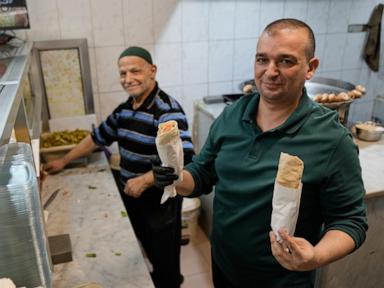
The next time you read a glowing profile about a family shop surviving a century of war, inflation, and state collapse, put down the tissues. Look past the golden-brown crust of the falafel and the smiling portrait behind the counter. You are not looking at a cute story about the power of good food. You are looking at what happens when ordinary people are forced to outwork the failures of their government, their banks, and their history—one cheap sandwich at a time.
Stop calling their desperation a miracle, and start asking why a hundred years of flawless execution still hasn't bought them the freedom to take a day off.