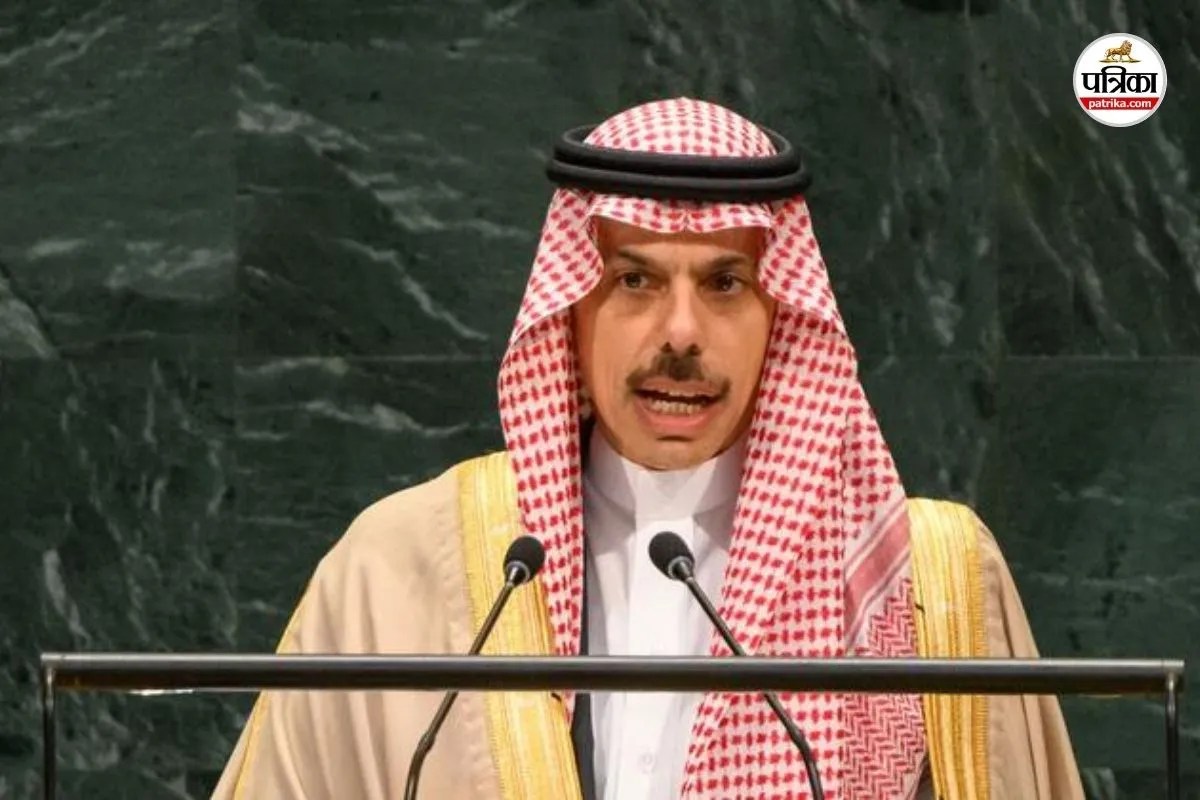
The standard narrative playing out across international wire services is predictable to the point of exhaustion. Riyadh stands before the United Nations Security Council, waving red flags, labeling the Houthi movement an existential threat to international commerce, and demanding immediate, heavy-handed global intervention. The lazy consensus among foreign policy analysts treats this as a straightforward plea for maritime protection. It is nothing of the sort.
Saudi Arabia is not crying out because a few container ships are taking the long way around Africa. They are panicking because their entire post-oil economic transformation blueprint rests on an illusion of predictable regional stability that they can no longer unilaterally control or buy off.
Let us dismantle the core premise underpinning every breathless dispatch coming out of the UN headquarters. The consensus tells us that Houthi maritime disruptions are purely an insurgent proxy crisis managed exclusively out of Tehran, designed to bleed global supply chains until the international community crushes them. That version of events is comforting because it fits neatly into an old Cold War playbook. It also happens to be dangerously incomplete.
The Geography of Convenience
When Riyadh demands that the Security Council act as global traffic cop for the Bab el-Mandeb strait, they are outsourcing a diplomatic failure disguised as a military emergency. For years, the Saudi-led coalition tried to bomb Yemen back into a pre-industrial quietude, spending billions on hardware designed to fight conventional state adversaries while entirely missing the reality of decentralized, resilient asymmetric networks.
I have watched defense contractors and regional consultants pitch multi-billion-dollar air defense shields to Gulf capitals while ignoring the simple economics of asymmetrical warfare. A drone costing a few thousand dollars does not care about your billion-dollar Patriot battery. When Riyadh runs to New York begging for resolutions, they are admitting that their military campaign failed to achieve a decisive outcome, and their economic diversification strategy—Vision 2030, luxury gigaprojects, tourist hubs on the Red Sea coast—cannot survive in a neighborhood where insurance rates for ships spike every time a missile clears a Yemeni ridge.
The conventional analysis treats the Houthi administration in Sanaa as a temporary glitch in maritime logistics. Look closer at the mechanics on the ground. They are functioning as a de facto state authority over millions of people, consolidating administrative control, managing local taxation, and embedding their military apparatus deep into civilian terrain. You do not bomb that out of existence with a Security Council press release.
Follow the Money and the Pipelines
Why is Riyadh suddenly so vocal at the UN? Follow the flow of hydrocarbons and capital. Saudi Arabia spent decades positioning itself as the ultimate swing producer and a safe haven for foreign investment. But investors looking at the Red Sea littoral do not see a stable jurisdiction; they see a choke point where a local actor with zero regard for global trade orthodoxy can disrupt five percent of daily global oil transit from the back of a pickup truck.
The traditional media frame this strictly as an anti-shipping campaign. But consider the domestic pressure inside the Kingdom. Crown Prince Mohammed bin Salman needs foreign direct investment to build futuristic cities in the desert. Foreign investors demand risk-adjusted returns. When missiles start landing near desalination plants and oil processing facilities, the risk calculation changes overnight. Riyadh's UN appeal is an admission that domestic security architecture cannot guarantee the physical safety of their modernization agenda.
Instead of acknowledging that the military intervention in Yemen hit a brick wall of local resilience, official rhetoric blames the wider international community for not doing enough the moment shipping lanes get squeezed. That is a inversion of responsibility. You cannot spend years dismantling a neighbor's state institutions through embargoes and airstrikes, only to demand that the global club rescue your coastline when the blowback reaches international waters.
The Myth of the Quick International Fix
Let us look at what the Security Council can actually do versus what the pundits pretend it can do. Every time a resolution passes condemning Houthi actions, market analysts pencil in a return to normalcy. That is magical thinking. Resolutions do not clear mines, they do not intercept low-flying cruise missiles over mountainous terrain, and they certainly do not alter the domestic political calculus of a movement that has survived years of total blockade.
Imagine a scenario where the UN actually deploys a massive naval armada with a robust mandate to clear the entire Yemeni coast. What happens the day after? You have occupied a coastline, triggered a humanitarian mobilization of millions of hostile locals, and anchored yourself in a quagmire that makes Iraq look like a weekend exercise. No major power, including the United States, has the appetite for a boots-on-the-ground intervention in western Yemen. Riyadh knows this. Their UN posturing is designed to force Washington and its allies into maintaining an indefinite naval presence so the Kingdom does not have to bear the full cost of its own geopolitical backyard.
The Real Question Nobody is Asking
Stop asking how the international community can secure the Red Sea for tankers. That is the wrong question entirely. The right question is why Riyadh expects global powers to underwrite a security umbrella for an economic transition that relies on projecting invulnerability while practicing regional adventurism.
The contrarian truth is this: the Houthis have achieved strategic parity not through conventional strength, but by exploiting the structural fragility of hyper-centralized Gulf economies built on glass and sand. As long as Saudi Arabia treats a deeply rooted local movement as a transient nuisance that can be legislated away by the UN Security Council, the Red Sea will remain volatile.
The security of modern trade routes cannot be ordered from a podium in New York. It requires diplomatic recognition of realities on the ground, hard compromises with adversaries who cannot be bombed into submission, and an acceptance that absolute dominance over the Arabian Peninsula is a ghost of the past.
Riyadh wants the world to fight its battles so it can keep building its skyscrapers in peace. History suggests the skyscrapers have to withstand the weather outside, not just the weather inside the boardroom.