The water did not arrive with an announcement. It came as a thickening in the dark, a low, subterranean vibration that rattled the copper teacups on the shelf before anyone smelled the mud.
For generations, the people of the valley lived by a quiet contract with the monsoon. They knew its temper. They respected the way swollen grey clouds pooled against the jagged shoulders of the mountains, heavy with rain, ready to burst over the terraced fields of green. But contracts require both sides to hold to the terms. Lately, the sky has been breaking its promises.
Consider a hypothetical afternoon in a village perched above the roaring Melamchi riverbed, a place where concrete foundations now replace the stone-and-timber houses of old. Let us call him Ramesh. Ramesh is fifty-two, with hands calloused from decades of wrestling rocky soil. On a Tuesday that felt entirely ordinary, Ramesh sat on his porch, listening to the heavy drone of cicadas. He remembers the heat. It was a suffocating, metallic heat that clung to the skin long after the sun dipped behind the ridges.
Then came the sound. Not a roar, but a groan.
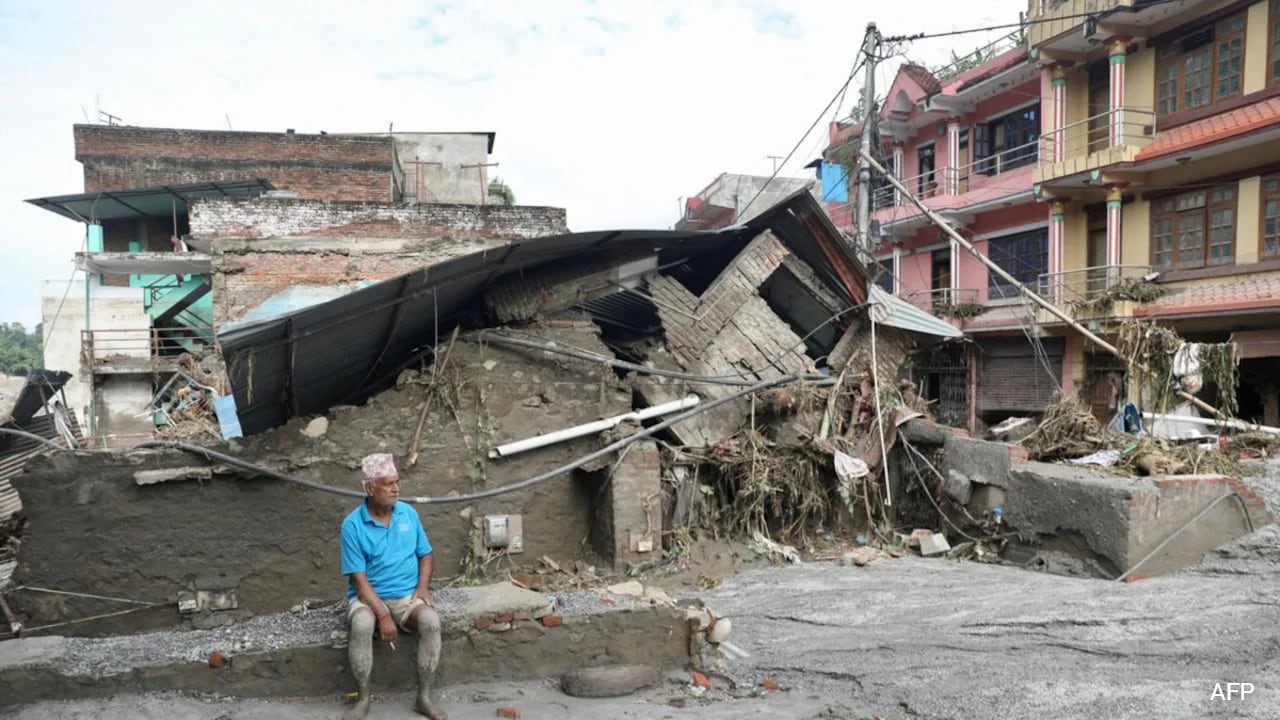
By the time Ramesh stepped out to look, the river was no longer water. It was a churning, slate-grey wall of slurry, boulders, and snapped pine trees, moving with the terrifying speed of an express train. It carried the history of the upper slopes down into the valleys in a matter of minutes. Houses built safely above historical high-water marks vanished. Bridges crumpled like dry twigs.
Water does not just destroy; it exposes.
What scientists later confirmed in cold, precise reports was something Ramesh and his neighbors had felt in their bones. Climate change did not merely cause a heavy rainstorm. It rewrote the math of the Himalayas.
Experts studying the disaster pointed to a chilling cascade of events. Higher global temperatures are quietly melting the high-altitude ice and snow that have capped the roof of the world for millennia. But the danger goes deeper than melting glaciers. High in the mountains, sudden cloudbursts—massive dumps of water concentrated in tiny windows of time—are growing more frequent. When a sudden wall of rain slams into fragile, thawing mountain slopes already destabilized by rising temperatures, the earth loses its grip.
A standard flood is water overflowing its banks. This was something entirely different. This was a cascading debris flow, a liquid avalanche born from the marriage of melting ice and hyper-concentrated rainfall.
Science tells us that for every degree Celsius the atmosphere warms, it holds roughly seven percent more moisture. Translate that dry atmospheric statistic into mountain geography, and you get a loaded gun pointed at every downstream community. The atmosphere is heavier. The clouds are denser. The rain falls harder, faster, and with a viciousness that older generations swear they never witnessed in their youth.
We talk about climate change as a distant abstract. We view melting ice caps through the blue tint of television screens, counting down years on a digital clock. But vulnerability is local. It smells like wet silt and crushed timber. It looks like a grandmother clutching a brass photo frame while standing on a patch of bare dirt where her kitchen used to be.
The tragedy of the Nepal flood is not simply that a natural disaster occurred. The tragedy lies in the shifting baseline of human endurance. People adapt, they rebuild, they pour concrete a little higher, they plant crops a little later. Yet, how do you adapt to an enemy that changes its rules every single season?
Standing on the edge of the newly carved riverbank months later, the scale of the alteration becomes staggering. The river is wider now. It has eaten whole acres of fertile farmland, turning generational wealth into barren gravel flats. The local school stands gutted, its chalkboard smeared with dried mud.
We are forced to ask uncomfortable questions about the architecture of our modern world. Why do we continue to build as though yesterday is a guarantee of tomorrow? Why do planners rely on fifty-year flood maps in an era when historical climate patterns have become entirely obsolete?
The answers are buried beneath tons of debris, waiting for us to dig them out.
There is an eerie silence that settles over a valley after the water recedes. The frantic shouting stops. The choppers leave. The international news crews pack their cameras and fly away to the next breaking crisis. Left behind are the people, staring at a landscape that no longer matches their memories.
Ramesh walks the edge of the new chasm every morning. He looks up at the towering peaks, still majestic, still piercing the blue sky with indifferent beauty. The mountains do not care about carbon emissions. They do not calculate parts per million. They simply react, balancing the immense, crushing forces of a warming planet.
As the sun begins to set behind the jagged horizon, casting long, bruised shadows across the valley floor, the river keeps moving. It carries the dust of fallen mountains toward the plains, a quiet, relentless reminder of what happens when the earth loses its balance.