Water has a long memory. It carves valleys out of stone, patient as a clock, and when it rises, it takes whatever happens to be standing in its path. Then, weeks or months later, it recedes, leaving behind a crust of gray silt that smells of rot and old iron.
In the valleys of Nepal, the monsoon does not merely rain. It arrives like an invading army. The mountains, which look so eternal from a distance, are loose rubble wrapped in thin green skin. When the heavens open with a biblical fury, those slopes let go. Whole hillsides slide into the rivers, transforming clear glacial streams into roaring walls of liquid mud.
Imagine waking up to the sound of your kitchen tearing away from its foundation. Not a loud sound, necessarily—just a low, grinding groan of timber and stone giving up.
That was the reality for thousands of families along the flooded banks. And when the water finally went home, it left behind an impossible void.
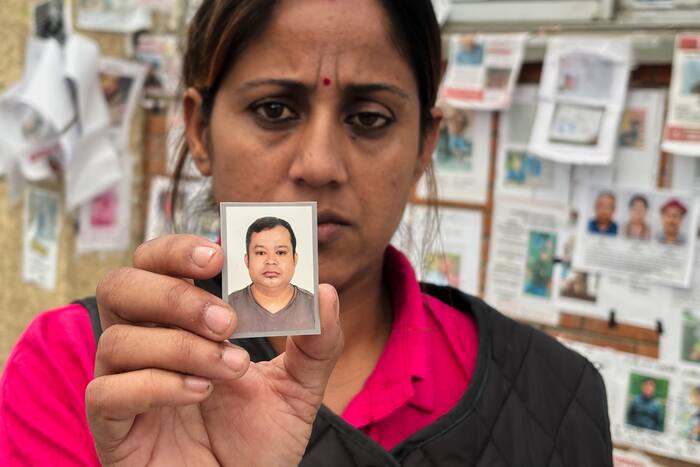
Governments call it search and rescue. Statisticians call it missing persons data. But on the ground, in the villages where corrugated iron roofs now poke out of gravel banks like jagged teeth, it is simply an open wound. For months, families walked the banks of swollen rivers with long sticks, turning over logs, staring into eddies where debris accumulated. Every muddy sweater could belong to a brother. Every shoe half-buried in sand could belong to a child.
Then, an official announcement came down from Kathmandu. The state was calling off the active search.
Silence.
How do you tell a mother that the river has finished digesting her son? How do you measure the exact Tuesday when hope officially becomes a bureaucratic inconvenience?
To understand what happens when a government stops looking, you have to understand the strange geography of grief in rural South Asia. A grave is an anchor. Even if a loved one dies far away, a mound of earth gives the living something to tend. You plant marigolds there. You light a small oil lamp on the anniversary. But when a body is swept away by a flash flood, swallowed by the churning grey torrents of the Melamchi or the Indrawati, there is no grave. There is only an absence that refuses to heal.
When the announcement was made that rescue operations were winding down, the reaction was not uniform. It split communities down the middle, tearing open old scars.
Some felt a cold, bitter anger. They saw the decision as abandonment. To them, stopping the search meant the state had simply grown tired of their tragedy. It meant the cameras had packed up, the emergency helicopters had flown back to the capital, and the people left shivering in temporary tarps were suddenly invisible again. They argued that as long as a single scarf remained snagged on a river boulder, the search wasn't over. They wanted dredgers. They wanted volunteers combing the deep gorges downstream. They wanted someone to care as much about the missing farmer or the lost schoolgirl as they did.
Others, strangely enough, felt a flicker of relief.
This is the part that outsiders struggle to comprehend. How can you be relieved when the search for your missing family member ends?
Because hope, when it is stretched too thin, becomes a form of torture. Every time a dog barked in the night, someone sat up. Every time a body was pulled from a downstream reservoir hours away, hearts stopped across three districts, waiting for the name. The limbo was destroying them. The daily ritual of walking out into the cold morning mist to scan the grey water was eating away at what little strength they had left to rebuild their shattered homes.
Relief, in this context, is not happiness. It is the grim permission to finally grieve. It is the terrible, exhausted realization that you can stop looking at the river now. You can stop waiting for a miracle that the monsoon swallowed forever.
The economic reality behind these disasters compounds the tragedy. Nepal loses millions of dollars in infrastructure every monsoon season, but the human ledger cannot be balanced with a spreadsheet. Entire farming communities saw their livelihood—the fertile topsoil they had farmed for generations—washed down into India, replaced by barren rocks and sand. When you have no home, no crops, and no savings, the luxury of an endless search is one you simply cannot afford. You have to patch the roof of whatever shed is still standing. You have to boil water before someone gets sick. Survival is a jealous master; it demands every ounce of your attention, leaving very little room for mourning.
Yet, the emotional aftermath lingers long after the police tape is taken down.
In these mountain communities, life has resumed an outward semblance of normalcy. Children walk to school along newly cut dirt tracks. Women wash clothes in the remaining streams. But the social fabric has been permanently altered. Entire households vanished in minutes, leaving empty spaces at wedding feasts and religious festivals.
The state has moved on to rebuilding bridges and shoring up vulnerable highways, eager to restore tourist routes and trade corridors. That is the nature of governance. Bridges are useful. Roads generate revenue. Missing people do not balance a national budget.
But down by the water’s edge, long after the officials have returned to their air-conditioned offices in Kathmandu, an old man still walks the grey gravel banks. He does not carry a shovel anymore. He does not look for signs of life. He simply walks, watching the brown current rush past, carrying the ghosts of an entire valley toward the distant sea.