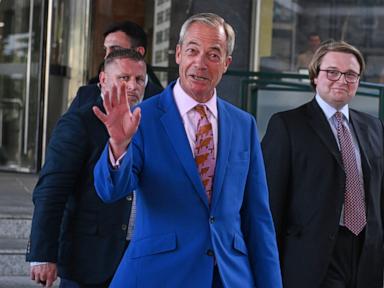
A 28-year-old man was arrested by police after making explicit threats to shoot Reform UK leader Nigel Farage during the heat of the UK general election campaign. The arrest, executed after intelligence-led policing tracked down online threats of lethal violence, highlights a terrifying shift in the security of British public figures.
This arrest was not an isolated incident of internet bluster. It represents the sharp end of an increasingly volatile environment where words translate into physical danger with frightening speed. For a country still reeling from the assassinations of Jo Cox and Sir David Amess, the threat of a political candidate being shot on the campaign trail is no longer a fringe paranoia. It is an operational reality that security forces and political parties must confront daily. Discover more on a connected subject: this related article.
The Anatomy of a Threat
When the call came in to investigate the threats against the Reform UK leader, police had to act with immediate, decisive force. In the modern security climate, law enforcement cannot afford the luxury of waiting to see if a threat is credible.
The suspect was detained under suspicion of sending communication threatening to kill. This offense, governed by the Malicious Communications Act and updated public order laws, has become one of the most frequent touchpoints between local police forces and political campaigns. But tracking down a suspect is only the first step in a much larger, more complicated security operation. Further reporting by Associated Press highlights related views on the subject.
For years, the UK prided itself on the accessibility of its politicians. Candidates stood on soapboxes, walked down high streets, and shook hands with voters without a barrier in sight. That era is dead.
The threat directed at Farage illustrates how quickly a campaign can transform from a democratic exercise into a high-risk security operation. Police forces across the country are now forced to allocate dwindling resources to protect candidates who are increasingly viewed as targets by radicalized individuals.
The Security Gap for Unaligned Politicians
The British state has a well-defined mechanism for protecting public figures. The Royal and VIP Executive Committee, known as RAVEC, determines who receives state-funded, round-the-clock armed protection. Typically, this privilege is reserved for the Prime Minister, the Home Secretary, the Leader of the Opposition, and select high-profile royals.
For leaders of insurgent or minor parties, the situation is far more precarious. They do not automatically qualify for the same level of taxpayer-funded protection.
This creates a dangerous security gap.
+------------------------------------------+------------------------------------------+
| State-Funded Protection (RAVEC)          | Private Security / Local Police Liaison  |
+------------------------------------------+------------------------------------------+
| - Prime Minister                         | - Minor Party Leaders (e.g., Reform UK)  |
| - Cabinet Ministers                      | - Backbench MPs                          |
| - Leader of the Opposition               | - Local Council Candidates               |
+------------------------------------------+------------------------------------------+
To bridge this gap, campaigns like Reform UK are forced to spend massive sums of money on private security firms. These private teams are often staffed by former military personnel and close-protection specialists. They scan crowds, plan escape routes, and form physical barriers around the candidate.
But private security guards do not have the same powers as police officers. They cannot make arrests, they do not carry firearms in the UK, and they do not have direct access to national counter-terrorism databases. They must rely on local police forces to act on intelligence, creating a fragmented defense system where a breakdown in communication can have fatal consequences.
The Normalization of Physical Contempt
Before the threat of gunfire emerged, the campaign trail had already become a hostile physical space. Farage was targeted with milkshakes and wet cement in separate public appearances.
Some commentators laughed these incidents off as harmless political theater. They were wrong.
These low-level assaults serve to test the perimeter of a politician’s security detail. They show potential attackers how close a person can get to a high-profile target without being intercepted. When a system fails to prevent a cup of liquid from hitting a candidate's face, it proves that a more dangerous object could just as easily find its mark.
The transition from throwing food to threatening to use a firearm is a logical progression in an environment where political opponents are routinely dehumanized. Social media platforms act as giant acceleration chambers for this hostility.
An individual sitting alone in a room can consume a steady diet of hyper-partisan content, becoming convinced that a political figure is not just someone with different economic views, but an existential threat to society who must be eliminated.
The Cyber Hunting Ground
The digital trail that led to the 28-year-old’s arrest is typical of modern counter-terror and public order policing. Threat intelligence units within police forces monitor public forums, social media channels, and encrypted messaging apps.
They use specialized software to flag keywords associated with violence, firearms, and specific public figures. Once a threat is flagged, investigators work backward to identify the user behind the screen.
[Social Media Post/Message] ---> [Keyword Flagged by Police Algorithm] ---> [IP Tracking & ISP Query] ---> [Physical Address Identified] ---> [Tactical Arrest Executed]
This process sounds efficient, but it is incredibly labor-intensive.
Police departments are flooded with thousands of hostile messages every day. Separating a genuine, operational threat from an angry teenager venting behind an anonymous account requires immense human intelligence and time.
If the police ignore a threat that turns out to be real, the consequences are catastrophic. If they investigate every single offensive comment, they exhaust their budget and personnel within weeks. It is an unsustainable numbers game that the police are currently losing.
The Threat to the Democratic Process
When politicians can no longer safely meet the public, democracy itself begins to erode. We are already seeing the early stages of this retreat.
Many Members of Parliament have stopped holding open surgeries in their constituencies, opting instead for pre-screened online meetings or security-vetted appointments. Campaign events are increasingly kept secret until the last possible moment to prevent hostile crowds or individuals from organizing.
This secrecy protects the candidate, but it isolates them from the very people they wish to represent.
The public square is being hollowed out. If only the most heavily guarded politicians can campaign, then the political arena becomes a playground exclusively for those backed by deep-pocketed organizations or the state apparatus.
The threat to shoot a political leader is not just an attack on an individual. It is a direct assault on the fundamental premise of a free society, designed to intimidate dissenters into silence and drive candidates off the streets.
The arrest of a single suspect in this case offers a temporary sigh of relief, but the underlying machinery that produced his anger remains entirely intact.
The state cannot guard everyone. The police cannot monitor every keyboard. The private security details can only do so much. We are rapidly approaching a point where the physical safety of our leaders will require them to exist behind a permanent wall of steel and glass, completely severed from the public they serve.