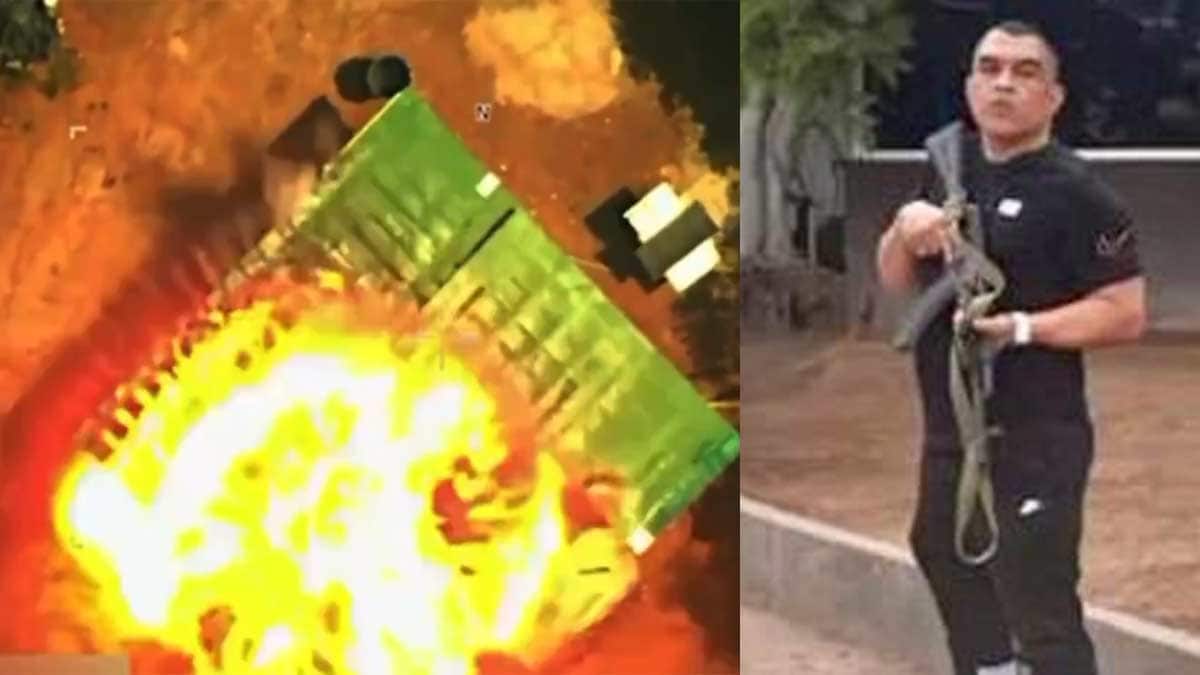
The rules of global organized crime just changed overnight. White House announcements confirmed a precision strike by the United States Southern Command wiped out Hector Rusthenford Guerrero Flores, the elusive kingpin known as Nino Guerrero. For years, Guerrero ran Tren de Aragua, a vicious transnational syndicate, transforming it from a local prison gang into a global security threat.
The strike targeted a fortified compound in Venezuela. Declassified footage shared online showed a green-roofed building instantly vaporized by U.S. munitions. This operation marks an aggressive escalation in international counter-cartel operations, signaling that sovereignty lines won't block high-value targeting anymore.
Inside the Tocorón Prison Empire
You can't understand the sudden downfall of Nino Guerrero without looking at where his power base grew. Most crime bosses hide in mountain jungles or luxury safehouses. Guerrero built his multi-million-dollar empire inside Tocorón prison in north-central Venezuela.
After his conviction for murder and drug trafficking, Guerrero realized the state had essentially abandoned the prison system due to the country's economic collapse. He moved into the vacuum. He established total control over the facility, converting a overcrowded penitentiary into a heavily armed fortress and a bizarre playground.
Under his rule, Tocorón didn't look like a prison. It featured a fully stocked zoo, a professional baseball field, a gambling casino, nightclubs, and a pool. Guerrero lived in a luxury suite complete with high-speed internet, premium alcohol, and personal security details drawn from the inmate population.
- Taxation: Every inmate paid a weekly fee called a prana just to stay alive.
- Logistics: He ran international extortion rings directly from his prison cell.
- Military Gear: Raids later uncovered anti-tank grenades, machine guns, and thousands of rounds of ammunition stored inside the cellblocks.
Guerrero used this bizarre haven to launch Tren de Aragua across Latin America. When Venezuelan migrants fled economic ruin, the gang followed them, exploiting vulnerable populations in Peru, Chile, Colombia, and eventually the United States. They didn't just deal drugs; they specialized in human trafficking, contract killings, and hyper-violent local extortion.
The Secret Escape and the Global Hunt
The turning point came when the Venezuelan military attempted to retake Tocorón prison. Warned by corrupt insiders, Guerrero and his top lieutenants didn't wait around for the raid. They used a sophisticated, five-kilometer tunnel network dug beneath the prison. The tunnels featured concrete reinforcement, electrical wiring, and ventilation, leading straight to Lake Valencia where speedboats waited.
Guerrero vanished. The U.S. State Department put a $5 million bounty on his head while federal prosecutors in New York filed sweeping racketeering and terrorism charges against him.
The gang's expansion into U.S. cities quickly turned them into a top political target. High-profile crimes linked to undocumented gang members intensified the pressure on Washington to act. The administration responded by officially designating Tren de Aragua as a Foreign Terrorist Organization, placing them in the same legal category as global jihadist networks. This shift allowed the military, rather than just international law enforcement, to take the lead in tracking Guerrero down.
A Highly Unusual Alliance
The details of the strike reveal a massive shift in regional geopolitics. Washington confirmed the operation was executed in close coordination with security forces inside Venezuela.
This level of cooperation is stunning given recent history. For years, intelligence reports suggested deep complicity between elements of the Venezuelan state and Tren de Aragua. The gang acted as a useful tool to control local populations and generate illicit revenue. However, after major political shakeups in Caracas earlier this year, the landscape changed completely.
The joint operation proves that the new reality in Caracas leaves no room for independent warlords. By greenlighting a U.S. military strike inside its borders, the current leadership signaled that regional stability and normalization outweigh any lingering ties to criminal syndicates. For Guerrero, his political capital simply ran out. He went from a protected asset to an easy bargaining chip.
What Happens to the Crime Network Now
If you think killing Nino Guerrero instantly solves the Tren de Aragua problem, you don't understand how modern cartels work. Guerrero was a brilliant coordinator, but Tren de Aragua operates as a decentralized franchise model.
Local cells in cities like Lima, Bogotá, Chicago, and New York run their own operations. They pay a percentage up the chain, but they don't need daily orders from a central command post to function.
[Central Leadership: Nino Guerrero (Eliminated)]
                 │
        ┌────────┴────────┐
        ▼                 ▼
[Regional Leaders]  [Local Franchises]
(Disrupted)        (Sells Drugs/Extortion Independently)
We should expect an immediate power struggle. Mid-level commanders will try to seize control of lucrative human smuggling routes and retail drug markets. This often leads to short-term spikes in street-level violence as factions fight over territory.
Furthermore, the intelligence gathered from the raid on Guerrero's final compound will likely trigger a wave of arrests. U.S. and Latin American agencies now have a golden opportunity to exploit the chaos, trace the group's financial assets, and disrupt their money laundering networks before a new leader consolidates power.
The era of the untouchable prison kingpin is over. The strike proves that hiding behind borders or corrupt local officials no longer guarantees safety when a criminal network escalates into a primary national security threat. Securing long-term safety now requires local law enforcement to dismantle the street-level franchises currently operating in neighborhoods across the hemisphere.


