The International Court of Justice finally said what Rohingya survivors have been screaming into a void for nearly a decade. Myanmar committed genocide.
That single legal determination changes everything, yet by itself, it changes nothing on the ground. A court in The Hague doesn't have an army, a police force, or a bank account freezing mechanism. Without immediate, coordinated economic pressure from global powers, a landmark ruling is just expensive paper sitting in an archive.
Human rights organizations know this better than anyone. That's why advocacy coalitions—including Human Rights Watch, Fortify Rights, and Amnesty International—immediately shifted their focus from the courtroom to the ministries of finance in Washington, London, and Brussels. They aren't asking for more strongly worded statements from diplomats. They're demanding targeted sanctions that choke off the cash flow keeping Myanmar's military junta alive.
What the International Court of Justice Actually Decided
When The Gambia first filed its case against Myanmar back in November 2019, plenty of legal scholars doubted it would ever reach a final judgment on the merits. They were wrong.
Under the 1948 Genocide Convention, any state party can bring a dispute to the International Court of Justice (ICJ) to hold another state accountable for failing to prevent or punish genocide. The Gambia took up that mantle on behalf of the Organisation of Islamic Cooperation, accusing Myanmar of state-sponsored mass atrocities against the Rohingya Muslim minority in Rakhine State.
The court's final ruling confirms that the 2017 "clearance operations" carried out by the Tatmadaw—Myanmar's armed forces—weren't merely counter-insurgency missions gone wrong. The judges found specific genocidal intent.
Let's be clear about what that means in international law. War crimes and crimes against humanity are horrific, but genocide carries a unique legal threshold. Prosecutors and applicant states have to prove an intent to destroy, in whole or in part, a national, ethnical, racial, or religious group. Killing thousands of civilians, burning hundreds of villages to the ground, and forcing over 700,000 people across the border into Bangladesh satisfied that grim standard.
You might wonder why this took so many years. International justice moves at a glacial pace by design, bogged down by preliminary objections, jurisdictional challenges, and mountains of evidentiary filings. Meanwhile, the junta seized total power in the February 2021 coup, plunging the entire country into a brutal civil war while the Rohingya remained trapped in sprawling refugee camps in Cox's Bazar.
Why a Court Ruling Alone Won't Stop the Junta
Here's the frustrating reality of international law. The ICJ settles disputes between states, not individuals. Unlike the International Criminal Court, which issues arrest warrants for specific generals, the ICJ orders a country to comply with treaty obligations and pay reparations.
Myanmar's military rulers don't care about treaty obligations. They barely care about basic diplomatic legitimacy.
If the generals in Naypyidaw ignore the court's orders, enforcement falls to the United Nations Security Council under Article 94 of the UN Charter. Anyone who has followed global politics for five minutes knows what happens next. China and Russia hold veto power on the Security Council, and both have historically shielded Myanmar's military from binding UN resolutions.
That diplomatic dead end is precisely why rights groups are hammering on unilateral and regional sanctions. If the Security Council won't act, individual nations and economic blocs have to step into the breach.
The Specific Sanctions Rights Groups Are Pushing For
Advocates aren't calling for broad, indiscriminate embargoes that starve ordinary Burmese citizens who are already suffering under junta rule. They want surgical strikes aimed directly at the military's wallet.
Cutting Off Aviation Fuel
You can't bomb villages without jet fuel. Over the past few years, the Myanmar military has increasingly relied on airstrikes to compensate for heavy ground losses against ethnic armed organizations and resistance forces.
Human rights investigators have repeatedly traced the supply chains bringing aviation fuel into Myanmar's ports. Rights groups are demanding comprehensive bans on the sale, transfer, and insurance of aviation fuel destined for the country. Sanctioning the shipping companies, insurers, and brokers involved in this trade hits the junta's operational capacity almost overnight.
Targeting State-Owned Enterprises and Foreign Currency
The military doesn't rely on tax revenue to buy weapons. It relies on state-owned enterprises that extract natural resources and funnel hard currency straight into offshore accounts.
The Myanma Oil and Gas Enterprise (MOGE) has been the crown jewel of this system for decades. While the United States and the European Union have imposed various restrictions on MOGE and military-controlled conglomerates like Myanma Economic Holdings Limited (MEHL), loopholes remain wide enough to drive a tanker through.
Advocacy groups want full blocking sanctions on MOGE and every remaining state-owned bank, specifically Myanma Foreign Trade Bank and Myanma Investment and Commercial Bank. Without access to US dollars and euros, the junta struggles to pay foreign arms dealers.
Secondary Sanctions on Enablers
Primary sanctions only go so far when regional neighbors look the other way. Military-linked entities routinely set up shell companies in Singapore, Thailand, and Hong Kong to procure dual-use technology and weapons components.
Rights organizations are pressing Western governments to deploy secondary sanctions against foreign financial institutions and intermediaries that continue processing transactions for the junta. When banks realize that helping a Burmese general could cost them access to the New York or London financial markets, they close those accounts fast.
The Geopolitical Catch Nobody Likes Talking About
If the moral and legal case for crushing sanctions is airtight, why haven't governments done everything on the list already? Because geopolitics is messy, and Washington, Brussels, and regional powers are juggling competing priorities.
First, there's the China factor. Western policymakers constantly worry that pushing Myanmar's junta too hard into a corner will drive Naypyidaw completely into Beijing's orbit. China already enjoys massive infrastructure investments in Myanmar, including oil and gas pipelines running from the Bay of Bengal straight into Yunnan province. Some diplomats privately argue that total financial isolation leaves the West with zero leverage.
Second, neighboring countries like Thailand and India have their own security and economic interests. Thailand depends heavily on natural gas imported from Myanmar to keep its power grid running. Expecting Bangkok to abruptly cut off its own energy supply without viable alternatives isn't realistic, which complicates regional enforcement.
Honestly, this hesitation is exactly what has allowed the junta to survive for so long. Every time Western capitals calibrate their sanctions to avoid upsetting regional allies, the military pockets millions more dollars and buys more artillery shells. Rights groups argue that waiting for a perfect geopolitical alignment just subsidizes ongoing atrocities.
What Most People Get Wrong About Accountability for the Rohingya
There's a common misconception that the ICJ genocide ruling means the Rohingya refugees in Bangladesh can safely go home next month. Nothing could be further from the truth.
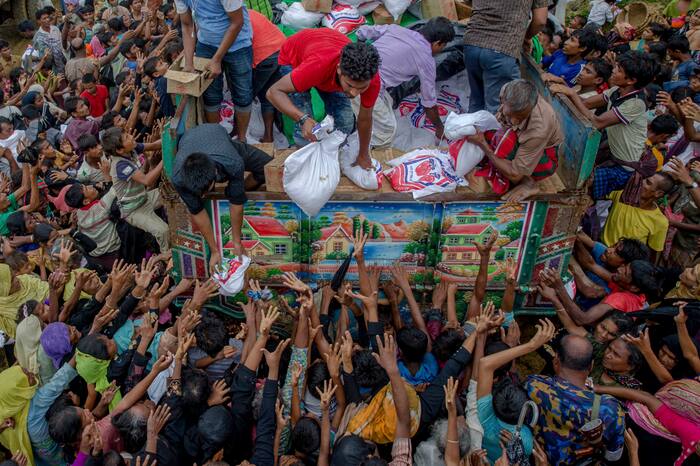
Right now, over a million Rohingya live in overcrowded bamboo-and-tarpaulin shelters in Cox's Bazar, completely dependent on shrinking international food aid. Even worse, Rakhine State is currently an active warzone, with fierce fighting between the junta and the Arakan Army trapping the remaining Rohingya population in the crossfire.
Repatriation without citizenship rights, freedom of movement, and genuine security guarantees would simply deliver survivors back into the hands of their abusers. The ICJ ruling gives Rohingya leaders massive legal leverage to demand full citizenship and restitution as non-negotiable conditions for any future return, rather than accepting rushed bilateral deals between Dhaka and Naypyidaw.
People also confuse the ICJ case with two other major legal tracks happening simultaneously:
- The International Criminal Court (ICC): Unlike the ICJ, the ICC prosecutes individuals. Its prosecutor has been investigating the forced deportation of the Rohingya into Bangladesh, which falls under ICC jurisdiction because Bangladesh is a member state even though Myanmar isn't.
- Universal Jurisdiction Cases: Courts in countries like Argentina have opened criminal investigations under the principle of universal jurisdiction, allowing national judges to prosecute grave international crimes regardless of where they occurred.
These three legal tracks reinforce each other. Evidence authenticated by the ICJ can be used by prosecutors in criminal trials against senior generals, making it nearly impossible for those commanders to ever travel abroad without risking arrest.
How Governments and Citizens Can Actually Push for Enforcement
A court verdict is only the starting gun for political accountability. If you're watching this unfold and wondering what real enforcement looks like over the coming months, keep your eyes on three concrete benchmarks.
First, watch the US Treasury Department's Office of Foreign Assets Control (OFAC) and the European Council. Real commitment means seeing new designations targeting aviation fuel suppliers and state-owned banks within weeks, not years. If officials only issue congratulatory press releases praising the ICJ without updating their sanctions lists, they're stalling.
Second, look at how donor nations respond to the humanitarian funding crisis in Bangladesh. The UN's Joint Response Plan for the Rohingya humanitarian crisis has been chronically underfunded, forcing the World Food Programme to slash monthly food rations for refugees to pennies a day. Governments that celebrate a genocide verdict while letting genocide survivors go hungry face a glaring credibility gap.
Third, track whether democratic nations formally intervene or support ongoing criminal proceedings at the ICC and in universal jurisdiction courts. Legal accountability requires funding for investigative mechanisms like the UN's Independent Investigative Mechanism for Myanmar (IIMM), which collects and preserves digital and forensic evidence before witnesses disappear.
If you want to support these efforts directly, look past generic charity drives and focus on organizations doing targeted legal and policy work. Groups like Fortify Rights, the Burmese Rohingya Organisation UK (BROUK), and Legal Action Worldwide work directly with Rohingya survivors to document war crimes, lobby parliamentarians for specific sanctions packages, and sustain legal challenges in international courts. Contacting elected representatives to demand full blocking sanctions on Myanmar's aviation fuel supply chains and state-owned enterprises puts direct constituent pressure on the exact officials who sign off on enforcement orders.
The ICJ gave the world an unambiguous legal truth. Now the burden sits squarely on political leaders to prove that the word "genocide" still triggers real consequences.