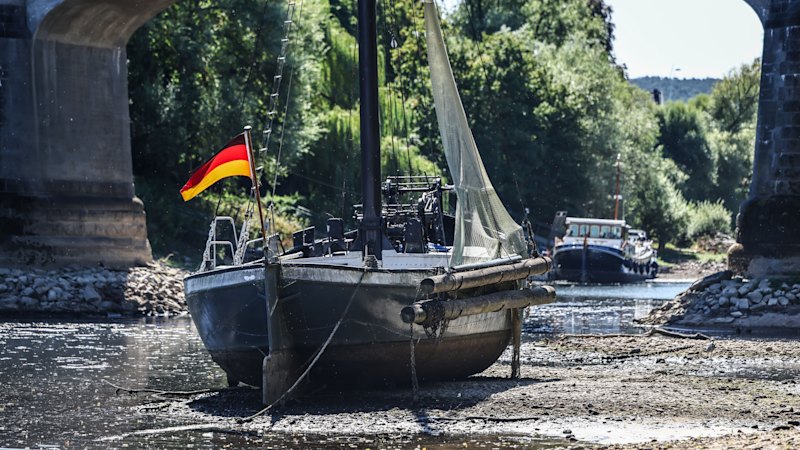
When a multi-billion-dollar trade artery drops to single-digit centimeter readings at its most critical chokepoint, people stop ignoring the weather. Germany’s vital Rhine River is currently facing an existential crisis as unrelenting heatwaves bake Europe, pushing water levels down toward historic lows and threatening to effectively fracture the continent's most crucial commercial waterway in two.
If you think this is just an environmental footnote for geography nerds, you're missing the big picture. Around 285 million tonnes of freight move along this river every single year. It handles roughly 80% of all goods transported on Germany’s inland waterways, linking massive industrial hubs like the Rhine-Ruhr steel region and the Ludwigshafen chemical complex straight to the North Sea ports of Rotterdam and Antwerp. When the Rhine stops functioning smoothly, the whole European economy catches a cold.
The Reality of a Fractured Waterway
Water levels at Kaub, a shallow bottleneck near Koblenz that dictates whether ships can pass safely toward southern Germany and Switzerland, have plunged to historic lows. Industry associations have warned that single-digit centimeter depths mean the river is no longer reliably navigable along its entire length, effectively dividing shipping logistics into disconnected zones.
Cargo vessels cannot just power through mud and exposed sandbars. To avoid running aground, commercial ships have been forced to shed up to 80% of their normal cargo loads. Chemistry tankers, oil product carriers, and heavy dry bulk vessels suffer the most because they naturally sit deeper in the water than standard container barges.
Replacing a single stranded barge doesn't happen with the snap of a finger. Moving that same volume of cargo requires dozens of heavy trucks or an entire freight train. Given the existing bottlenecks in European rail and road infrastructure, those alternative transport options simply cannot absorb the sudden overflow.
Why the Logistics Backup Hits Consumers Hard
Supply chain strain translates directly into higher operational costs for major manufacturers, chemical producers, and energy companies. During past severe droughts like the one in 2018, low water conditions shaved roughly 0.3 percentage points off Germany’s total GDP. Major corporations were forced to throttle back production at riverside plants because raw materials simply stopped arriving on schedule.
Power generation also takes a direct hit. Industrial facilities and power plants rely heavily on river water for cooling and operational processes. When water temperatures rise and volume drops, plants have to scale back output to comply with environmental regulations or face mechanical overheating.
History is quite literally surfacing alongside these dry conditions. Receding waters across Europe have once again exposed centuries-old "hunger stones"—etched boulders bearing past drought years like 1857 and 1947 that served as grim historical warnings of failed crops and economic hardship. Seeing those stones reappear reminds anyone paying attention that today's climate stress tests are pushing infrastructure past the limits it was originally engineered to handle.
Navigating the Supply Chain Crunch
Adapting to chronic low-water summers requires structural shifts that European industry has been slow to adopt. Shipping companies are investing heavily in specialized low-draft vessels designed to carry viable payloads in shallow water channels. At the same time, logistics planners are diversifying supply routes well in advance, setting up dual-sourcing strategies that do not rely exclusively on river barges during the peak summer months.
If you manage logistics, procurement, or manufacturing supply chains tied to central Europe, waiting out the heatwave is a losing strategy. Audit your inventory buffers now, secure alternative overland contracts before regional truck shortages peak, and assume that low-water disruptions on major trade corridors are becoming a recurring baseline rather than a rare anomaly.