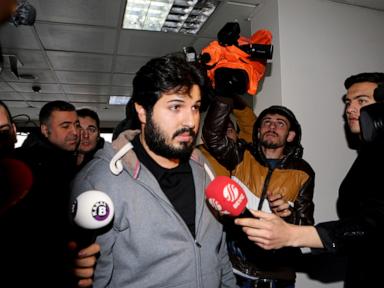
Geopolitics isn't written in textbooks. It's written in backroom deals, courtroom sketches, and sudden favors between global superpowers. If you want proof, look no further than Manhattan federal court, where U.S. District Judge Richard M. Berman just closed the book on a saga that nearly tore the relationship between Washington and Ankara to shreds.
Reza Zarrab, the flashy Turkish-Iranian gold trader once dubbed the "Turkish Gatsby," walked away with a sentence of time served.
For years, this man was at the center of a massive, multi-billion-dollar scheme to bust U.S. sanctions against Iran. He faced decades behind bars. Instead, thanks to a mix of explosive cooperation and a massive shift in global diplomacy, he's a free man. If you think this is just a standard white-collar crime story, you're missing the bigger picture. This case shows exactly how international justice takes a backseat when the White House needs a favor on the world stage.
The Sanctions Machine Built on Fake Food and Real Gold
To understand why this verdict is a massive deal, you have to look at what Zarrab actually did. This wasn't a small-scale smuggling operation. It was a prolific money-laundering machine that funneled roughly $20 billion of restricted Iranian oil revenue through the financial system.
Iran wanted its cash. The U.S. had locked it down through strict banking sanctions. Enter Zarrab, who figured out that if you convert oil money into physical gold, ship it to Dubai, and sell it for cash, you can bypass the western banking infrastructure entirely. When the gold route got too much heat, the operation switched to documenting fake shipments of food and humanitarian aid to justify shifting billions of dollars through Turkish state-run lender Halkbank.
The scheme worked beautifully until Zarrab made the fateful decision to fly to Miami for a family trip to Disney World with his then-wife, Turkish pop star Ebru Gundes. U.S. authorities arrested him the moment he landed.
Flipping the Script in New York
Once in custody, Zarrab realized he was looking at a lifetime in a federal penitentiary. So, he did what any self-preserving billionaire would do. He flipped.
In 2017, he secretly pleaded guilty and became the star witness for the U.S. government. His testimony was nuclear. He didn't just point fingers at low-level compliance officers; he implicated the highest levels of the Turkish government. Zarrab testified under oath that he paid tens of millions of dollars in bribes to Turkish ministers and banking executives to keep the wheels greased. He even testified that Recep Tayyip Erdogan, who was Turkey's prime minister at the time, personally approved the involvement of Turkish banks in the scheme.
Erdogan was furious. He publicly labeled the entire U.S. prosecution an "ugly," scandalous plot to blackmail Turkey. The Turkish government aggressively lobbied successive U.S. administrations to kill the case. They even hired high-profile figures like Rudy Giuliani to try and broker a prisoner swap to get Zarrab back to Turkey.
But the American prosecutors wouldn't budge—until geopolitical realities forced their hand.
How Global Diplomacy Killed the Case
The timing of Zarrab's final sentencing isn't a coincidence. It is the direct result of a broader diplomatic realignment between the U.S. and Turkey.
Federal prosecutors dropped their long-running criminal probe into Halkbank. Why would the Department of Justice walk away from a $20 billion sanctions-evasion case? Because Turkey made itself useful. U.S. officials openly admitted that the dismissal of the charges tied directly to Turkey's diplomatic help in brokering the Israel-Hamas ceasefire agreement and assisting with high-stakes regional negotiations.
With Donald Trump back in the White House, ties between Washington and Ankara hit their best stride in decades. The Halkbank case was a massive splinter in that relationship. By letting the bank off with a compliance monitor and giving Zarrab time served, the U.S. wiped the slate clean.
The High Cost of Cooperation
Don't assume Zarrab got away completely clean. While he avoids a long prison sentence, his life as a high-rolling international billionaire is over.
According to court filings from his defense team, Zarrab is essentially destitute and roughly $50 million in debt. After he turned on the Turkish establishment, Ankara froze and seized his assets, wiping out his family businesses and tens of millions in real estate income. He had to forfeit hundreds of thousands of dollars in cash and luxury items to the U.S. government.
More than the money, his safety is permanently compromised. During his time in custody, Zarrab was reportedly attacked by a knife-wielding inmate who threatened to kill him for cooperating. In Turkey, he is widely viewed as a traitor. His lawyers noted that he can barely step into public in the U.S. without being recognized, outed on social media, and forced to abandon his business ventures, including a planned horse farm.
What This Means for Future Sanctions
If you are a compliance officer, corporate attorney, or anyone dealing with international trade, this case offers a sobering lesson.
First, it proves that the U.S. financial system has a long memory and an incredibly long reach. Zarrab thought he was safe because he operated with the blessing of a NATO ally's leadership. He was wrong. The moment he stepped onto American soil, those political protections vanished.
Second, it shows that the Justice Department rewards cooperation heavily. If a principal architect of a $20 billion illicit machine can walk away without extra jail time, the incentive for individual actors to turn over evidence on state actors is massive.
Pay close attention to how your organization audits cross-border transactions, especially involving third-party clearing houses or complex trade structures in the Middle East. The tools Zarrab used—sham gold transactions and falsified humanitarian invoices—are exactly what global regulators are looking for today. Keep your compliance frameworks tight, verify the end-users of your transactions, and remember that when global tensions shift, legal cases can disappear overnight. Keep your documentation pristine because, in the world of international sanctions, political winds change quickly, but the paper trail remains.