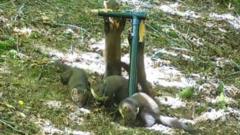
The confirmation of pine marten kits arriving in new territories represents far more than a simple feel-good wildlife anecdote. For decades, the quiet disappearance of Martes martes from large swathes of the British countryside stood as a quiet indictment of intensive land management and unchecked predator control. Now, the birth of these small, elusive carnivores signals a structural shift in upland and woodland ecology. Conservationists have spent years moving populations from robust strongholds in the Scottish Highlands to strategic southern and central English forests. Every documented birth confirms that reintroduction biology is moving past the experimental phase and biting into hard reality.
Understanding why these kits matter requires looking past their undeniable charm. These mustelids are apex medium-sized predators that reshape local ecosystems simply by existing. Where pine martens establish stable territories, invasive grey squirrel populations face immediate pressure. Native red squirrels, which evolved alongside martens, possess the spatial awareness to evade them. Grey squirrels, introduced from North America, freeze or panic. This behavioral mismatch gives red squirrels a fighting chance in forests where they were previously driven to local extinction.
The Mechanics of Reintroduction
Moving wild animals across international or regional boundaries is a logistical nightmare wrapped in bureaucratic red tape. Critics often point out that throwing animals into a new woodland and hoping for the best is a recipe for failure. They are correct. Modern carnivore restoration relies on meticulous tracking, genetic profiling, and soft-release enclosures.
Animals are not merely dumped into the wild. They spend weeks in pre-release pens, acclimatizing to local scents, prey densities, and human proximity. Telemetry collars track their movements for months after release. When a female establishes a den and successfully rears kits, it proves that the habitat meets three non-negotiable criteria:
- Adequate structural complexity in the canopy and understory
- Sufficient prey biomass, primarily small rodents and amphibians
- Low density of illegal persecution
Yet, friction remains. Gamekeepers and shoot managers eye the return of any predator with deep suspicion. The historic grievances run deep. Victorian-era gamekeeping wiped out Britain's native predators with ruthless efficiency, and the cultural memory of those practices lingers in rural communities.
Confronting the Rural Divide
Conservation in Britain is deeply polarized. Urban supporters cheer headlines about returning species from the comfort of city apartments, while rural workers bear the immediate economic and management consequences. Pine martens can occasionally target poultry or pre-roosting game birds. While their diet consists overwhelmingly of field voles, wood mice, and rabbits, an opportunistic marten will exploit an insecure chicken coop.
Pretending this conflict does not exist helps nobody. Effective conservation requires financial support for farmers and smallholders to upgrade predator-proofing. Ignoring local opposition breeds resentment, leading to illegal snaring or poisoning. The recovery of the pine marten will only succeed if rural communities see the animal as a manageable neighbor rather than an imposed nuisance from distant urban planners.
Furthermore, habitat fragmentation remains a silent killer. British woodlands are often isolated islands surrounded by an ocean of intensive agriculture and concrete infrastructure. A young marten dispersing from its birth site faces roads, domestic dogs, and lack of cover. Without wildlife corridors—hedgerows, shelterbelts, and restored riparian zones—these isolated populations risk inbreeding depression over generations.
The Broader Ecological Cascade
When a missing predator returns, the whole machine starts to fix itself. The presence of pine martens alters rodent behavior, reducing bark-stripping damage on young trees. This subtle behavioral shift aids natural woodland regeneration far more effectively than human tree-planting campaigns.
We are watching a slow-motion rewiring of the British landscape. The birth of pine marten kits is not an endpoint. It is a fragile beginning. The true test of our environmental maturity will not be whether we can capture a cute photo for a seasonal press release, but whether we can tolerate the messy reality of living alongside wild animals that refuse to stay neatly inside our designated boundaries.


