You've probably heard that nature always bounces back if you just leave it alone. That is a comforting lie. Sometimes, ecosystems break so badly they need human hands to fix the damage. Take the Kissimmee River in Florida. Back in the sixties, the Army Corps of Engineers turned a winding, life-filled wetland into a straight, sterile drainage ditch known as Canal 38. They wanted flood control. They got ecological disaster.
Fish died. Birds vanished. Dissolved oxygen levels plummeted to near zero. It took decades of political bickering before anyone agreed to fix the mess. In nineteen ninety-two, the federal government and the state of Florida finally launched the Kissimmee River Restoration project.
People rolled their eyes. Skeptics said it was a waste of taxpayer money. They thought you could never put a broken river back together again. They were dead wrong. Twenty-eight years later, wildlife returned in numbers that shocked even the biologists monitoring the site.
The Cost of Straightening Nature
Engineers love straight lines. Water hates them. When Florida officials authorized the channelization of the Kissimmee, they basically signed a death warrant for the surrounding floodplain.
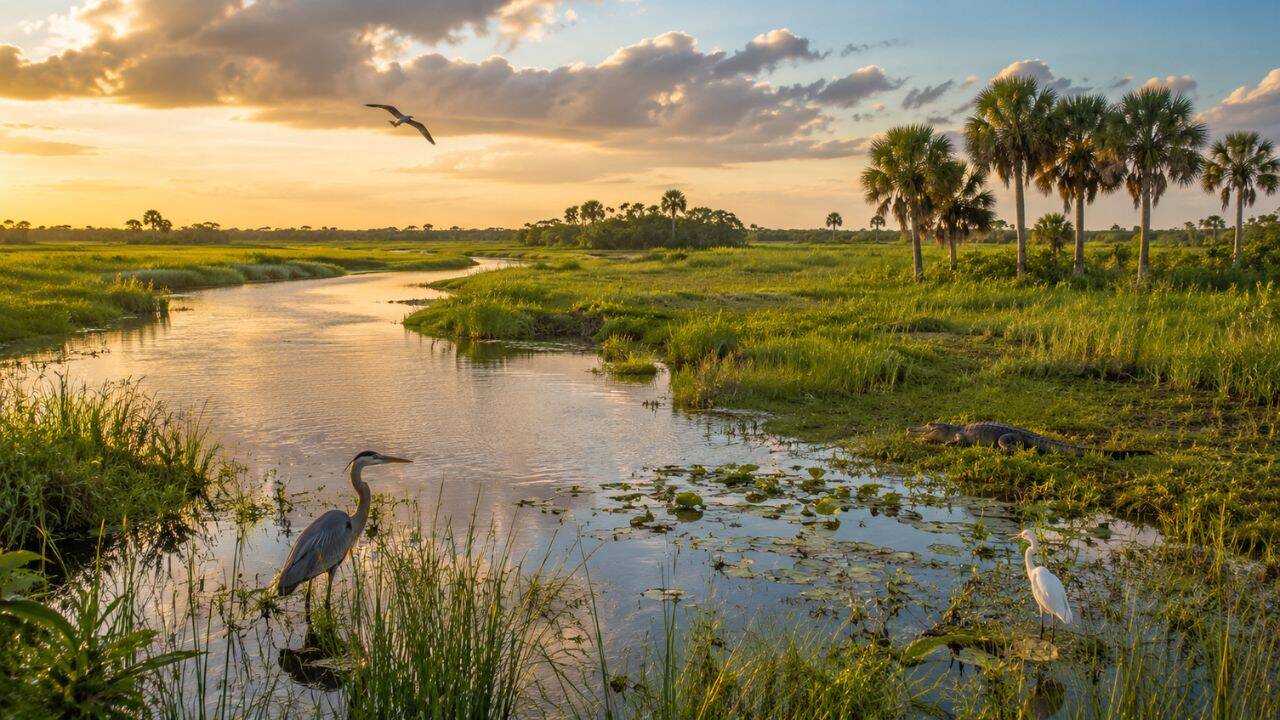
The original river meandered for over one hundred miles through central Florida. It was a slow, pulsing system that connected lakes down to Lake Okeechobee. Seasonal floods spilled out over thirty square miles of broad wetlands. Those marshes acted like a giant sponge. They filtered pollutants, stored water, and provided a breeding ground for millions of wading birds, largemouth bass, and alligators.
Then came the ditch.
Workers dug a trench thirty feet deep and three hundred feet wide straight through the heart of the ecosystem. They drained the floodplain completely. Cattle ranchers moved in. Real estate developers cheered. But the local ecology cratered. Without the meandering curves to slow the current down, water rushed straight through into Lake Okeechobee, carrying a massive load of agricultural runoff and nutrients.
You cannot treat a river like a plumbing pipe and expect it to stay healthy. The ecosystem starved. The wading bird population dropped by over ninety percent in the impacted zones. Native fish species lost their spawning grounds. It was an environmental catastrophe engineered by people who thought they could outsmart geography.
How to Un-Break a River
Fixing Canal 38 wasn't just a matter of planting a few trees and hoping for the best. It required a massive, multi-decade civil engineering campaign in reverse.
The strategy focused on backfilling. Crews poured millions of cubic yards of earth back into the straight-line canal. By plugging the ditch, project managers forced water out of the man-made trench and back into the original, dormant river channels that had been dry for decades.
Restoring the flow took time. Phase one started small, but by the time major backfilling wrapped up across a massive swath of the upper basin, over forty miles of continuous river channel were reconnected.
You have to understand the scale here. This wasn't a local volunteer cleanup. It cost over a billion dollars. It involved buying back thousands of acres of private ranchland. It required cutting through bureaucratic red tape at both the state and federal levels.
Most river restoration projects fail because they tinker at the edges. They plant riparian buffers or build small retention ponds. Florida went nuclear. They un-dug the ditch. They recreated the natural slope and depth variations that allow water to oxygenate naturally.
What Happened When the Water Came Back
Nature didn't waste any time moving back in.
Within a few years of reconnecting the river to its historic floodplain, aquatic plants exploded. Submerged vegetation returned. That matters because plants provide the base of the food web. Insects eat the plants. Small fish eat the insects. Big fish and wading birds eat the small fish.
The numbers tell the real story. Monitoring data collected by the South Florida Water Management District showed that populations of bald eagles, wood storks, white ibises, and great blue herons rebounded dramatically in the restored areas. Wading bird density in the Kissimmee floodplain matched or exceeded pre-channelization estimates.
Game fish love it too. Largemouth bass and black crappie found new spawning habitats in the re-established marshes. The oxygen levels in the water stabilized. The water stopped rushing violently south into Lake Okeechobee, reducing the frequency of toxic algae blooms downstream.
It turns out that if you give a river back its curves, it remembers how to live.
Lessons from the Kissimmee Restoration
If you look at environmental projects around the world, most of them are plagued by half-measures. Governments love announcing grand plans, underfunding them, and then walking away when results take too long.
The Kissimmee project stands out because it proves that long-term vision can actually win. It took nearly thirty years to see the full biological recovery. That requires political staying power that most modern leaders lack. Administrations change, budgets tighten, priorities shift. Yet, the work continued through multiple governors and presidential terms.
There is a practical takeaway here for anyone interested in conservation or land management. You cannot negotiate with physics or biology. If you destroy a natural buffer, you will pay for it later in flood damage, water treatment costs, and lost biodiversity. Fixing the damage costs vastly more than protecting the system in the first place.
Florida spent a billion dollars fixing a mistake made in the mid-twentieth century. Every state and country should look at that bill as a warning. Protect what works. Stop trying to engineer ecosystems into submission.
The Kissimmee River is flowing through its old bends again. The birds are back. The bass are biting. But it took a generation of hard work to undo a few years of bureaucratic arrogance. Next time someone tells you they can improve on natural geography with a shovel and some concrete, don't believe them.
Walk away. Save the river.