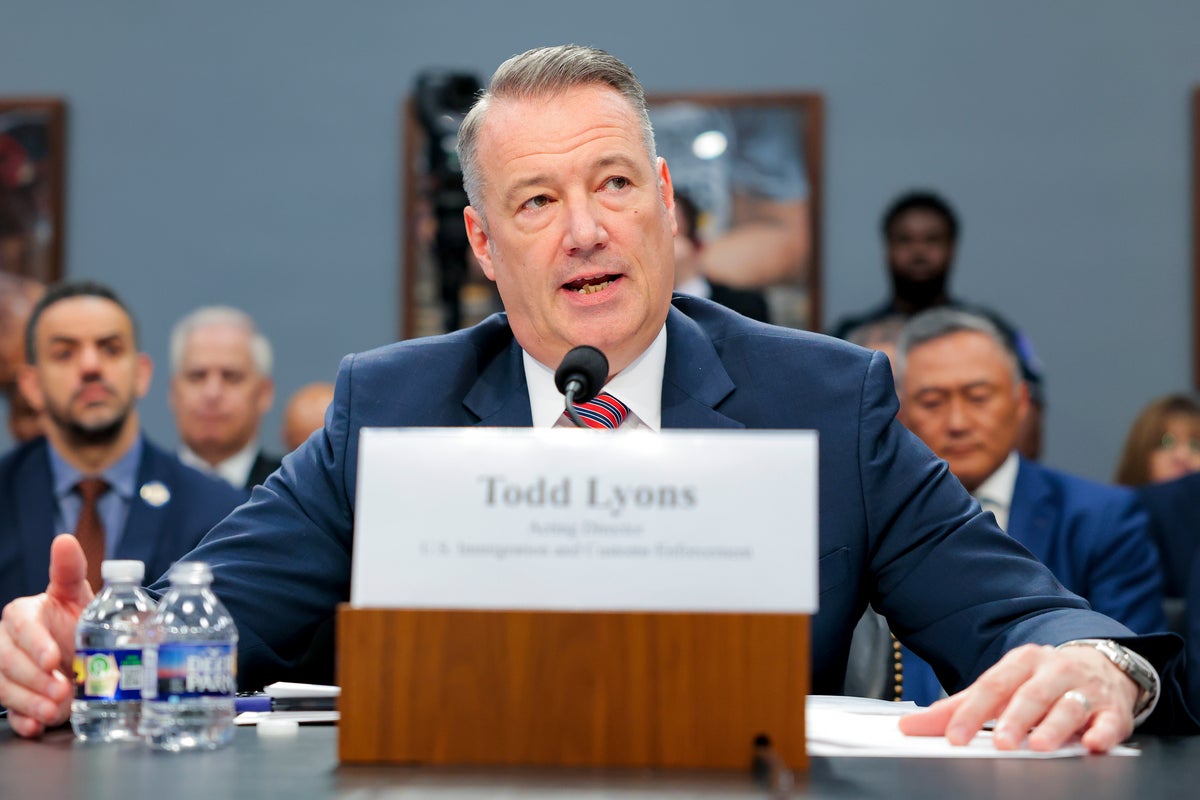
Todd Lyons, the acting director of Immigration and Customs Enforcement (ICE), has formally submitted his resignation to Department of Homeland Security Secretary Markwayne Mullin. This departure marks the end of a high-pressure tenure for a career law enforcement official who occupied one of the most scrutinized seats in the federal government. Lyons’ exit is not merely a personnel change. It represents a significant shift in the internal mechanics of DHS as the agency attempts to navigate a period of intense enforcement mandates and political friction.
The resignation, confirmed by senior department officials, comes at a time when the administration is doubling down on mass removal operations and increased workplace enforcement. Lyons had been a stabilizing force within the agency, often acting as the bridge between career civil servants and the more ideologically driven political appointees. His departure creates an immediate leadership vacuum at a time when operational continuity is vital.
A Career Officer Navigating a Political Minefield
Todd Lyons did not arrive at the top of ICE through political connections. He spent over two decades in the trenches, moving from the field into executive leadership. This background gave him a level of street credibility that political appointees often lack. He understood the logistical nightmares of detention bed space and the grueling reality of deportation flights.
However, that same expertise often put him at odds with the broader policy goals of the current leadership. In the halls of the Department of Homeland Security, the tension has been palpable for months. Secretary Markwayne Mullin has pushed for a more aggressive, accelerated timeline for removals that some career officials felt stretched the agency’s existing infrastructure to its breaking point. Lyons was frequently the person tasked with explaining why certain quotas were physically impossible to meet without massive infusions of new capital and personnel.
The friction became undeniable during recent budget negotiations. While the public sees the headlines about border numbers, the internal struggle was about the "how." Lyons was reportedly concerned about the long-term sustainability of using emergency funds to cover permanent operational gaps. When the Secretary’s office demanded a pivot toward more visible, large-scale enforcement actions, Lyons had to weigh those demands against the legal and safety protocols his agency is bound to uphold.
The Secretarial Clash and the Markwayne Mullin Doctrine
Markwayne Mullin did not enter the role of DHS Secretary to maintain the status quo. His approach has been characterized by a blunt, results-oriented style that prizes speed and optics over the slow, methodical processes of the previous decade. For a veteran like Lyons, this shift was jarring.
The internal doctrine at DHS has moved toward a "zero-refusal" policy regarding enforcement directives. In this environment, the nuanced warnings of a career professional can be interpreted as bureaucratic resistance. Sources within the department suggest that the relationship between Mullin and Lyons had cooled significantly following a series of closed-door meetings regarding the expansion of detention facilities.
Mullin wanted faster results. Lyons wanted a more sustainable framework. This is the classic struggle within any large government apparatus, but the stakes here involve national security and thousands of human lives. When a Secretary and an agency head stop speaking the same language, the agency head usually leaves.
The Mechanics of the Leadership Gap
The departure of an acting director is often more disruptive than the exit of a Senate-confirmed leader. Acting officials are the ones who keep the gears turning day-to-day. They manage the internal morale of a workforce that is often under fire from both sides of the political aisle.
With Lyons gone, ICE faces a period of uncertainty. The rank-and-file officers are losing a leader who "came from the floor." This matters for morale. It matters for recruitment. When the people in the field feel that the leadership doesn't understand their daily risks, productivity and retention begin to crater.
The administration now faces a choice. They can appoint another career official who might offer similar pushback on logistical grounds, or they can install a political loyalist who will execute orders without question. Each path carries immense risk. A loyalist might satisfy the Secretary’s immediate goals but could inadvertently trigger legal challenges or operational disasters by ignoring the advice of seasoned staff.
The Operational Reality of Mass Removals
The backdrop of this resignation is a massive ramp-up in enforcement activity. The government is currently attempting to scale up operations to a level not seen in a generation. This requires more than just a directive from the top; it requires a symphony of coordination between ICE, the Department of Justice, and international partners.
Logistics remain the primary hurdle. It is easy to order a deportation; it is incredibly difficult to secure the aircraft, the flight crews, and the landing rights in a foreign country that may be hostile to the process. Lyons was an expert in these logistics. Without his institutional knowledge, the agency risks hitting a wall of its own making.
Furthermore, the legal landscape is shifting. Every new enforcement push is met with a flurry of litigation. Lyons had spent much of his time ensuring that ICE operations were "bulletproof" in court. If the new leadership prioritizes speed over procedural correctness, the courts will likely step in, effectively halting the very operations the administration is trying to accelerate.
The Problem of Resource Mismanagement
One of the quieter reasons for the friction between Lyons and Mullin involved the allocation of funds for technology versus boots on the ground. The Secretary has been a vocal proponent of high-tech surveillance and automated processing. While these tools have their place, Lyons argued that they cannot replace the physical presence of enforcement officers and the physical infrastructure of detention.
The agency is currently facing a massive backlog in its non-detained docket. Millions of people are in the country with pending court dates, and ICE is responsible for tracking them. Lyons was an advocate for prioritizing the most high-risk individuals, whereas the current mandate from the Secretary’s office is a broader, "all-of-the-above" approach. This difference in philosophy is not just academic; it dictates where every dollar of the ICE budget goes.
The Impact on the Workforce
ICE has long struggled with a morale crisis. The agency is frequently the target of intense public criticism and political theater. Lyons was seen as a "cop's cop," someone who defended his officers in public while holding them accountable in private. His exit is being felt throughout the various field offices, from Boston to San Diego.
When a leader who understands the nuances of the job is replaced by someone seen as a political instrument, the impact is immediate. Discretionary effort drops. Experienced officers start looking for the exit, taking decades of experience with them. This "brain drain" is perhaps the most dangerous consequence of the current leadership churn at DHS.
The agency cannot afford a talent vacuum. The complexity of modern immigration law and the volatile nature of border security require a steady hand. If the next director is viewed as a mere extension of the Secretary’s political office, the divide between the field and headquarters will only widen.
Looking Toward the Replacement
The names currently circulating as potential successors to Lyons suggest a move toward a more "hardline" stance. These are individuals who have expressed support for the Secretary’s aggressive timelines and are less likely to voice concerns about logistical constraints.
This may achieve the short-term goal of increasing the number of removals, but it ignores the fundamental cracks in the system. You cannot run a massive enforcement agency through sheer willpower. You need a functioning infrastructure, a motivated workforce, and a legal framework that holds up under pressure. Lyons understood this. It remains to be seen if his successor will.
The resignation of Todd Lyons is a signal that the internal guardrails at ICE are being removed. The tension between the "how" of the career professional and the "what" of the political leader has been resolved in favor of the latter. For the men and women of ICE, and for the public they serve, the consequences of this shift will become clear in the coming months as the agency attempts to execute the most ambitious enforcement agenda in modern history.
The departure is effective at the end of the month. Until then, the agency sits in a state of suspended animation, waiting to see if the next leader will be a builder or a disruptor. The Secretary has his wish for a clean slate, but a clean slate does not necessarily mean a functional one.
The real test for the Mullin doctrine begins now. Without the tempering influence of a veteran like Lyons, the administration’s immigration policies will be tested in their rawest form. If the system buckles under the weight of these new mandates, there will be no one left to blame but the people at the very top who insisted on moving faster than the machinery of government allowed.
The focus must now turn to the logistics of the transition. ICE needs more than a figurehead; it needs an operator who can manage the unprecedented scale of the current mission without triggering a total systemic failure. The coming weeks will reveal if the Department of Homeland Security is prepared for the reality of the task they have set for themselves.