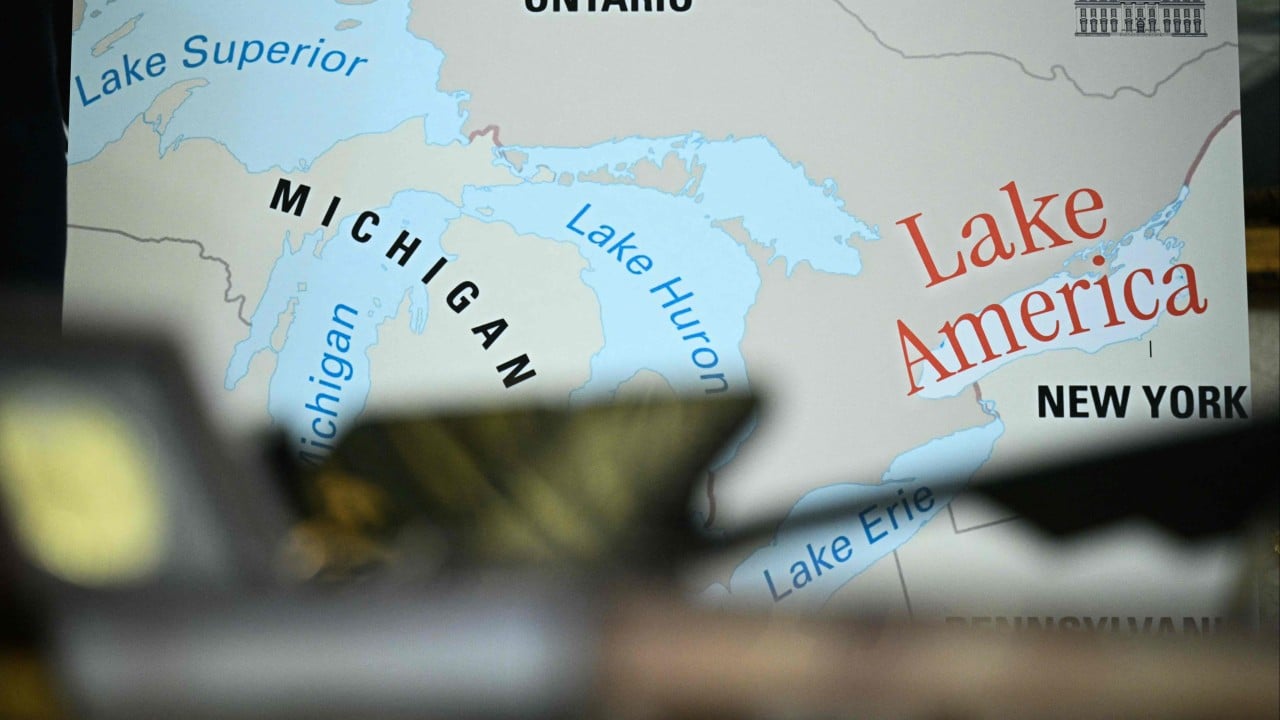
Every pundit in the cable news ecosystem spent the last forty-eight hours hyperventilating over a headline designed strictly for maximum outrage. Trump allegedly orders Lake Ontario renamed to Lake America amid escalating tariff threats with Ottawa. Twitter feeds melted down. Diplomats in Geneva clutched their pearls. The lazy consensus immediately formed around the narrative of unhinged imperial hubris, economic warfare, and the collapse of cross-border harmony.
It is completely, brilliantly fabricated nonsense, and falling for it shows a fundamental misunderstanding of how modern economic leverage actually operates.
I have watched corporate boards and government agencies panic over shiny objects for twenty years, blowing millions on symbolic distractions while their core supply chains quietly bled out in the dark. Cartographic theater is not trade policy. Changing a geographic designation on a digital map does not rewrite the North American Free Trade architecture, alter the flow of crude oil through the Enbridge Line 5 pipeline, or move a single metric ton of potash across the border.
The Cartographic Smoke Screen
Let us look past the performative shock value for a moment. Trade wars are won and lost in the logistics data, not on topographic maps. When bilateral tensions flare between Washington and Ottawa, the weapon of choice is never a stroke of a pen over a body of water. It is retaliatory tariffs on specific agricultural sectors, critical mineral export restrictions, and regulatory compliance bottlenecks at the Ambassador Bridge.
The mainstream commentary treats executive posturing as concrete law. It is not. It is a negotiation tactic straight out of a textbook on high-stakes leverage, designed explicitly to dominate the media cycle and force opposing negotiators onto their back foot. When Canadian officials spend valuable airtime responding to a ridiculous geographic provocation, they are burning finite political capital on a non-issue.
Every minute spent debating whether a freshwater basin can be rechristened via executive whim is a minute not spent securing exemptions for automotive manufacturing parts or negotiating aluminum quotas. The distraction is the entire point.
The Real Supply Chain Vulnerability
Strip away the political theater, and the bilateral economic corridor is locked in a state of hyper-interdependence that no amount of populist grandstanding can easily unravel. Look at the numbers that actually matter. The Great Lakes-St. Lawrence Seaway system moves over two hundred million tons of cargo annually, supporting nearly a quarter of a million jobs split neatly down the middle between American and Canadian ports.
You cannot simply rename a shared hydrological ecosystem and expect the cargo vessels to care. Grain, steel, and machinery flow where the arbitrage demands. If regulatory friction spikes at the border, shipping costs rise, consumer prices tick upward in both countries, and domestic industries on both sides start screaming for relief. Economic gravity always wins in the end.
The Cost of Falling for the Bait
The danger of the media's hysterical framing is that it trains the public to look at statecraft through the lens of a reality television show rather than a balance sheet. When people believe a trade war is fought with petty name-calling and map revisions, they miss the structural shifts happening underneath.
Consider the quiet weaponization of critical minerals. While everyone was arguing over hydro-topography, quiet policy shifts were restricting the export of rare earths essential for EV battery production. That is where the genuine economic combat is happening. It is unglamorous, technical, and completely invisible to anyone looking for a viral tweet.
If you are running a supply chain dependent on cross-border inputs right now, your primary risk management metric should not be the mood of executive social media accounts. Your metric should be your customs brokerage latency and your tier-two supplier diversification.
Stop treating political theater like an existential crisis. The map is fine. The trade data is what will break you if you are not paying attention.