The plastic zippers of a bio-secure isolation cube make a very specific sound. It is a sharp, metallic screech that tears through the heavy, humid air of an isolation ward in the Democratic Republic of Congo. For weeks, that sound usually meant one thing: another body was being moved out.
But on a Tuesday morning in Beni, the zipper pulled back to reveal something the doctors had stopped expecting. A sixteen-month-old boy named Sylvain sat on the edge of his cot. He was not bleeding. He was not burning with fever. He was chewing on a plastic toy, his eyes tracking the movement of the health workers who had spent more than a year watching children his age slip away within days.
Beside him stood his mother, Alphonsine. She was tired, her face etched with the kind of exhaustion that goes deeper than bone. But she was standing.
In the dry vocabulary of international public health epidemiology, this moment is recorded as a statistical anomaly. Two recoveries. One minor, one adult. Case closed.
To look at a spreadsheet of an Ebola outbreak is to look at a wall of absolute despair. The numbers are clean, but the reality is filthy, violent, and fast. The virus does not just attack the organs; it liquefies the very social fabric of a community. It turns a mother’s instinct to hold her feverish child into a lethal act. If you hug your dying son, you die too. That is the brutal calculus of the red zone.
For months, the outbreak in the eastern DRC had been a relentless march of bad news. The virus was moving through towns caught in the crossfire of active military conflict. Health workers were fighting two enemies at once: an invisible pathogen and a deeply entrenched, entirely understandable mistrust from a population that had seen decades of outside intervention bring nothing but empty promises and violence.
When Alphonsine first noticed the heat rising under her son’s skin, she knew what the neighbors would say. They would say the treatment centers were places where people went to die. They would say the white hazmat suits were the garments of ghosts.
She had to make a choice that no parent should ever have to face: keep her child at home and watch him bleed out in secret, or hand him over to strangers wrapped in layers of impermeable plastic, knowing she might never touch his bare skin again.
She chose the plastic. She chose the strangers.
The clinical reality of treating a toddler for Ebola is a nightmare of logistics. A sixteen-month-old child cannot tell you where it hurts. They cannot understand why the people sticking needles into their veins look like astronauts. They cannot comprehend why their mother is suddenly trapped behind a clear wall of vinyl, unable to wipe the sweat from their forehead with her bare hands.
Medical teams in Beni had to reinvent their approach on the fly. They realized that survival in the red zone is not just about experimental antivirals or aggressive intravenous hydration, though those are the tools that save the physical body. Survival is about the spirit. A child who is terrified, isolated, and surrounded by the sounds of agony will simply give up.
The doctors and nurses began to do something that wasn't in any tropical medicine textbook. They brought childhood into the isolation ward. They brought in bright plastic blocks that could be scrubbed down with chlorine solutions. They played music through the thick fabric of their hoods. They turned the high-tech, terrifying space of a mobile laboratory into a makeshift nursery.
It was an agonizingly slow process. For days, Sylvain’s condition seesawed between critical and catastrophic. Ebola destroys the lining of the blood vessels, causing internal leaking. In a body that small, the margin for error is nonexistent. A fraction of a milliliter too much fluid can overwhelm the lungs; too little, and the kidneys fail.
Alphonsine watched every drop of the IV line. She had tested positive shortly after her son, her own body fighting the same war. In a strange, terrible twist of fate, their shared diagnosis became their only advantage. Because she was already inside the isolation unit, she did not have to watch from behind the glass anymore. She could hold him.
Imagine the heat inside those units. It is a suffocating, wet heat that builds up under layers of protective equipment. The healthcare workers can only stay inside for a few hours at a time before their boots literally fill with sweat. But a mother does not have a shift change. Alphonsine stayed. She held Sylvain through the vomiting, through the terrifying spikes in temperature, through the moments when his heart rate fluttered so fast it felt like a trapped bird.
Then, the blood work changed.
The polymerase chain reaction tests—the machines that hunt for the genetic signature of the virus—started coming back with different results. The viral load wasn't growing. It was dropping.
The human body is an incredible machine when it is given a fighting chance. Sylvain’s immune system, aided by real-time supportive care and experimental therapies, began to manufacture the exact proteins needed to neutralize the invader. His liver stopped swelling. The rash began to fade.
When the final test came back negative for both mother and son, the atmosphere in the Beni center broke.
Public health reports don't describe the sound of a medical team cheering through respirator masks. They don't capture the smell of the chlorine spray used to wash down Sylvain’s clothes one last time before he was allowed to step across the threshold from the infected zone to the clean zone. They don't record the expression on the face of the local nurse who had spent three weeks straight without seeing a single patient walk out alive.
This survival is not a guarantee that the battle is won. The outbreak continues to simmer in the forests and crowded towns of the Congo. More cases will hit the clinics tomorrow. More families will face the choice that Alphonsine faced.
But what happened in that tent changes the narrative completely. It proves that the virus is not an absolute executioner. It shatters the myth that entering a treatment center is a one-way trip to a communal grave.
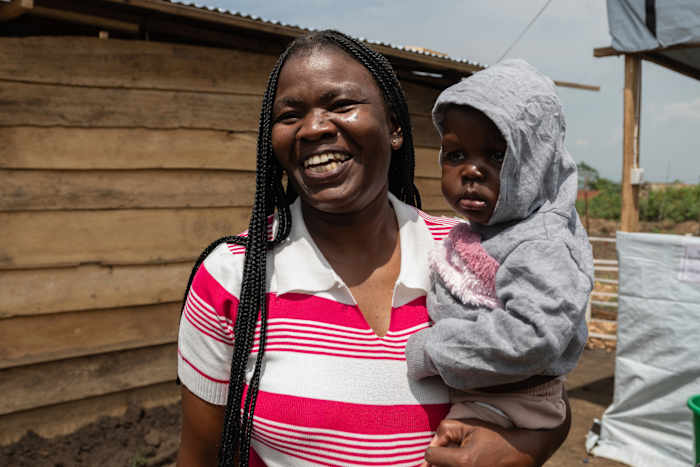
When Alphonsine walked out of the center into the bright sunlight of Beni, she held Sylvain high on her hip. He wasn't a case number anymore. He wasn't a tragedy to be analyzed at a summit in Geneva or New York. He was just a little boy with a clean bill of health, looking around at a world that had almost closed its doors on him, completely unaware that his survival had just rewritten the rules of what was possible in the dark.