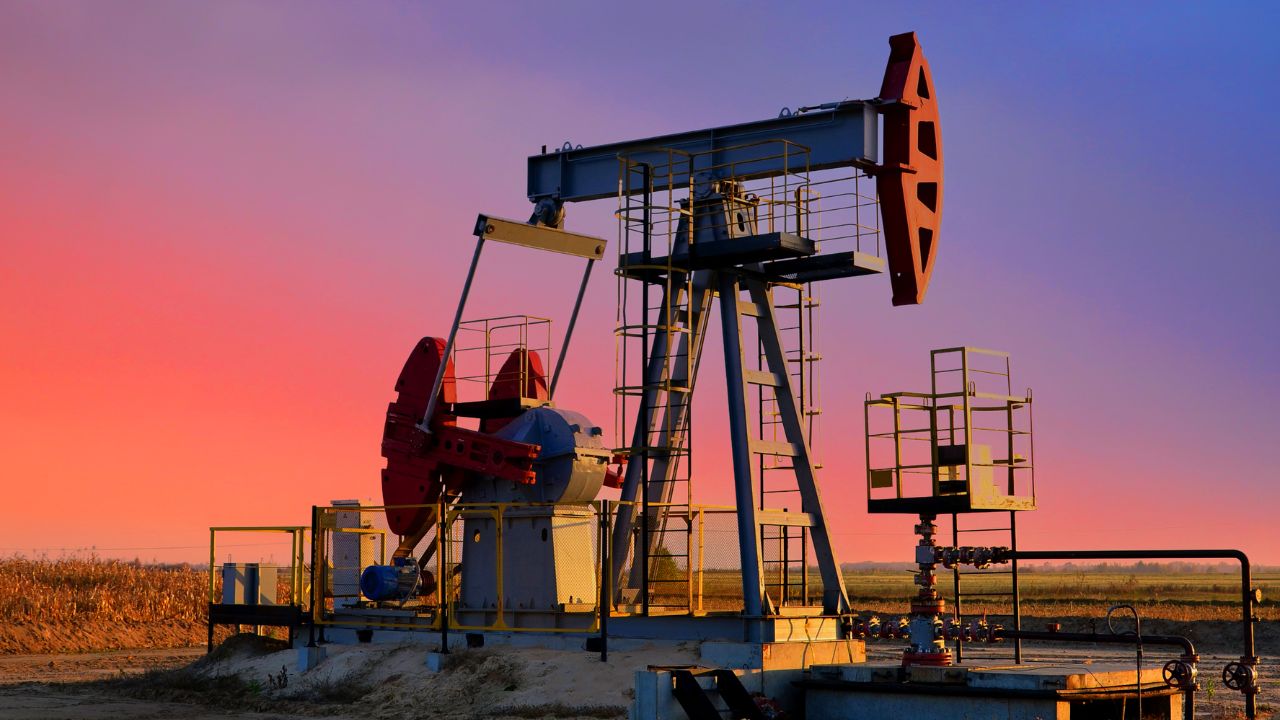
Brent crude hitting $111 per barrel isn't just a number on a ticker. It is a flashing red siren for the global economy. As the conflict between Iran and the US-Israel alliance shifts from a slow burn to an open flame, the energy markets are pricing in a nightmare scenario that many analysts spent years dismissing as impossible. The primary driver here is the credible threat to the Strait of Hormuz, a narrow chokepoint that handles roughly 20% of the world’s daily oil consumption. If that door slams shut, $111 will look like a bargain.
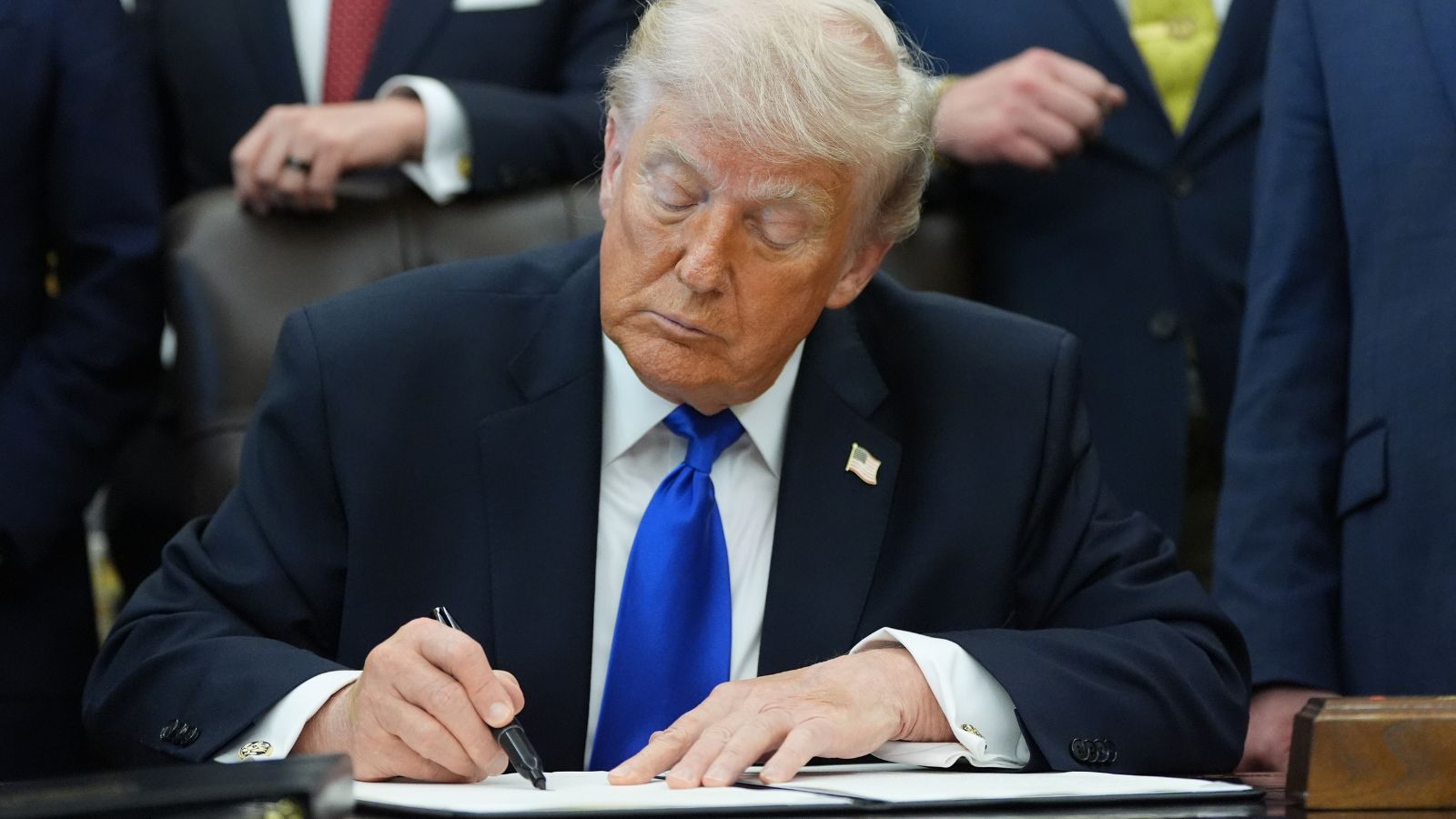
Donald Trump’s recent rhetoric regarding the "incredible" power of a Hormuz blockade has stripped away the diplomatic veneer usually found in these geopolitical standoffs. While the former president claims Iran’s economy is in a state of freefall, the reality on the ground is more nuanced and significantly more dangerous. Iran has spent decades perfecting the art of "resistance economics," building a shadowy network of tankers and front companies to bypass sanctions. However, even the most resilient black market cannot survive the total kinetic disruption of its primary export routes. We are no longer debating policy; we are watching a collision of raw physical constraints.
The Hormuz Trap
Geography is a cruel master. The Strait of Hormuz is only 21 miles wide at its narrowest point, with shipping lanes just two miles wide in either direction. It is the jugular vein of the global energy trade. When political leaders talk about a blockade, they aren't just talking about ships. They are talking about sea mines, shore-to-ship missiles, and the kind of insurance premium spikes that can paralyze a fleet overnight without a single shot being fired.
Wall Street traders are currently scrambling to calculate the "war premium." This is the extra cost added to a barrel of oil based on the risk of supply disruption. At $111, that premium is roughly $25. If the Strait is actually closed, even partially, models suggest prices could moonshot toward $150 or even $200. This isn't hyperbole; it is basic math. The world has very little spare production capacity outside of the Gulf, and what does exist cannot be brought online fast enough to replace 20 million barrels a day.
Economic Asymmetry and the Tehran Strain
The claim that Iran’s economy is crashing contains a grain of truth wrapped in a layer of political theater. Inflation in Tehran is rampant, and the rial has lost significant value against the dollar. For the average Iranian citizen, the "war" is already happening at the grocery store. But a wounded state is often more unpredictable than a stable one.
Iran’s leadership views its influence over the Strait of Hormuz as its ultimate insurance policy. If they cannot export their oil, they have historically signaled that no one else in the region will be allowed to either. This "all or nothing" strategy is the foundation of their regional deterrence. While the US and Israel focus on neutralizing drone factories and enrichment facilities, the Iranian Revolutionary Guard Corps (IRGC) focuses on the maritime chokepoints.
The Myth of Sanction Totality
We often hear that sanctions have "crippled" the Iranian regime. This is a misunderstanding of how autocratic petrostates function. Sanctions have certainly hurt the Iranian middle class and limited the government's ability to modernize its infrastructure. Yet, the IRGC and the elite structures of the state have stayed well-funded through "ghost armadas"—tankers that turn off their transponders and transfer oil at sea.
China remains the primary customer for this off-the-books crude. As long as Beijing is willing to provide a financial vent for Tehran, the regime can survive a level of economic pressure that would topple a democratic government in weeks. This creates a dangerous disconnect: the West thinks it is winning a war of attrition, while the East is busy subsidizing the stalemate.
The US Israel Alliance and the Shift to Kinetic Action
The nature of the US-Israel partnership has changed. In previous decades, the focus was on containment and "mowing the grass"—periodic strikes to degrade capability. Today, the strategy has shifted toward decisive disruption. Israel’s intelligence apparatus has proven it can strike deep within Iranian territory with surgical precision, targeting not just nuclear sites but the very leadership of the IRGC.
This puts the United States in a precarious position. While Washington wants to support its closest ally in the Middle East, it is also terrified of a sustained spike in energy prices. An oil price of $111 is already a political liability for any sitting administration. If it hits $130, it becomes an electoral death sentence. The friction between Jerusalem’s security needs and Washington’s economic stability is the most significant fracture in the current alliance.
The Role of Domestic Production
There is a common refrain that US energy independence protects the American consumer from Middle Eastern volatility. This is a fallacy. Oil is a fungible global commodity. Even if every drop of oil consumed in the US was produced in Texas or North Dakota, the price would still be dictated by the global market. If the global supply drops because of a conflict in the Gulf, the price at a gas station in Ohio will rise just as fast as one in Berlin.
US producers are also not in a position to "drill, baby, drill" their way out of a Hormuz crisis. Capital discipline among public energy companies means they are more focused on returning dividends to shareholders than on massive capital expenditure for new exploration. The rigs aren't coming back fast enough to save the day.
The Logistics of a Blockade
What does a blockade actually look like in 2026? It’s not a line of battleships like something out of a Napoleonic war. It’s digital and asymmetrical. It’s a swarm of low-cost suicide drones targeting the engine rooms of ultra-large crude carriers. It’s cyberattacks on the port management systems in Ras Tanura and Jebel Ali.
Insurance Markets as a Weapon
The most effective blockade might not involve a single explosion. The maritime insurance market, centered in London, is extremely sensitive to risk. If Lloyd’s of London declares the Persian Gulf a "war zone" and refuses to underwrite tankers, the flow of oil stops. No captain will sail a billion-dollar cargo into a zone where they aren't covered. By simply increasing the perceived risk, Iran can achieve the functional equivalent of a physical blockade.
Tactical Escalation and the Miscalculation Risk
Every player in this theater believes they are acting rationally. Israel believes it must stop a nuclear-armed Iran to ensure its survival. Iran believes it must project power to prevent a regime-change invasion. The US believes it must maintain the "rules-based order" while keeping gas prices low.
The problem is the margin for error. A stray missile hitting a civilian tanker, or a misinterpreted naval maneuver, can trigger a ladder of escalation that no one knows how to climb down from. We saw this during the "Tanker War" of the 1980s, but the weaponry today is infinitely more lethal and the global economy is far more interconnected.
The China Factor
China is the silent partner in this chaos. As the world’s largest oil importer, they have the most to lose from a price spike. Yet, they also benefit from seeing the US bogged down in another Middle Eastern quagmire. Beijing’s role as a mediator—seen in the Saudi-Iran rapprochement—is an attempt to secure its energy needs without having to commit military force. However, if the Strait closes, China’s "neutrality" will be tested. They may be forced to choose between supporting their Iranian energy source and pressuring Tehran to reopen the lanes to protect the global trade they rely on.
The Fragility of the Global Recovery
Post-pandemic inflation has already thinned the buffers of most Western economies. Central banks have been struggling to bring inflation back to target levels without triggering a recession. A sustained oil price of $111 acts as a massive tax on every sector of the economy, from agriculture to aviation. It pushes the "soft landing" scenario off a cliff.
If the conflict moves to a stage where infrastructure in the Gulf—refineries, desalination plants, and loading terminals—is targeted, we are looking at a multi-year supply shock. It takes years to rebuild a refinery. It takes days to destroy one.
The markets are currently hoping for a "limited" engagement. They are betting that both sides are too afraid of total war to actually pull the trigger on a Hormuz shutdown. But hope is not a strategy. The rhetoric coming out of both Washington and Tehran suggests that the era of strategic patience has ended. We are moving into an era of strategic consequence.
A blockade of the Strait of Hormuz wouldn't just be an "incredible" show of power; it would be a fundamental reordering of the modern world. The transition to green energy is nowhere near complete enough to provide a safety net. For now, the world remains tethered to a 21-mile wide strip of water, and that water is getting very choppy.
Prepare for the volatility to become the baseline. The $111 mark is the floor, not the ceiling, of this new reality. When the cost of energy is used as a kinetic weapon, the traditional rules of supply and demand are discarded in favor of survival. The next few weeks will determine if the global economy enters a period of managed decline or an unmanaged collapse.