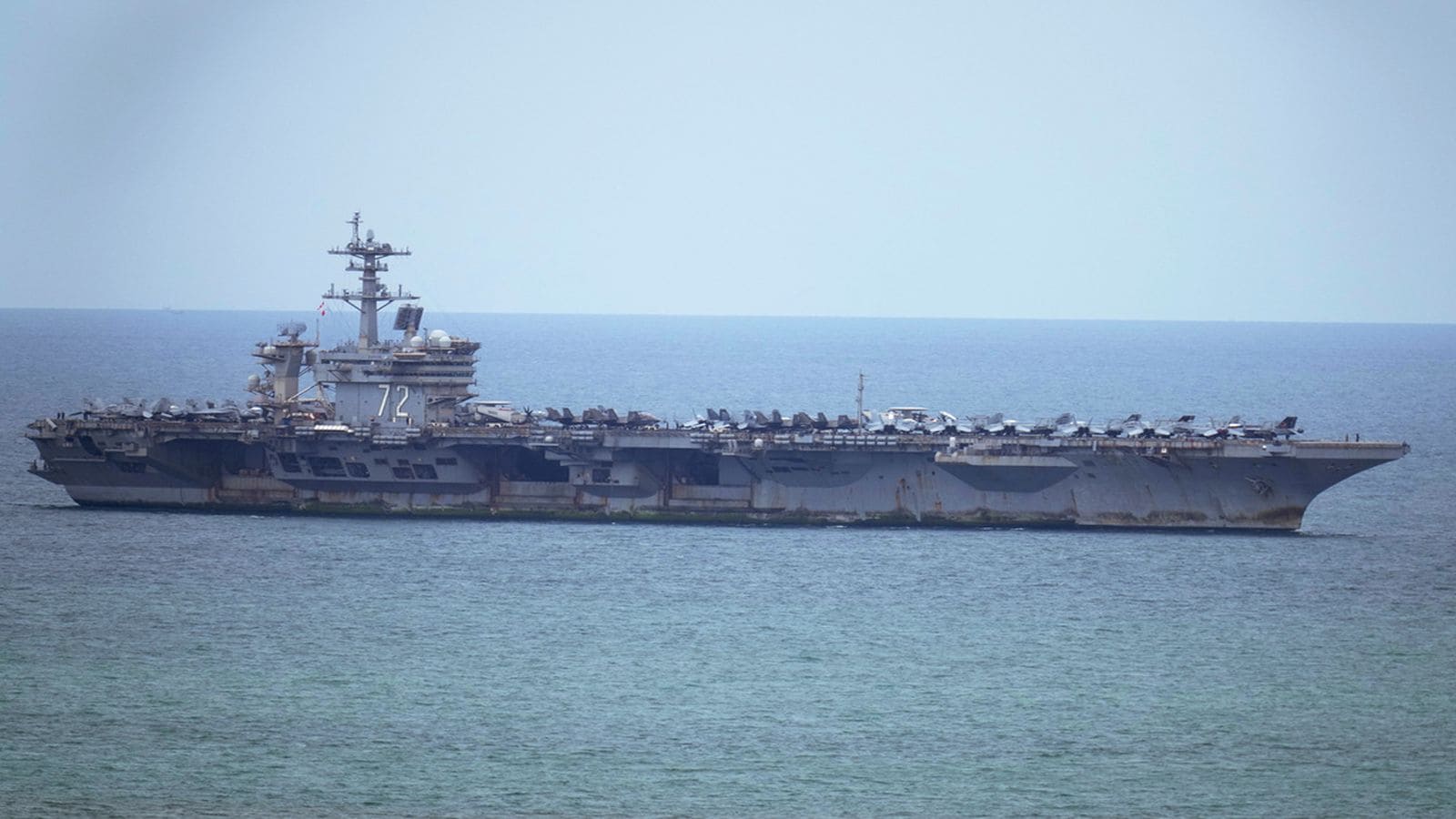
Every major defense outlet is currently celebrating the USS Abraham Lincoln carrier strike group pulling into port in Thailand after an eye-watering 286-day deployment. They are writing breathless paragraphs about endurance, ironclad resolve, and the heroic crew weathering a nearly continuous operational tempo driven by tensions with Iran.
They are entirely missing the point.
A nearly ten-month deployment is not a badge of honor. It is a blinking red warning light that American naval logistics, maintenance pipelines, and rotation schedules are completely broken. When a billion-dollar nuclear-powered warship has to stay at sea for over nine months straight because the shipyard infrastructure back home cannot keep pace, that is not strength. That is structural exhaustion disguised as a milestone.
I have spent decades watching defense bureaucracy turn operational failures into public relations wins. We clap for the sailors who bear the brunt of this mismanagement, pretending that sheer human grit can substitute for a sane force structure. It cannot.
The Myth of the Infinite Hull
The lazy consensus in modern defense commentary treats aircraft carriers like magical, self-sustaining islands that can absorb infinite extensions. The standard rotation model is supposed to be six to seven months. Pushing that past nine months strains every single mechanical and psychological threshold on that ship.
Let us look at the mechanics of what a 286-day deployment actually means for hardware and personnel.
- Reactor and Engineering Plant Wear: Nuclear reactors are engineering marvels, but the secondary propulsion systems, piping, and electrical grids are subjected to relentless corrosion and thermal stress in high-humidity environments without standard depot-level maintenance cycles.
- Air Wing Degradation: F-35C and F/A-18E/F Super Hornet airframes require rigorous, scheduled maintenance down to the microsecond. Extended deployments mean cannibalizing parts from other jets or flying aircraft past their safety margins until depot overhauls happen.
- Crew Burnout: Retention metrics do not improve because a crew spent an extra three months circling a hostile body of water. They crater. Experienced petty officers and technicians look at these extended tours and quietly draft their separation paperwork the moment they hit dry land.
The conventional narrative asks: How tough is the US Navy to pull off a 286-day deployment?
The correct question is: Why did the Pentagon fail to rotate the force, and what does this say about the total lack of depth in our carrier fleet?
The Maintenance Trap Nobody Wants to Talk About
The dirty secret behind these marathon deployments is the shipyard bottleneck. Naval Sea Systems Command cannot push surface combatants and carriers through maintenance availabilities on time. Delays at public and private shipyards run into years, not weeks.
When a carrier comes home, it is supposed to enter a structured phase of maintenance, training, and workups. But if the shipyard is backed up with three other hulls sitting in dry dock waiting for dry dock space, the Navy has a stark choice: keep the current strike group deployed, or leave a geographic theater completely uncovered.
They chose to push the Lincoln. They always choose to push the ship because politicians refuse to accept a temporary gap in naval presence.
This creates a vicious feedback loop. By extending deployments, ships arrive at their eventual maintenance phase in far worse condition than anticipated. That turns a scheduled twelve-month overhaul into an eighteen-month nightmare. The yard time balloons, the next deployment gets pushed back, and the subsequent strike group has to stay out even longer to fill the void.
Imagine a scenario where a commercial airline decided to skip mandatory safety overhauls on its fleet because the ticketing department booked too many flights. Passengers would riot, the FAA would ground the airline, and executives would be marched into congressional hearings. Yet when the United States Navy does essentially the same thing with a floating city packed with nuclear material and strike aircraft, the media calls it a masterclass in global power projection.
The Cost of Strategic Fatigue
We need to address the human factor with brutal honesty. The Department of Defense loves to publish glossy photos of flight deck operations at sunset, highlighting the precision and morale of the crew.
Ask any surface warfare officer or aviation ordnanceman what day two hundred feels like. It feels like mechanical fatigue, sleep deprivation, and a relentless grind where simple preventive maintenance gets skipped because everyone is too tired to care about anything other than immediate operational tasking.
When equipment is stressed beyond its design parameters, accidents happen. Fatigue leads to procedural drift. Procedural drift leads to mishaps. The Navy has paid for these operational extensions in blood and readiness before, and pretending that a 286-day stint is sustainable invites a repeat of history.
If our deterrence strategy relies on keeping individual hulls at sea for nearly a year straight, we do not have a global deterrent force. We have a hollowed-out force running on borrowed time and institutional inertia.
Stop praising the endurance of the sailors. Fix the shipyards, build more redundancy, and admit that stretching a deployment to nearly three hundred days is an admission of logistical defeat.