Airlines love to blame the weather when your flight gets canceled, yet the most terrifying disruptions happen under completely clear skies. If you've been watching the news lately, you know airports and passengers are still picking up the pieces from the latest FAA meltdown just as the holiday travel rush kicks into high gear.
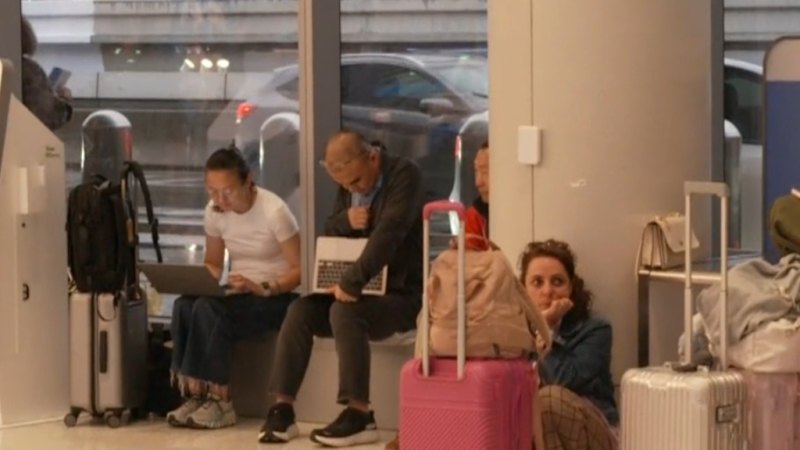
It's a familiar nightmare. Thousands of flights grounded. Crews timed out and stranded in the wrong cities. Terminal floors turning into makeshift campgrounds while departure boards bleed red. Recently making news in related news: Why the FAA's Promise of a Sunday Travel Recovery Is a Dangerous Lie.
You might think a system reboot fixes everything overnight. It doesn't. Aviation logistics work like a massive, interconnected row of dominoes, and when the Federal Aviation Administration's infrastructure stumbles, the ripple effects take days—sometimes weeks—to smooth out. With millions of travelers preparing to pack into hubs from Atlanta to Chicago for the holidays, understanding why the system breaks and how to protect your itinerary isn't optional anymore. It's basic survival.
Why Air Travel Takes So Long to Bounce Back
When a critical FAA system fails—whether it's a database outage like the infamous NOTAM (Notice to Air Missions) crash or severe air traffic control staffing bottlenecks—the immediate ground stop is just the beginning of the mess. Further details on this are explored by Lonely Planet.
Think about how an airline actually operates. A single commercial aircraft doesn't just fly back and forth between two cities all day. It might start in Boston, fly to Charlotte, jump to Dallas, and finish the night in Seattle. That plane is carrying crews who have strict, federally mandated rest requirements.
When the FAA halts departures for even three hours, that carefully choreographed ballet falls apart instantly.
Planes get stuck on tarmacs in the wrong hubs. Pilots and flight attendants hit their maximum legal working hours while sitting at the gate, meaning they have to deplane and go to a hotel before the flight can even take off. Even after the FAA gives the green light to resume normal operations, airlines have to spend days repositioning empty aircraft and deadheading crews across the country just to get back to square one.
Honestly, the public rarely sees the real bottleneck. It isn't always the software itself. It's the chronic shortage of certified air traffic controllers at major facilities like the New York Terminal Radar Approach Control (TRACON) and Jacksonville Center. According to multiple reports from the Department of Transportation's Office of Inspector General, several critical air traffic facilities are operating well below target staffing levels. When a technical glitch hits an already understaffed control room, controllers have to manually space aircraft further apart to keep the skies safe. That immediately slashes the number of planes an airport can handle per hour.
The Myth of the Seamless Holiday Rush
Every November and December, Transportation Security Administration (TSA) checkpoints break passenger volume records. Airlines respond by packing their schedules to the absolute limit. They run at nearly 90 percent load factors, leaving almost zero spare aircraft sitting in hangars as backups.
Here's the problem with running a system at max capacity. There is no margin for error.
During a normal Tuesday in October, a two-hour FAA ground delay program might annoy a few hundred business travelers, who quickly get rebooked onto later flights with empty seats. During the holiday rush, those empty seats don't exist. If your flight gets scrubbed because of an air traffic control outage on a Friday afternoon before a holiday, the next available seat on that same carrier might not be until Tuesday.
Most travelers assume airlines have secret reserves of planes and pilots waiting in the wings for big travel weekends. They don't. Every single usable jet is already scheduled to fly from dawn until midnight. When the FAA sneezes during peak season, the entire aviation network catches pneumonia.
What Actually Happens Behind the Scenes During an FAA Outage
If you've ever sat at a gate wondering why the gate agent looks exhausted and refuses to give you a straight answer, cut them some slack. During an FAA meltdown, frontline airline employees are often finding out about airspace closures at the exact same time you are.
Air traffic management specialists at the FAA's Command Center in Warrenton, Virginia, constantly monitor airspace flow. When a system degrades—like radar feeds dropping out, telecommunications lines failing, or flight plan processing servers crashing—they issue Ground Stops or Ground Delay Programs (GDPs).
A Ground Stop is exactly what it sounds like. Nobody takes off for the affected destination. Period.
A Ground Delay Program is trickier. The FAA assigns every flight a specific "wheels-up" time, known as an Expect Departure Clearance Time (EDCT), to meter the flow of traffic into congested airspace. If your flight is given an EDCT three hours in the future, you aren't going anywhere until that exact minute, regardless of whether your plane is fueled, boarded, and ready to push back.
Worse yet, airlines have to make brutal triage decisions during these events. They will almost always prioritize long-haul international flights and hub-to-hub routes carrying hundreds of connecting passengers. Regional flights on smaller jets—the ones connecting smaller cities to major hubs—are always the first on the chopping block. If you're flying into or out of a regional airport, you're the first to get canceled and the last to get recovered.
Stop Making These Rookie Holiday Booking Mistakes
You can't fix the FAA's aging infrastructure, and you definitely can't force airlines to hire more pilots overnight. What you can do is stop booking flights like it's 2015. The old rules of cheap holiday travel will get you stranded in a terminal eating $18 airport salads.
Booking the Last Flight of the Night
This is the single biggest mistake I see travelers make. People grab the 8:30 PM departure because it's $60 cheaper than the morning flight. Don't do it. Delays accumulate throughout the day like snow on a windshield. By evening, a minor morning glitch in the airspace has snowballed into massive crew timeouts and rolling delays. If that last flight cancels, you're sleeping on the concourse carpet. Always book the first flight out in the morning—ideally before 8:00 AM. The plane is already parked at the gate from the night before, the crew is fresh, and the airspace is wide open.
Trusting Tight Layovers
A 45-minute connection in Atlanta, Denver, or O'Hare might be technically legal according to airline booking engines, but during holiday travel, it's a trap. If an FAA flow control program slows down your inbound flight by just 30 minutes, your connecting flight will push back without you. Give yourself at least two hours between flights during peak travel weeks. Yes, you might sit around the terminal for an extra hour. Better that than watching your connection taxi away while you're stuck in row 28.
Relying on Third-Party Booking Sites
Saving twenty bucks on an obscure online travel agency site feels great until everything goes sideways. When an FAA outage triggers mass cancellations, airline agents will help customers who booked directly first. If you bought your ticket through a third-party aggregator, the airline will often tell you to call the booking site to reissue your ticket—and you'll spend six hours on hold listening to terrible jazz music while direct-booking passengers snatch up the last remaining seats.
How to Outsmart a System Meltdown in Real Time
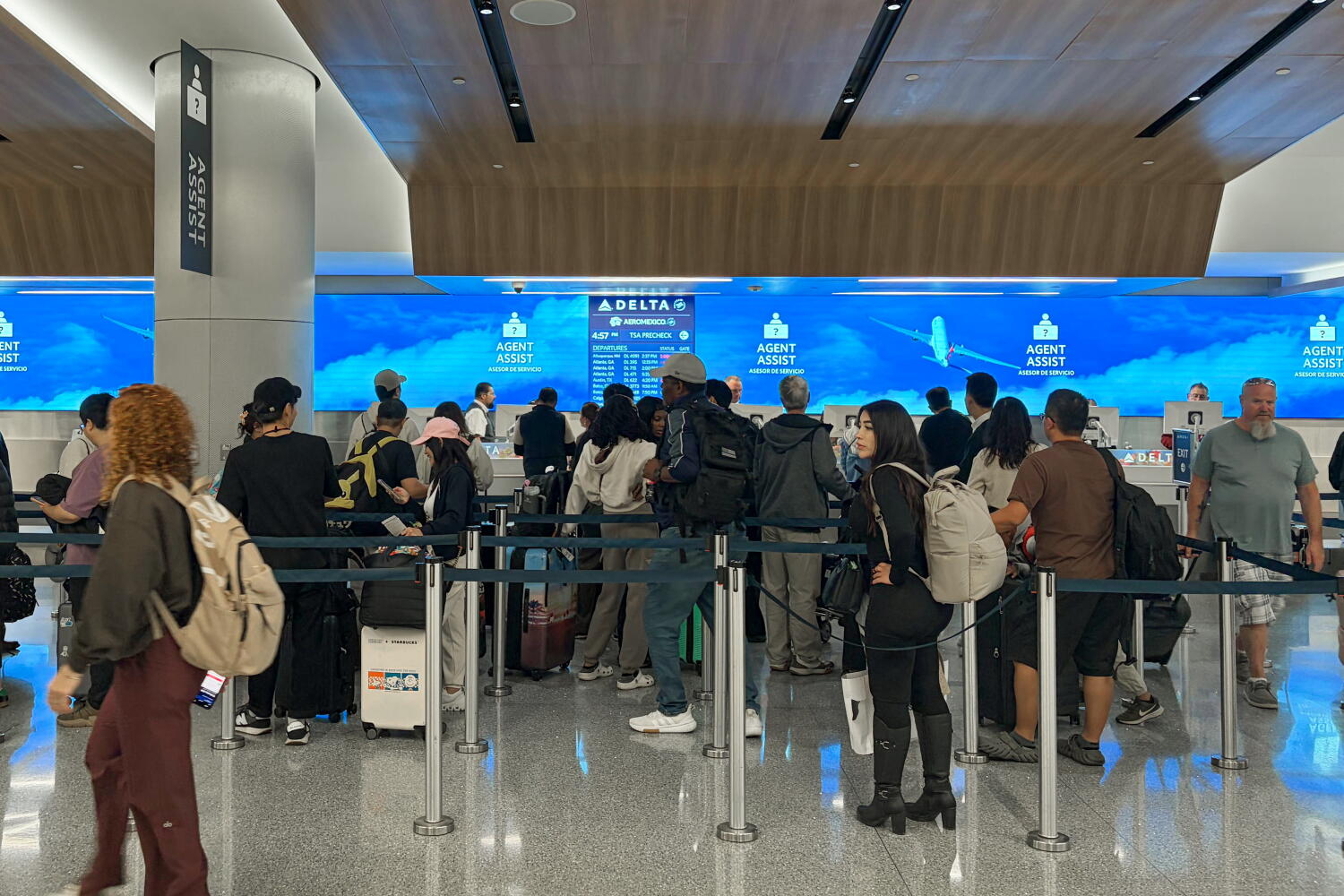
When the departure boards start flashing red and the gate area descends into chaos, standing in the customer service line is the worst thing you can do. There are 200 angry people in front of you and two exhausted agents working the desk. By the time you reach the front, every viable alternative flight is gone.
You need to move faster than the crowd.
The second you hear about an airspace issue or see your flight delayed, pull out your phone and open the airline's mobile app. Most major US carriers—including Delta, United, and American—now have automated rebooking tools built right into their apps that let you switch flights for free the moment a travel waiver or delay is triggered.
While you're tapping through the app, dial the airline's customer service line at the exact same time. Pro tip: if the US toll-free number has a three-hour wait time, call the airline's international support line in the UK, Canada, or Australia using a cheap VoIP app. They access the exact same reservation system, and their call queues are usually a fraction of the length.
You should also stop relying on the airline's app to tell you why your flight is delayed. Airlines routinely delay updating their customer-facing boards until the last possible second. Instead, bookmark the FAA's National Airspace System Status page (fly.faa.gov) on your phone. It's ugly, government-designed, and brutally honest. It shows real-time ground stops, average delay minutes, and airspace closures across the entire country before gate agents even make an announcement.
Know Your Actual Rights When Things Go Sideways
There's a massive amount of misinformation floating around social media about what airlines owe you when travel falls apart. Let's clear the air so you don't waste energy screaming at a gate agent over rules that don't exist.
Under Department of Transportation (DOT) regulations, if your flight is canceled or significantly delayed—regardless of the reason—and you choose not to travel, the airline must give you a full cash refund to your original form of payment. Do not let them bully you into accepting a travel voucher if you're abandoning the trip. Federal rules explicitly require cash refunds, and airlines are legally obligated to process them automatically if you reject their rebooking options.
However, getting a hotel voucher or meal credit is a completely different story.
Airlines categorize disruptions into two buckets: "controllable" and "uncontrollable." Controllable delays include maintenance issues, crew scheduling failures, and IT outages within the airline's own network. Uncontrollable delays include severe weather and FAA air traffic control meltdowns.
Because an FAA system failure is technically outside the airline's direct control, carriers are legally off the hook for paying for your hotel room or dinner when air traffic control shuts down the sky. Some airlines might hand out meal vouchers as a goodwill gesture if you ask politely, especially if you hold elite status, but they aren't required to do so. You can check each carrier's exact commitments on the DOT's Airline Customer Service Dashboard (transportation.gov/airconsumer), which spells out what every major US airline promises during controllable disruptions.
That's why having a travel credit card with built-in trip delay insurance—like the Chase Sapphire Preferred or Capital One Venture X—is worth its weight in gold during the holidays. If you paid for your flight with a card that includes trip delay protection, your credit card issuer will typically reimburse you up to $500 per ticket for hotels, meals, and toiletries once a delay crosses six or twelve hours, even when the airline refuses to pay a dime.
Your Pre-Flight Game Plan for the Holidays
Don't wait until you're standing at TSA security to realize your itinerary is fragile. Look at your upcoming holiday reservations right now and audit them for weak points.
If you have a tight connection, call the airline today and see what it costs to move to an earlier feeder flight. Download the airline's app, make sure your loyalty number and credit card details are saved, and turn on push notifications so you get delay alerts the second they hit the system. Pack a carry-on instead of checking a bag—if your flight gets canceled mid-trip, being separated from your checked luggage adds another layer of misery you don't need.
Throw a portable battery bank, an extra day's worth of medications, and a change of clothes into your personal item. Save the FAA status page to your phone's home screen, keep your cool with the frontline staff who are just trying to survive the shift, and give yourself plenty of breathing room before any event you actually care about attending.