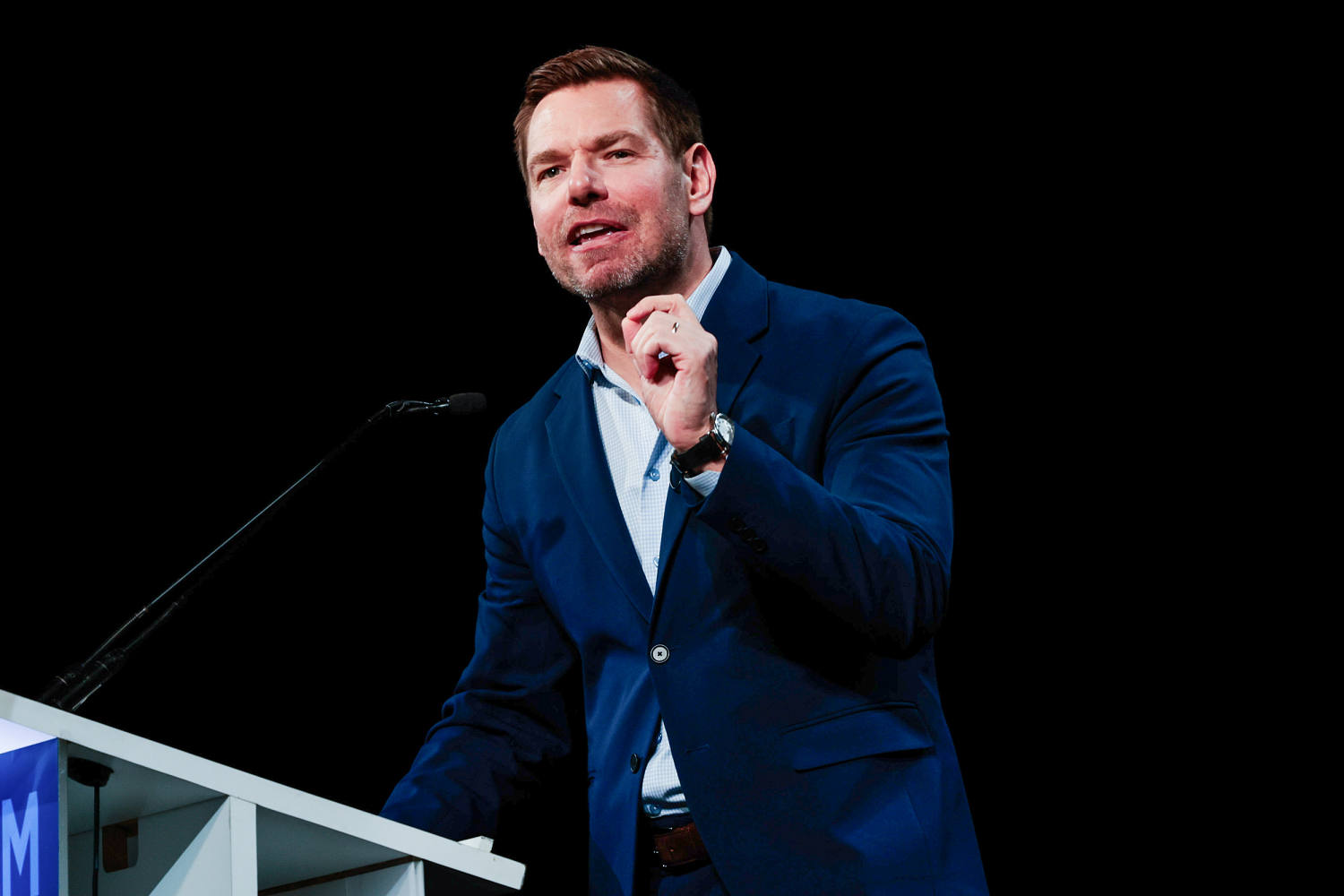
No charges have been filed against former Rep. Eric Swalwell by Los Angeles County prosecutors in connection with the West Hollywood sexual assault allegation investigated by the Los Angeles County Sheriff's Department. Honestly, that single fact clears up half the confusion floating around online right now.
Headlines make it sound like a charging decision is imminent or already handed down. It isn't. When a headline says prosecutors are weighing charges after a sheriff's investigation, people picture a neat handoff: deputies finish a file, a prosecutor reads it on a Tuesday, and indictments drop on a Wednesday. Real criminal cases involving high-profile figures and multi-year timelines don't move like that.
Let's look at what actually happened, where the Los Angeles investigation stands, and why prosecutorial review in a case like this is slow, messy, and fiercely contested.
Why the Eric Swalwell Investigation Caught Fire in 2026
The political fallout hit fast in April 2026. Multiple women came forward with allegations of sexual misconduct or assault against Swalwell, a California Democrat who had been running for governor. Within days, his gubernatorial bid collapsed, bipartisan talk of House expulsion gained momentum, and Swalwell resigned from Congress on April 13, 2026.
Among the accusations was a claim by Lonna Drewes, who alleged at an April 2026 news conference that Swalwell drugged, choked, and raped her in a West Hollywood hotel room in July 2018 after offering career connections. Because West Hollywood falls within the Los Angeles County Sheriff's Department patrol jurisdiction, the department's Special Victims Bureau opened an inquiry, and the Los Angeles County District Attorney's office—led by District Attorney Nathan Hochman—stated that its Sex Crime Division was working with law enforcement and would review facts and evidence if a case were presented for a filing decision.
Swalwell has pushed back hard. Through his attorneys, he has categorically and unequivocally denied every allegation of sexual misconduct and assault.
And LA isn't the only jurisdiction looking into him. Reporting across 2026 has pointed to a tangled web of overlapping scrutiny: a criminal inquiry by the Manhattan District Attorney over an alleged 2024 incident in New York, a federal Department of Justice and FBI inquiry that included device seizures in August 2026 and a sealed October 27, 2026 search warrant executed at a North Roxbury Drive residence in Beverly Hills tied to Stephen Cloobeck, plus a House Ethics Committee probe that lapsed once Swalwell left Congress.
How Prosecutors Actually Weigh Charges After a Sheriff's Probe
Here is what folks outside the legal system miss: an open investigation by deputies and a prosecutor's statement about reviewing evidence are not the same thing as a formal charging decision.
In Los Angeles County, when a case lands on a sex crimes prosecutor's desk—especially one involving an alleged incident from roughly eight years earlier—the standard isn't just "is there an accusation?" Prosecutors evaluate whether the admissible evidence can prove every element of a crime beyond a reasonable doubt to a unanimous jury of twelve people.
From years of watching how complex felony investigations play out in California, a few friction points always stand out:
- Corroboration and physical evidence. Eight years is a long time. Forensic evidence from a 2018 hotel stay is rarely sitting intact in a locker unless preserved under specific circumstances, so detectives lean heavily on digital trails, travel and hotel records, messages, receipts, and witness accounts.
- Consent, incapacitation, and statutes. Allegations involving intoxication or suspected drugging turn on exact statutory definitions and proof of impairment or lack of capacity at the moment of the alleged act.
- Jurisdiction and parallel cases. When federal agents, another county's district attorney, and local deputies are all looking at related or separate allegations, investigators have to be careful not to step on each other's witnesses, grand jury secrecy rules, or evidentiary chains. A search warrant execution in October doesn't automatically translate into a filing in Los Angeles the next week.
Some observers assume political pressure speeds up prosecutorial decisions. In practice, high-profile cases often slow down because seasoned prosecutors know a rushed filing that collapses in court wastes years and damages public credibility.
Misconceptions You Should Ignore Right Now
Social media clips and sensationalized headlines distort almost every step of an active criminal probe. Keep three things straight:
- An investigation is not guilt. A sheriff's inquiry, a DA review statement, or even a search warrant is an investigative tool, not a finding of wrongdoing. Swalwell has not been charged in connection with these allegations and continues to deny them.
- Related news isn't always proof of a direct link. When a search warrant stays sealed—as occurred with the October 2026 Beverly Hills search—speculation fills the vacuum. Unless unsealed records or prosecutors say otherwise, treat unverified claims about motives, dollar figures, or connections with skepticism.
- Resigning from office doesn't end criminal exposure. Resigning from Congress ended the House Ethics Committee's jurisdiction, and leaving the governor's race changed his political future, not state or federal criminal law. Criminal statutes operate independently of elected office.
Practical Ways to Track This Case Without Getting Burned
If you want to follow whether Los Angeles County prosecutors actually bring charges without falling for clickbait, stick to primary signals:
- Watch for official filing announcements, not rumors. Prosecutors in large jurisdictions like Los Angeles County typically announce formal felony filings through official press releases or court dockets once a review concludes and charges are approved.
- Check dates and jurisdictions. Always verify whether a report refers to the Los Angeles County Sheriff's Department West Hollywood probe, the Manhattan District Attorney's inquiry, or federal investigative steps. Mixing them up is the easiest way to misread where things stand.
- Read court filings and official statements directly. When warrants are unsealed or formal charging documents are filed, the actual legal language tells you far more than a headline ever will.
CBS Los Angeles coverage of the Los Angeles County Sheriff investigation
LAist report on the Los Angeles County District Attorney and Sheriff probes