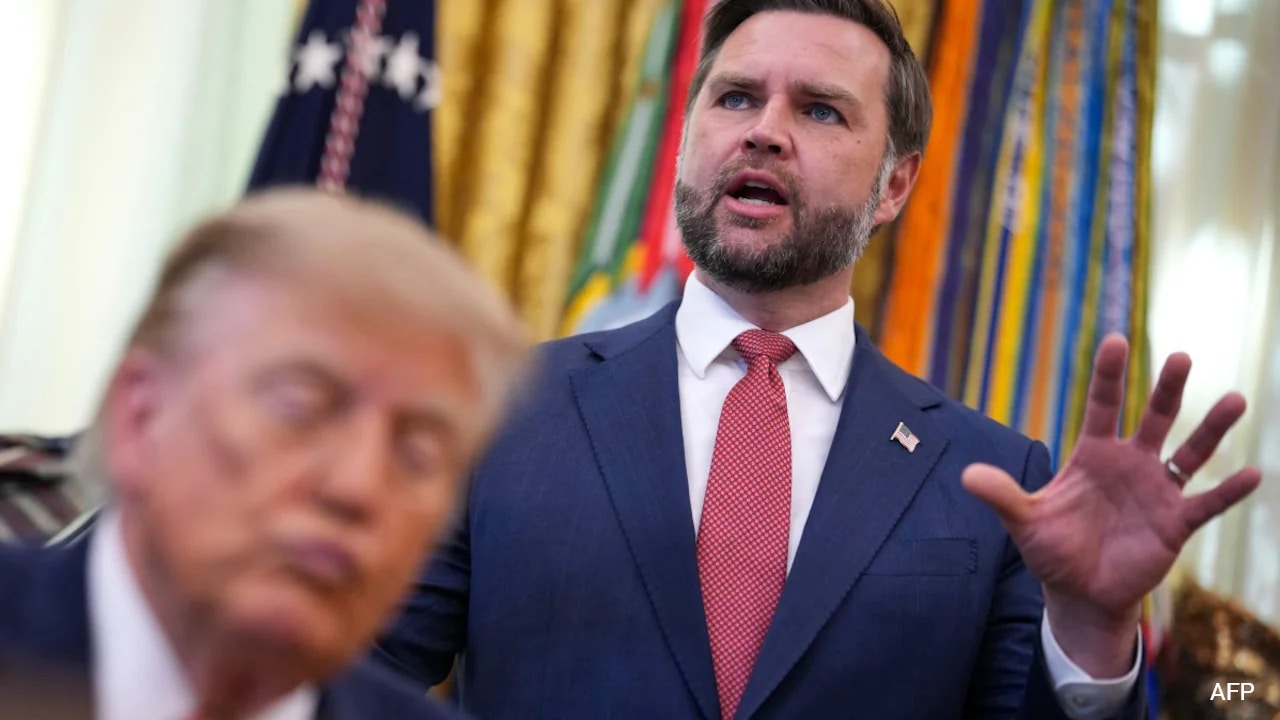
Two weeks after Republicans took a beating in the November 2026 midterm elections, a quiet fissure inside the White House broke wide open. According to reporting from The New York Times and the Associated Press, President Donald Trump grew increasingly frustrated with Vice President JD Vance over Vance’s blunt post-election verdict that the U.S. war with Iran cost the GOP its congressional majorities.
At first, Trump brushed off Vance’s remarks. That patience didn't last.
If you've watched how Washington post-mortems usually play out, you know the standard script: everyone blames messaging, turnout, or the opposing party's spending. Vance ripped up that script on November 4, the morning after the election. In a lengthy post on X, he wrote plainly, "The reason we lost is the war." He went even further, challenging defenders of the conflict to admit the political price tag: "If you'd like to argue it was worth it, that losing the Senate for the next 6 years was worth it, then do so. Argue it was a worthwhile cost to pay. Agree or disagree, that's at least honest."
Why Trump's Patience Ran Out Over the Iran War Remarks
Initially, Trump appeared unbothered. Speaking to reporters on November 4 while leading a tour of his White House ballroom construction project, he called Vance's post "good" and said, "I know how he feels about it, and I think it was fine." In separate interviews, Trump even conceded that Vance's assessment was "largely true" and that the conflict was "a piece" of why Republicans lost.
Behind closed doors, the mood shifted.
By mid-November, The New York Times reported that Trump had grown irritated with how Vance framed the defeat. From Trump's perspective, acknowledging that the war hurt Republicans at the ballot box was one thing. Failing to defend the military operation itself was another. Trump told advisers and reporters alike that Vance left out a crucial qualifier—that if faced with the same choice again, the administration would still launch the strikes.
"He was right. Other than one thing," Trump said earlier in November. "He should have made one other statement, which I think is very important. If you had it to do again, would you do it again? The answer is yes."
Trump’s argument rests on nuclear prevention. Having launched military operations against Iran in late February 2026—a campaign originally projected to last four to five weeks that stretched into its ninth month—Trump has consistently maintained that Tehran could not be allowed to acquire a nuclear weapon. In his view, stopping Iran's nuclear program outweighs short-term electoral pain.
Vance, who built his political brand on foreign policy restraint before joining the ticket, tried to walk a tightrope. He blamed the war for the midterm rout without directly attacking the commander-in-chief. Yet in Washington, saying a president's signature foreign policy decision caused a historic wipeout rarely reads as loyal support.
The Numbers Behind the 2026 Midterm Rout
To understand why Vance sounded the alarm so loudly, look at the electoral math.
According to CBS News estimates following the November 3 election, Democrats captured control of the U.S. House with between 251 and 268 seats and secured at least 54 seats in the U.S. Senate after winning 10 of 11 battleground states. For a party that entered the cycle holding unified control of Washington, losing both chambers—and facing a six-year Senate map disadvantage—was a massive setback.
Vance argued in his post-election breakdown that the defeat wasn't a base turnout failure. He pointed to states like Florida, noting that the electorate was 9 points more Republican than Democratic—only slightly off the 2024 mark. Instead, Vance cited data showing that voters who backed the Trump-Vance ticket in 2024 crossed over and voted for Democrats in 2026 out of frustration over the prolonged conflict and rising fuel costs.
The human and financial toll of the conflict weighed heavily on voters throughout the fall:
- Financial cost: Associated Press reporting placed the American taxpayers' bill for the Iran war at an estimated $47.1 billion.
- Military casualties: Defense Department figures cited by CBS News reported 23 U.S. service members killed and 865 wounded during the conflict.
- Economic spillover: Prolonged hostilities in the Strait of Hormuz drove up gas and diesel prices through the summer and fall, undercutting Republican messaging on inflation and affordability.
Conservative commentators outside the White House echoed Vance's diagnosis. Curt Mills, executive director of The American Conservative, told Clash Report that the midterms were "a verdict against Trump's frankly betrayal of a lot of campaign promises, most notably the Iran war," arguing that the conflict fueled a resurgence in inflation and alienated "America First" voters.
Sidelined From Diplomacy and Reassigned to Domestic Issues
The friction between Trump and Vance didn't stay confined to rhetoric. It quickly showed up in White House portfolio assignments.
Over the summer of 2026, Vance had emerged as one of the administration's most visible advocates for finding a diplomatic off-ramp, backing an initial 14-point memorandum of understanding that ultimately lapsed after its 60-day window expired without a final agreement. On November 11, The Wall Street Journal reported that Vance was weighing a new round of direct talks with a senior Iranian official.
The very next day, November 12, Trump publicly shut that door.
In a pointed social media post reported by the Associated Press, Trump declared that the United States did not need a deal with Iran and bluntly instructed Vance to shift his focus away from foreign negotiations. Instead, Trump directed his vice president to concentrate on fighting what the president described as "corruption and crime" in Democratic-led cities and states.
Around the same time, multiple reports indicated that Trump excluded Vance from high-level Iran peace discussions while privately praising Secretary of State Marco Rubio—a longtime hawk on Tehran—as a strong potential contender for the 2028 Republican presidential nomination.
The 2028 Shadow Over Every White House Move
You can't separate this policy dispute from the 2028 succession race.
Trump is term-limited, and the battle to inherit the MAGA coalition began the moment the 2026 midterm ballots were counted. Vance has openly stated he would decide after the midterms whether to mount a 2028 presidential campaign. His political future depends on keeping the populist, non-interventionist wing of the Republican base intact—the exact voters who soured on the Iran conflict.
Marco Rubio represents the traditional national security wing of the party, which views confronting Iran as a strategic necessity. By praising Rubio privately while sidelining Vance on Iran diplomacy, Trump reminded everyone in the West Wing that his 2028 endorsement isn't guaranteed.
Vance's Public Course Correction
By November 21, the fallout forced a visible recalibration.
Standing alongside both Vance and Rubio during a White House news conference, Trump dismissed reports of a personal rift, telling reporters, "I didn't say I was unhappy with it." He reiterated that he would launch the military operation again without hesitation because "we cannot allow Iran to have a nuclear weapon," while arguing that oil prices had climbed far less than critics predicted.
Vance, standing next to the president, struck a noticeably more cautious tone than he had on November 4. When pressed by reporters on whether he agreed with Trump's assessment that Iran had been close to developing a nuclear weapon, Vance stopped short of endorsing the specific intelligence claim, while firmly closing ranks behind Trump's authority.
"I think the president is the one who makes the decision, and the president has said he would do it again," Vance said. "My view is that my goal is, and my job is, to support the president of the United States."
What to Watch in Washington Over the Next Few Months
Whether this truce holds depends on how the conflict in the Middle East and the new Congress collide in early 2027. If you're following how this rift affects U.S. foreign policy and the 2028 GOP primary, keep your eye on three concrete pressure points:
- Congressional war powers votes: With Democrats taking control of both the House and Senate in January 2027, expect renewed legislative pushes to restrict funding or force troop withdrawals. In November 2026, the outgoing Senate narrowly blocked a war powers resolution (H. Con. Res. 93) by a 48–51 vote, with Republican Senators Susan Collins, Lisa Murkowski, and Rand Paul breaking ranks. A Democratic majority changes that math overnight.
- Who leads Iran diplomacy: Watch whether Marco Rubio remains the sole point person on Tehran or if Vance is brought back into national security meetings. Continued exclusion from foreign policy talks would signal that Vance's influence inside the administration has narrowed to domestic messaging.
- Trump's 2028 endorsement signals: Trump thrives on keeping potential successors competing for his favor. Pay close attention to joint appearances and rally invitations—any continued praise for Rubio or other GOP contenders alongside lukewarm references to Vance will confirm that the post-midterm friction left a lasting mark on the 2028 race.
For more details on how White House aides and conservative analysts reacted to the clash, watch CNN's report on Trump's frustration with JD Vance over his Iran war critique, which breaks down the timeline of their public statements and what it means for 2028.


