Salt sits on the tongue before dawn even breaks over the northern French coast. You taste it in the wet air rolling off the Channel, heavy with diesel from waiting lorries and the sharp, metallic tang of razor wire catching the first gray light.
Ten years ago, officials declared a clean break. Bulldozers cleared the sprawling makeshift settlement outside Calais that reporters and residents had long called the "jungle," promising order, dispersal, and an end to a visible humanitarian crisis on Europe's edge. On paper, the chapter closed. If you enjoyed this piece, you might want to read: this related article.
Except it didn't close. It fractured.
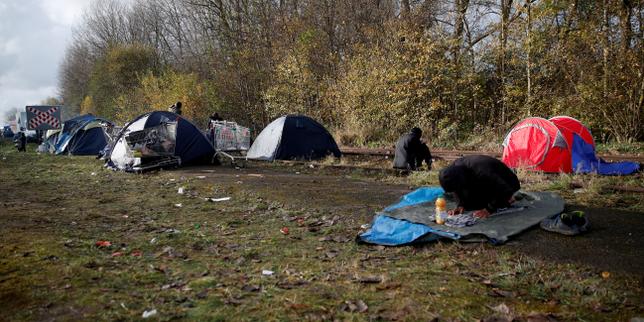
Aid workers along the coast say there is no longer a single visible camp to point to on a map, no solitary city of tarpaulins and timber frames to sweep away in one headline-grabbing operation. Instead, there are smaller, shifting pockets scattered through scrubland, industrial edges, wooded hollows, and coastal ditches—a pattern humanitarian organizations describe as moving from one concentrated site to many dispersed ones. For another look on this story, see the latest update from BBC News.
To understand why a decade of clearing ground has not cleared the human reality behind it, you have to step away from press briefings and listen to the people living inside the friction.
The Illusion of the Clean Slate
Press releases love a neat ending. A fence goes up, a bulldozer drops its blade, a ribbon of tape seals off a former field, and politicians can stand before cameras and say the problem has been solved—or at least moved somewhere else.
Yet moving water across a dry yard does not make it disappear; it just sends it pooling into every crack in the concrete. Consider that a simple metaphor for what happens when thousands of people with nowhere else to go are pushed out of one visible space without resolving why they arrived or where they can lawfully go next.
(To keep the human stakes concrete without pretending to speak for any single real person in danger, let's use a hypothetical volunteer coordinator—call her Nadia—who has spent years handing out dry socks, warm tea, and legal referrals along northern coastal routes.)
Nadia remembers the quiet that followed the big dismantling ten years ago. For a few weeks, the cameras left. City halls breathed out. Anyone driving past the perimeter saw fewer smoke plumes at dusk and fewer crowds gathered near the main roads.
Then came the second wave of morning calls.
A group of young men sleeping under wet plastic sheeting behind a warehouse three miles away. Families tucked into brush where municipal sweeps had not checked yet. People arriving with blistered feet after walking along rail lines or highway verges, carrying nothing heavier than a damp sleeping bag and a folded piece of paper with a phone number written in ballpoint ink.
Why did the camps multiply instead of vanishing? Because geography is stubborn. Calais sits right across a narrow stretch of water from Britain, tied by ferry terminals, freight corridors, and long-standing family or language networks that pull migrants toward that bottleneck like iron filings toward a magnet. You can clear a field in autumn. By winter, wind and desperation find a new hollow.
What Ten Years of Dispersal Actually Looks Like
When people hear that there is no longer one big camp, some assume conditions improved—fewer crowded rows, less squalor, quieter nights. Sometimes the opposite happens in quieter ways.
A large settlement is terrible in plain sight. Doctors, volunteers, journalists, and local officials can see the mud, the queues for water, the lack of sanitation, and the sheer scale of need. A scattered network of small hideouts is harder to count, harder to reach with aid, and easier for the wider public to overlook until a tragic headline breaks through.
Think of the difference between a crowded waiting room and dozens of people standing alone in the rain outside locked doors. The crowding is gone, yet nobody has been given a seat or an answer.
In Nadia's notes from recent cold snaps, the details are small and exhausting:
- A tarp torn loose by coastal gusts at 3:00 a.m., leaving six people shivering in soaked clothes before sunrise.
- Volunteers spending two hours just locating where a small group moved after a morning police eviction, bringing food and water only to find them pushed into brambles a mile down the road.
- Exhausted outreach workers trying to explain asylum rules, medical appointments, or shelter options to people who are too cold, too scared, or too distrustful to stay in one place long enough to follow through.
There is a real tension here that deserves honesty. Local residents and businesses in port towns have spent years dealing with strain—crowded public spaces, security concerns around freight routes, political polarization, and a sense that national authorities left border towns carrying a weight meant for entire countries. Saying that humanitarian conditions remain harsh does not mean pretending coastal communities feel no fatigue. Anyone living beside a permanent geopolitical bottleneck feels the pressure eventually.
Still, fatigue has a cost when it turns into policy by attrition. Evicting small makeshift sites repeatedly without durable housing or clear processing pathways often triggers a predictable cycle: pack up, hide deeper, get moved again, lose whatever dry blankets and documents survived the last sweep.
The Invisible Stakes Behind Every Crossing Attempt
Outsiders often reduce the entire story to a tug-of-war over borders. That framing misses the quieter stakes playing out every evening.
For someone sleeping in damp grass behind an industrial estate, the immediate threat is rarely a grand political debate. It is hypothermia in November wind. It is an untreated infection from walking in wet shoes. It is the constant calculation of whether to rest for twenty minutes or keep moving before security patrols pass.
And for the people trying to help—municipal staff, aid workers, interpreters, drivers—there is a slow, grinding burnout. You hand out dry boots on Tuesday, and on Thursday you meet someone wearing thin sneakers because their bag was left behind during a sudden clearance.
I have stood in cold wind long enough to know what it does to judgment. When your fingers go numb and your teeth start to chatter, long-term planning evaporates. You stop thinking about next month. You think about surviving the next hour. That is true whether you are waiting on a coastal bank, standing watch on a cold shift, or trying to keep a volunteer van running on fumes.
Sometimes I catch myself wondering how people who have never spent a night on frozen ground judge those who take desperate risks to reach safety or family. Honestly, it is easy to talk about rules from a warm kitchen. It is much harder when every legal door feels jammed and every shelter bed feels temporary or out of reach. I don't pretend to have a tidy answer to how European border policy should balance sovereignty, order, and compassion—anyone who claims it's simple isn't looking closely enough.
What I do know, after watching this issue stretch across a decade, is that pretending a problem is solved because it is out of sight is a trap. Visibility is not the same as resolution.
Why Bulldozers Keep Meeting the Same Tide
History shows a familiar pattern along contested borders and transit hubs. Authorities crack down hard on visible encampments to deter arrivals and reassure voters that control is being reasserted. The camp comes down. For a moment, order looks restored.
Yet root drivers—conflict, economic collapse, family ties, smuggling networks, and slow or complex legal avenues—rarely vanish on the day a fence is finished. When pressure rises at one point without a release valve, people look for another path or another hiding spot.
That is why associations looking back ten years after the dismantling of the Calais camp say the landscape did not become simpler; it became fragmented. Instead of one focal point where aid and oversight could concentrate, small groups drift across wider terrain, making both humanitarian care and public management messier.
Consider what happens next when a crisis fragments:
- Aid gets harder to deliver. Distributing water, medical care, and accurate information to scattered groups takes more time, more fuel, and more coordination than reaching one known location.
- Vulnerability rises in the shadows. Smaller, hidden spots offer less safety in bad weather and less visibility when someone is injured or in distress.
- Public debate grows sharper. When people only glimpse fleeting figures near roadsides or hear rumors of new encampments popping up, fear and anger fill the gaps where clear facts belong.
None of this means nothing has changed in ten years. Shelters exist in parts of the region, organizations work day and night to offer food and legal guidance, and debates over migration management have forced governments across Europe to confront how border pressures are shared. Progress exists in patches. It just hasn't caught up to the reality on the ground.
Out on the coast, the tide still comes in twice a day, indifferent to border lines, speeches, or ten-year anniversaries. A single wet gust sweeps across the dunes, bends the scrub grass flat, and carries the cold straight through a thin coat—reminding everyone still standing there that clearing a field is easy, while giving people a real way forward is the work nobody has finished.