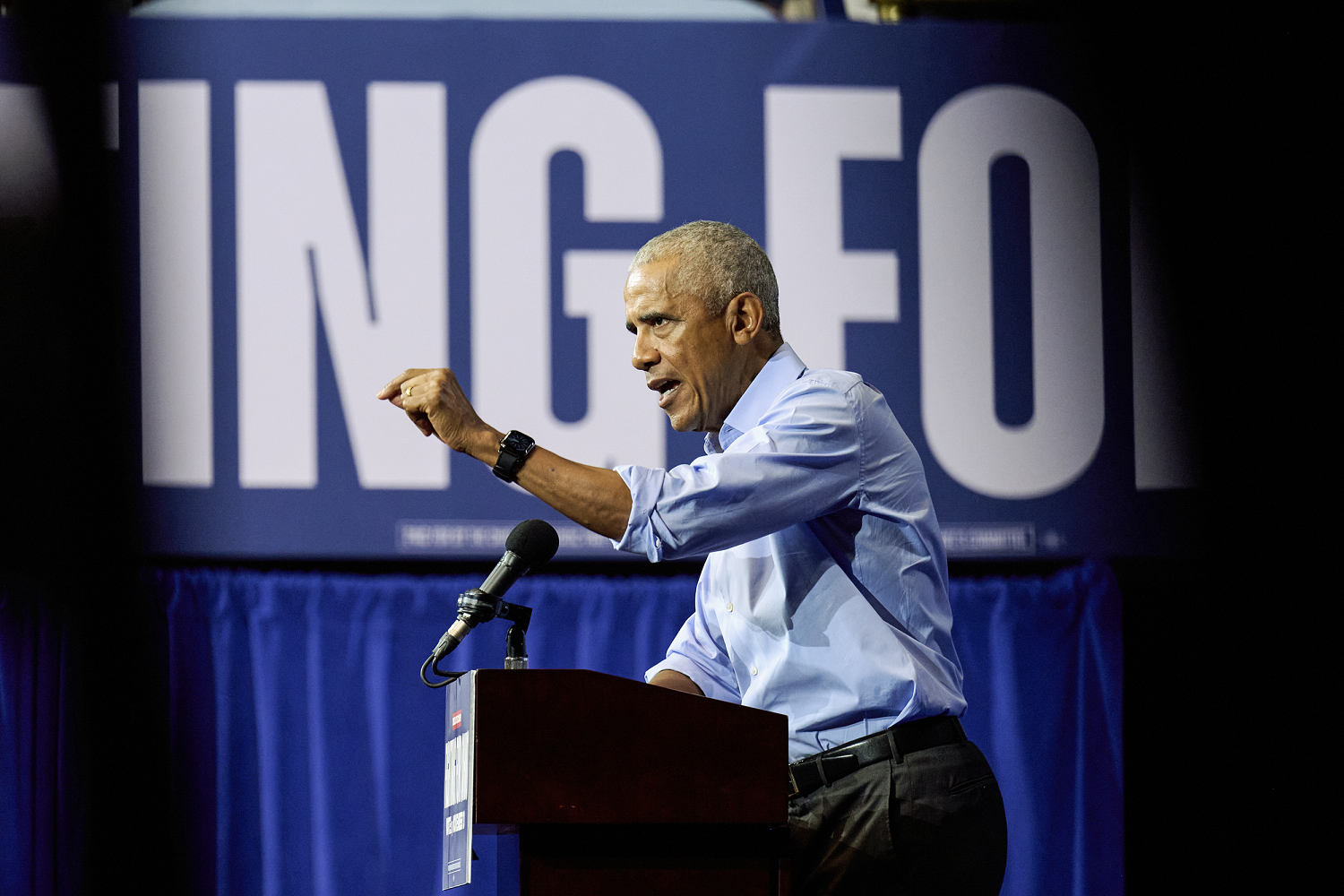
When former President Barack Obama stepped onto the campaign trail in late October 2026, he didn't hold back. Speaking to crowds in Cleveland, Ohio, and Detroit, Michigan, just days before the November 3 midterm elections, Obama labeled President Donald Trump an agent of "chaos and cruelty" and criticized what he described as "corruption and incompetence, the likes of which we have not seen in modern times".
Those remarks quickly became the defining headline of the final stretch of the 2026 midterm cycle. Yet if you only read the viral soundbites or a brief wire summary, you miss the actual political strategy behind why Obama chose those exact words—and how Republicans fired back.
I've spent years analyzing campaign rhetoric and midterm messaging, and one pattern always holds true: former presidents rarely deploy language this sharp unless they're trying to solve a specific turnout problem. Here is a closer look at what Obama actually said in the Midwest, the flashpoints that triggered his remarks, and what those speeches reveal about modern political messaging.
The Context Behind Obama's 2026 Midwest Blitz
On Saturday, October 24, 2026, Obama headlined major Democratic rallies in two critical Midwestern battlegrounds—Cleveland and Detroit—while early voting was already underway. According to reporting from the Associated Press and NBC News, his goal was straightforward: mobilize Democratic voters who might otherwise sit out a non-presidential election year.
Midterm elections historically suffer from an enthusiasm gap. Supporters of the party out of power in the White House often feel frustrated or disengaged. Obama addressed that head-on. Rather than focusing solely on legislative policy papers, he framed the election around basic governance, character, and everyday living costs.
In Ohio, campaigning alongside former Democratic Senator Sherrod Brown and gubernatorial nominee Amy Acton, Obama argued that Trump had made "a series of bad decisions" that drove up the cost of living. He pointed to tariffs, immigration enforcement tactics, and ongoing foreign policy crises—including conflict involving Iran—as evidence of instability.
"After two years of chaos and cruelty and corruption and incompetence, the likes of which we have not seen in modern times, you get the chance to say, 'Enough's enough,'" Obama told the Cleveland crowd, according to NBC News.
Humor Mixed With Sharp Critique
Obama didn't rely purely on doom and gloom. Anyone who has watched him campaign knows he uses humor to disarm audiences before landing a serious punch.
During his remarks, he mocked Trump's White House renovations and gilded aesthetic. "He should be on HGTV," Obama joked, before adding, "There's gold everywhere. He's got the White House looking like Saddam Hussein opened a Cheesecake Factory". That line raced across social media within minutes.
Behind the punchline sat a deliberate contrast. Obama was trying to portray the administration as preoccupied with personal vanity while ordinary families dealt with inflation at the grocery store and the gas pump.
The Flashpoint in Ohio and Michigan
To understand why the word "cruelty" took center stage in Obama's speech, you have to look at the local races he was trying to boost.
In Ohio's gubernatorial race, Republican nominee Vivek Ramaswamy had released a controversial television advertisement featuring Democrat Amy Acton's estranged birth mother, Donna Arthur, calling Acton "a liar" and questioning her fitness. The ad drew bipartisan criticism across the state. Appearing before Obama at the rally, Acton addressed Ramaswamy directly, stating that her opponent had "chosen to exploit, intentionally, my childhood to save his stumbling campaign" and insisting that "decency still matters".
Obama seized on that moment to connect local campaign tactics to national leadership. He argued that personal attacks crossing family boundaries reflected a broader culture of indecency normalized at the top of the Republican ticket.
Later that same day in Detroit, Obama pivoted to defend Michigan Democratic Senate candidate Abdul El-Sayed, who had faced scrutiny from critics over his background and faith. Standing in a packed high school gym with his sleeves rolled up, Obama drew on his own experience with birtherism.
"We have seen this movie before. I starred in it," Obama said, according to the Associated Press. "I've got a long-form birth certificate to prove it". He also poked fun at progressive purity tests, noting that critics pointed out El-Sayed hadn't agreed with every policy of the Obama administration. "You know who else doesn't agree with everything I do? Michelle Obama. Michelle Obama, about five times a day," he quipped.
How Trump and Republicans Responded
Politics isn't a one-sided monologue, and Republicans pushed back forcefully against Obama's framing.
President Trump, who cast his own early ballot in Florida on the same Saturday, dismissed Obama's criticisms and stood firmly behind Ramaswamy's campaign in Ohio. Speaking to reporters, Trump defended the controversial ad targeting Acton, saying, "The mother said that Amy Acton is a liar, and she's no good. And you know what? I don't think you can get a better reference on that".
Across conservative media and Republican campaign stops, GOP surrogates argued that Obama's rhetoric was a distraction from their core midterm message. Republicans contended that:
- Border security and stricter immigration enforcement were necessary measures to restore order, not acts of cruelty.
- Tariffs and deregulation were designed to protect American manufacturing, particularly in industrial states like Ohio and Michigan.
- Democrats were relying on personal attacks from a former president because they lacked a unified economic alternative.
Trump also continued his own rally blitz in battleground states, arguing that Democratic policies would bring economic decline while touting his administration's trade deals and foreign policy posture.
Why Most Media Coverage Missed the Bigger Picture
If you read standard news summaries of Obama's speech, they tend to treat his remarks as just another round of partisan name-calling. That misses what actually makes this messaging strategy work—and where it falls short.
First, look at the structural reality Obama acknowledged during his speech. He reminded crowds that Trump still had two years remaining in his term regardless of what happened in November. Voters couldn't remove the president in 2026. Instead, Obama pitched the midterms as an emergency brake—a way to elect Democratic senators, representatives, and governors who could act as a counterweight.
Second, media outlets naturally gravitate toward the sharpest quote. NewsCord's analysis of seven major outlets covering the Cleveland rally showed that headlines overwhelmingly foregrounded the phrase "chaos and cruelty," while treating local race dynamics and voting logistics as minor footnotes.
Yet for campaign operatives on the ground, the real payload of Obama's speech wasn't the HGTV joke. It was his repeated, urgent call to vote early. "Don't procrastinate, don't equivocate," Obama told the crowd, pointing out that early voting booths were already open in both Ohio and Michigan.
The Limits of Celebrity Surrogates
At the same time, it's worth being honest about what a former president can and cannot accomplish. Even some progressive commentators and voters expressed skepticism online after the rallies, arguing that clever jokes about White House decor don't automatically translate into grassroots enthusiasm for down-ballot candidates.
History backs up that nuance. Barack Obama remains one of the Democratic Party's most effective fundraisers and crowd-drawers a decade after leaving office. Still, during his own presidency, Democrats suffered heavy midterm losses in both 2010 and 2014 despite his active campaigning. A high-profile speech can dominate a news cycle for 48 hours, but sustained turnout depends on local field operations, candidate quality, and how voters feel about their own wallets when they step into the booth.
How to Evaluate Political Campaign Rhetoric Critically
Whether you agree with Obama's assessment of the Trump administration or side with Republican counterarguments, high-stakes midterm speeches follow predictable playbooks. When you see viral clips from major political rallies, use these practical steps to cut through the noise:
- Separate the applause line from the policy claim. Jokes about gold decor or sharp labels like "chaos and cruelty" are engineered for television clips and social media shares. Look past the hook to see what specific legislation, executive actions, or economic metrics the speaker actually cites.
- Check the local race context. National figures rarely travel to battleground states by accident. Look at who shared the stage—like Amy Acton in Ohio or Abdul El-Sayed in Michigan—to see which specific local controversies or vulnerable seats the speech was designed to rescue.
- Compare full transcripts against headlines. Aggregated news headlines condense a 45-minute speech into three words. Reading or watching the full address reveals how much time a speaker spends on voter logistics versus partisan attacks.
- Verify economic and legislative claims independently. When either party blames the other for rising prices, tariffs, or foreign conflicts, cross-reference those claims against nonpartisan data from sources like the Bureau of Labor Statistics or the Congressional Budget Office before forming your view.
For more context on how Obama delivered these remarks in full, watch France 24's coverage of Obama's midterm campaign speech, which captures the key moments from his Midwestern rally appearances.