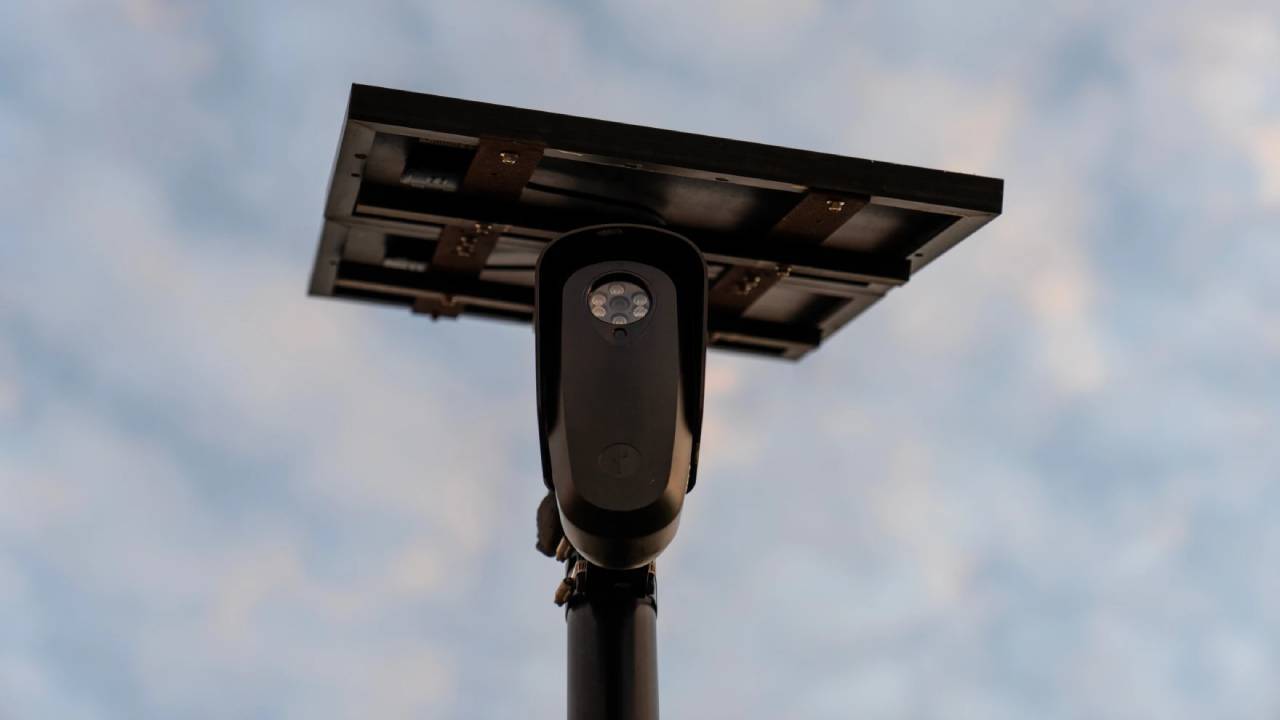
Spending $127,500 of public money on high-tech surveillance gear only to leave it sitting in boxes sounds like a bad comedy sketch. It actually happened in Michigan.
Police departments across the country love pitching automated surveillance tools as magic bullets for campus and community safety. When local authorities in Michigan quietly signed off on a $127,500 AI camera contract, they promised smarter security. Instead, the hardware was never even installed, and local students ended up blowing the whistle on the privacy risks before a single lens went live. Building on this idea, you can also read: The Quiet Room Behind the Auction Hammer.
If you've ever tracked municipal procurement or school board tech contracts, you know this pattern well. A vendor shows up with a slick pitch deck. Officials sign a six-figure check using grant money or discretionary funds. Nobody asks the people actually walking the hallways or streets how they feel about being tracked by facial recognition or behavior-detection algorithms.
How the $127,500 Michigan Police AI Camera Contract Fell Apart
Public records tell a frustrating story of rushed spending and zero follow-through. When you look closely at Michigan police's $127,500 AI camera deal, the timeline exposes a massive disconnect between purchasing decisions and operational reality. Experts at The New York Times have shared their thoughts on this matter.
Authorities approved the $127,500 expenditure for artificial intelligence camera systems meant to monitor public and campus-adjacent spaces. On paper, these systems promise real-time threat detection—identifying weapons, flagging "suspicious" loitering, or running automated license plate and facial scans. In practice, buying the software license and hardware is the easy part.
Installing networked AI cameras requires infrastructure, clear legal policies, and public buy-in. None of that was lined up. Months passed after the $127,500 check cleared, yet the cameras remained completely unmounted.
When local journalists and student investigators dug into the spending records, the lack of deployment became impossible to hide. Taxpayers paid six figures for an active surveillance contract while getting zero physical security in return. Worse, the clock on software licensing fees often ticks whether the cameras are bolted to a wall or gathering dust in a storage closet.
Why Students Pushed Back on AI Surveillance
You shouldn't underestimate student journalists and campus privacy advocates. Often, they're the only ones reading municipal agendas line by line.
Once news of the $127,500 AI camera purchase surfaced, students immediately raised alarms about mass data collection and algorithmic bias. Their concerns weren't theoretical. Modern AI camera suites don't just record video like an old CCTV loop from the 1990s. They index faces, track movement patterns, and feed biometric data into searchable databases.
Students pointed out three glaring problems with the Michigan rollout:
- Zero public input. Neither students nor local residents were consulted before police committed $127,500 to the surveillance vendor.
- Unclear data retention rules. Nobody could explain how long the AI system would store footage, who owned the biometric profiles, or whether third-party vendors could access the feeds.
- Documented algorithmic bias. Independent testing by the National Institute of Standards and Technology (NIST) has repeatedly shown that many commercial facial recognition algorithms misidentify women and people of color at significantly higher rates than white men.
Honestly, the students asked the exact questions police administrators should have answered before signing the contract. When a surveillance tool carries a high false-positive rate, an automated alert doesn't make a campus safer. It just increases the odds of an armed officer confronting an innocent student over a software glitch.
The Hidden Reality of Police Tech Procurement
I've watched dozens of local governments fall into this exact trap over the last few years. Tech vendors aggressively market AI surveillance to mid-sized police departments and school districts using fear-based sales tactics and federal grant deadlines.
Here is how the pitch usually works. A sales representative tells a police chief or city manager that federal safety grants expire at the end of the fiscal year. They frame a $127,500 package as "turnkey" protection. Officials rush to lock in the funds before the deadline, skipping basic due diligence like privacy impact assessments or installation feasibility studies.
Then reality hits.
To actually run AI video analytics, you need high-bandwidth fiber connections, upgraded servers, and strict compliance with state privacy laws. Many older municipal buildings and campus poles simply can't support the power or data load without tens of thousands of dollars in extra electrical work. So the gear sits in boxes while lawyers argue over liability and IT staff scramble to figure out wiring.
Meanwhile, the vendor already got paid. Most public-sector AI contracts are structured as multi-year Software-as-a-Service (SaaS) agreements. You aren't buying a camera; you're renting permission to use an algorithm. If a department takes a year to figure out installation, they just burned a full year of their subscription for nothing.
What Privacy Research Says About Campus AI Cameras
Supporters of automated surveillance always argue that if you aren't doing anything wrong, you have nothing to hide. That argument falls apart the second you look at how modern AI analytics actually work.
According to research from the Electronic Frontier Foundation (EFF) and the ACLU, pervasive AI monitoring creates a documented "chilling effect" on free speech and assembly. When students know every step, conversation, and protest attendance is being logged by automated tracking software, campus life changes. People self-censor. Political organizing shrinks.
There's also the massive cybersecurity risk. Centralizing high-definition video and biometric metadata creates a prime target for hackers. School districts and municipal police departments rarely have the cybersecurity budgets of Fortune 500 companies. Yet they routinely buy enterprise-grade surveillance tools that store sensitive location data on every student and passerby.
Even basic object-detection AI struggles in real-world environments. Independent audits of AI weapon-detection systems deployed in schools across the U.S. have documented false alarms triggered by harmless everyday items—umbrellas, chrome water bottles, musical instrument cases, and three-ring binders. Every false alarm triggers lockdown panic and desensitizes staff to real emergencies.
Why Transparency Laws Matter More Than Ever
The only reason the public found out about Michigan police's $127,500 AI camera deal is because someone bothered to check the paper trail. Without public records requests and student reporting, that money would have vanished into a line item labeled "equipment" or "security upgrades."
Across the country, civil liberties groups are pushing for Community Control Over Police Surveillance (CCOPS) ordinances. Over two dozen cities—including Seattle, Oakland, and New York City—have passed versions of these laws. The rules are simple and common-sense:
- Police must publicly disclose any surveillance technology they plan to buy before spending a dime.
- Agencies must publish a clear surveillance use policy detailing data retention, sharing rules, and audit procedures.
- Elected officials must hold a public hearing and vote explicitly on the technology's adoption.
When cities enforce these rules, wasteful $127,500 mistakes rarely happen. Public scrutiny forces agencies to prove a tool actually works before writing the check.
How Residents and Students Can Audit Local Surveillance Spending
You don't have to wait for a leaked memo to find out if your local police department or school district is quietly buying AI cameras. Public spending leaves footprints, and you have the legal right to inspect them.
Start by checking the consent agenda for your local city council, county commission, or school board. Big tech purchases frequently hide inside "consent agendas"—bundles of routine items approved in a single vote without public debate. Look for vendor names specializing in automated license plate readers, facial recognition, or video analytics.
If you spot a vague line item for security hardware or software licensing, file a state Freedom of Information Act (FOIA) request. Ask specifically for the signed vendor contract, the technical scope of work, any privacy impact assessments, and proof of installation or deployment. Requesting the invoice alongside the deployment log is the fastest way to catch shelfware—expensive tech paid for with tax dollars that never actually gets used.
Bring what you find to local reporters, student newspapers, and public comment sessions. The Michigan case proves that sunshine still works. When taxpayers and students demand basic accountability, even a $127,500 surveillance deal can be stopped in its tracks before the cameras ever turn on.