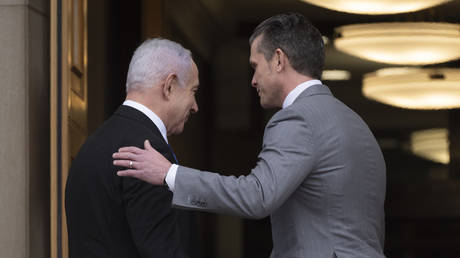
When word broke that Defense Secretary Pete Hegseth had slipped into Israel for an unannounced sit-down with Prime Minister Benjamin Netanyahu, most headlines treated it like a standard spy thriller. Land at a desert airbase on a military transport plane. Skip the diplomatic motorcade. Keep the press corps in the dark until after the wheels are back in the air.
Honestly, treating this meeting as just another routine defense check-in misses the real story. The sit-down happened on Monday, October 19, 2026—just eight days before Israel's high-stakes October 27 Knesset election—at Uvda (also spelled Ovda) Air Force Base in the southern Negev desert. Reports from outlets including Axios, Reuters, and The Jerusalem Post pointed to discussions around regional threats and potential renewed military action involving Iran, right as Netanyahu was fighting to hold onto a shaky governing coalition.
If you've watched Middle East diplomacy over the last two decades, you know that quiet visits right before an Israeli vote are rarely accidental. What's tricky here isn't proving the meeting happened—Netanyahu's office confirmed the Uvda base encounter the next day, and Hegseth posted on X about visiting CENTCOM troops on a "historic mission". The real question is whether this trip was driven by urgent battlefield planning against Iran, domestic Israeli election math, or a messy collision of both.
Why Hegseth and Netanyahu Met at Uvda Air Base
Choice of location says plenty. Instead of meeting in Jerusalem or Tel Aviv—where cameras, protesters, and leak-prone aides are everywhere—the two leaders connected at Uvda Air Force Base in Israel's southern Negev region. According to reporting from The Jerusalem Post, Hegseth arrived aboard a military transport aircraft rather than a standard VIP government plane to keep the movement low-profile.
Why use a military transport? Operational security, sure. Optics, too. When a U.S. defense chief steps off a transport jet at an active airbase eight days before a parliamentary vote, it sends a very specific message to voters and adversaries alike without requiring a formal Joint Statement at the prime minister's residence.
Reports following the initial Axios scoop highlighted two overlapping threads:
- Regional security and Iran: Outlets including Al Mayadeen and Reuters reported that discussions touched on regional threats and possible renewed strikes or military pressure on Iran amid ongoing conflict and U.S. force deployments in the region.
- Electoral timing: Sources noted that the timing of the unannounced visit landed right in the closing stretch of Israel's campaign, where Netanyahu's religious-nationalist coalition faced tough polling headwinds.
Notice how tight the timeline was. On Sunday, October 18, President Donald Trump publicly backed Netanyahu ahead of the October 27 election, declaring his "Complete and Total Endorsement" on Truth Social and warning that if Israel picked the wrong leader, America would have to do the work itself. On Monday, Hegseth met Netanyahu at Uvda. On Tuesday, officials and media began sorting out what had actually been agreed upon—and what the White House was willing to confirm.
Separating Battlefield Reality from Election Theater
Here's where people get tripped up. In foreign policy analysis, it's tempting to pick one neat motive and dismiss the other. Either it was all about Iran, or it was all a campaign prop for Bibi.
In practice, it's almost never that clean.
Look at the mixed signals coming out of Washington right around the visit. While reporting tied the trip to talks over potential renewed action against Iran, White House deputy press secretary Anna Kelly reiterated that the U.S. would not be attacking Iran at that time, even as Trump maintained that Iran was in rough shape economically and militarily. Meanwhile, Vice President JD Vance struck a different tone in a 2WAY interview, saying his focus was the U.S. midterm elections and stating he wasn't getting involved in Israeli elections.
When you have the president issuing a thunderous endorsement, the defense secretary hopping on a transport plane to a desert airbase, and other senior administration officials talking down imminent strikes or election meddling, you aren't looking at a single scripted line. You're looking at a coalition of priorities inside Washington.
From Netanyahu's side, the calculation is pretty straightforward. Heading into the October 27 vote, polls showed his governing bloc struggling to keep a Knesset majority, even as opposition parties like Gadi Eisenkot's Yashar and Naftali Bennett's Together contested the field. Showing voters a tight, active security link with the Pentagon—right after a Trump endorsement and just a day after Netanyahu visited an air force base warning enemies of harsher blows—projects strength and indispensable backing.
Yet that doesn't mean the security talks were fake. U.S. forces and military aircraft have been operating across the broader Middle East conflict environment, and CENTCOM commanders are constantly weighing force posture, air defense, and escalation risks. A meeting can be genuinely substantive on defense coordination and still be timed—or spun—for maximum political punch.
What Official Statements Revealed and What They Hid
One mistake readers make when covering covert or unannounced diplomatic meetings is treating official denials or minimal confirmations as proof that nothing happened. Equally, taking anonymous leaks at face value without checking incentives is a fast way to get burned.
After the news broke on October 20:
- Prime Minister's Office spokesperson Doron Spielman confirmed to Reuters that Netanyahu had met Hegseth at Uvda Air Force Base the previous day.
- Hegseth posted on X about visiting warfighters in CENTCOM on a "historic mission," without naming Uvda or detailing policy outcomes.
- When pressed by reporters back in the U.S., Hegseth said he was there visiting troops and had a chance to talk with the prime minister, declining to get into the substance of their conversation.
That's classic defense-official discipline: confirm the troop visit, acknowledge the conversation, and keep operational details under wraps. For anyone tracking U.S.-Israel defense ties, silence on specifics usually means one of three things: sensitive operational plans are on the table, the two sides haven't locked in a firm decision yet, or both leaders prefer ambiguity to keep adversaries guessing.
What Happened Next in Israel's Politics
We don't have to guess blindly about the political backdrop anymore because the October 27 election happened a week later.
When the votes were counted in Israel's 2026 legislative election—the first since the October 7, 2023 attacks and the Gaza war—the result was a fragmented Knesset rather than a clean sweep. With turnout reaching nearly 78% and a record volume of double-envelope ballots, no single party or bloc captured a clear 61-seat majority out of 120 seats. Likud finished first with 27 seats (down 9 from before), Yashar took 21 seats, Together won 12, and Arab parties made notable gains, leaving coalition arithmetic messy and protracted.
That outcome is a useful reality check on high-profile foreign endorsements and last-minute security optics. A high-voltage visit or a presidential endorsement can energize base supporters and dominate news cycles for 48 hours, but Israeli coalition math still comes down to seat counts, party negotiations, and domestic grievances like military conscription, cost of living, and security.
Common Misconceptions About Secret High-Level Meetings
Whenever a story like "Hegseth and Netanyahu hold secret talks" hits the wire, a few predictable myths tend to spread fast. Let's clear them up.
First, "secret" doesn't mean invisible to intelligence or air traffic. In modern defense logistics, moving a cabinet official via military transport into an active airbase involves flight clearances, force protection, and base operations. "Unannounced" or "covert" in press reporting usually means kept off the public schedule ahead of time so journalists, diplomats, and outside actors can't stage reactions or leak details before the meeting wraps.
Second, a meeting isn't a signed war order. Even when reports link talks to potential military action against Iran, a defense secretary and a prime minister comparing threat assessments is not the same thing as an authorized offensive. Military decision-making involves intelligence reviews, force readiness, regional allies, and top-level presidential sign-off—which is why White House officials can simultaneously talk tough on Iran and push back against claims of an immediate strike.
Third, denials and spin aren't always lies. Politicians and officials routinely frame the same event in ways that help their side. Netanyahu's camp has every incentive to highlight tight U.S. backing; U.S. officials have incentives to emphasize troop morale, regional deterrence, or domestic U.S. priorities. Reading both sides side by side gives you a much sharper picture than picking a favorite narrative.
Practical Ways to Track Stories Like This Without Getting Played
If you follow U.S. foreign policy or Middle East security closely, you'll see plenty more unannounced trips and leaked briefings. You don't need insider sources to read them well—just a simple habit check:
- Check the calendar first. Look at what elections, summits, or legislative deadlines are happening within two weeks on either side. Timing rarely explains everything, but it almost always explains part of the spin.
- Watch who confirms what. Compare the initial anonymous report against official readouts, social posts, and on-the-record press remarks over the next 24 to 72 hours. Pay attention to exact wording—such as "visiting troops" versus "agreed on next steps."
- Separate rhetoric from force movement. Speeches and endorsements move headlines; aircraft carriers, air defenses, and troop deployments move military reality. Always look for concrete posture changes before assuming escalation is locked in.
- Revisit the story after the dust settles. Election results, coalition talks, and follow-on reporting from outlets like Reuters, AP, and Israeli media often show whether a dramatic pre-vote meeting changed the actual trajectory or mostly shaped the week's noise.
In fast-moving geopolitical news, patience and skepticism beat hot takes almost every single time.