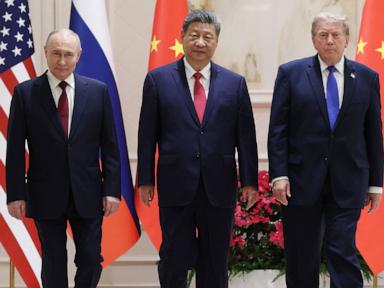
The headline out of Beijing sounds like a diplomatic victory, yet the fine print tells a completely different story. Donald Trump’s recent trip to China produced a sweeping peace declaration aimed at stabilizing bilateral relations, lowering temperature on trade disputes, and establishing crisis communication channels. However, the joint document notably omitted any binding commitments or direct resolutions regarding Iran and Ukraine. For foreign policy veterans watching the summit unfold, those two omissions are not oversights. They are the entire story, revealing the hard limits of transactional diplomacy when core national security interests collide.
Diplomatic communiqués are crafted with surgical precision. Every word included is fought over by teams of sherpas and deputies weeks in advance, and every word left out is excluded on purpose. When Washington and Beijing agreed to leave Tehran and Kyiv off the final ledger, both sides were acknowledging a fundamental deadlock. Neither superpower was willing to sacrifice its strategic equities in Eastern Europe or the Middle East simply to secure a bilateral photo opportunity.
The Illusion of the Bilateral Reset
Summits between American presidents and Chinese leaders always generate breathless coverage about historic breakthroughs. The reality on the ground is almost always more pedestrian. Both governments entered this meeting facing intense domestic economic pressures that made a public display of stability mutually beneficial.
In Washington, the administration has been looking for ways to manage inflationary pressures while keeping American agricultural and manufacturing exporters from losing permanent market share in Asia. In Beijing, the leadership is contending with a sluggish domestic recovery, weak consumer confidence, and structural debt issues in its property and local government sectors. A full-blown confrontation with the United States is the last thing Chinese economic planners want right now.
So, the two sides gave the markets what they wanted to see. They signed a declaration emphasizing peaceful coexistence, mutual respect, and renewed working groups on commercial disputes and fentanyl precursors. It reads well on a financial terminal. It temporarily calms nervous equity markets in New York and Shanghai.
Yet beneath that polished surface, the structural drivers of US-China competition remain untouched. Technology export controls on advanced semiconductors were not rolled back. Military deployments in the South China Sea were not reduced. The peace declaration functions less as a treaty and more as a tactical ceasefire designed to buy both capitals time to address internal vulnerabilities.
Why Ukraine Stayed Off the Page
The absence of Ukraine from the joint statement highlights the unbridgeable gap between Washington’s view of European security and Beijing’s alignment with Moscow. For the Trump administration, ending the war in Eastern Europe quickly has been a central foreign policy pledge, and pressuring China to cut off economic lifelines to Russia is the most obvious lever available.
Beijing, however, views its no-limits partnership with Russia through the prism of its own survival. Chinese strategists look at the map and see a vast northern border shared with a nuclear-armed neighbor. Ensuring that Moscow remains friendly, stable, and dependent on Chinese markets is an existential priority for Beijing. China will not abandon Vladimir Putin to please an American president, regardless of the trade incentives offered in return.
At the same time, Beijing has been careful to avoid triggering secondary Western sanctions that could cripple its major financial institutions. Chinese state-owned banks have quietly tightened compliance on certain cross-border transactions with Russian entities, even as overall bilateral trade remains high, largely driven by discounted Russian crude oil and Chinese dual-use industrial components.
During the Beijing talks, American negotiators pushed for explicit language calling for an immediate ceasefire and territorial integrity principles that would box Moscow in. Chinese diplomats refused. Including Ukraine in a bilateral declaration on the terms Washington wanted would have poisoned Beijing’s relationship with the Kremlin overnight. Leaving it out allowed Beijing to maintain its posture of supposed neutrality while continuing to underwrite Russia's wartime economy from the sidelines.
The Iranian Blind Spot
If Ukraine represents a collision of Eurasian geopolitics, the omission of Iran exposes a sharp divergence in energy security and Middle Eastern strategy. Washington’s approach to Tehran relies heavily on maximum pressure sanctions designed to choke off oil revenues and curb regional proxy networks. That strategy has a glaring vulnerability: China buys the vast majority of Iran’s exported crude.
For years, a shadow fleet of tankers has moved sanctioned Iranian oil to independent refineries in China’s Shandong province, settled in renminbi outside the reach of the US dollar clearing system. This trade provides Tehran with a vital financial lifeline while giving Chinese refiners access to heavily discounted energy supplies.
American officials arrived in Beijing hoping to extract a commitment that China would curtail these purchases and use its diplomatic clout to restrain Iranian nuclear ambitions and regional militancy. They hit a brick wall. From Beijing’s perspective, enforcing unilateral American sanctions on a sovereign energy supplier sets a dangerous precedent that could easily be turned against China in a future crisis over Taiwan.
Furthermore, China has spent the last several years positioning itself as an alternative power broker in the Middle East, most notably by brokering the diplomatic restoration between Saudi Arabia and Iran. Signing onto an American-led rebuke of Tehran inside a peace declaration would destroy Beijing’s carefully cultivated image as a non-interfering partner across the Global South.
The refusal to include Iran demonstrates a simple truth about modern sanctions. Economic blockades only work when the world's largest commodity importer agrees to enforce them. Without Beijing’s cooperation, Washington’s leverage over Tehran remains severely constrained.
Transactional Diplomacy Meets Ideological Reality
To understand why this summit played out this way, you have to look at the competing diplomatic playbooks used by both sides. The Trump administration approaches foreign policy like a high-stakes real estate negotiation. Everything is on the table, every issue can theoretically be traded against another, and personal rapport between leaders is treated as the ultimate currency.
The Chinese Communist Party operates on a completely different frequency. Beijing separates tactical flexibility from core ideological and territorial imperatives. Chinese negotiators are happy to trade soybean quotas, aircraft orders, or tariff exemptions. Those are transactional variables. They will never trade away strategic alliances, sovereign energy supply lines, or the geopolitical buffer provided by Russia.
When an American administration attempts to bundle trade concessions with demands on Iran and Ukraine, it runs directly into this structural wall. You cannot buy off a rival's core security architecture with a trade deal.
Consider a hypothetical example of how this miscalculation plays out in practice. Imagine an American trade representative offering to lift a ten percent tariff on Chinese consumer electronics if Beijing agrees to halt dual-use machinery exports to Russian defense contractors. To an American dealmaker, that looks like a balanced quid pro quo. To a strategist in Beijing, accepting that deal means trading a temporary, reversible tariff reduction for the permanent destabilization of a vital strategic partner on China’s northern flank. Beijing will walk away from that trade every single time.
The Real Takeaways for Global Markets and Security
Strip away the diplomatic pageantry, and several concrete realities emerge from the Beijing summit that businesses, investors, and policymakers must factor into their planning.
A Managed Floor, Not a Ceiling
The primary achievement of the Trump China trip is the establishment of a managed floor under the bilateral relationship. Neither side wants an accidental military clash in the Taiwan Strait or a sudden, chaotic decoupling that triggers a global recession. By re-establishing direct leader-to-leader dialogue and institutionalized working groups, both capitals have lowered the immediate risk of a catastrophic miscalculation. Supply chains reliant on Chinese manufacturing have received a temporary reprieve from sudden, punitive shocks, though the long-term trend toward diversification remains intact.
The Persistence of Regional Proxy Conflicts
Because Iran and Ukraine were deliberately excluded from the framework, there will be no superpower coordination to wind down either conflict. Washington will continue to manage European security and Middle Eastern containment largely on its own, relying on unilateral sanctions, military deterrence, and traditional alliances. Beijing will continue to exploit those distractions, using America’s bandwidth constraints in Europe and the Persian Gulf to consolidate its own influence across the Indo-Pacific.
The Erosion of Dollar Leverage
The quiet refusal by Beijing to budge on Iranian oil imports underscores the growing resilience of alternative financial plumbing. Over the past decade, China, Russia, and Iran have built parallel payment rails, local currency swap lines, and non-Western shipping insurance networks specifically designed to bypass US Treasury oversight. The Beijing summit confirmed that Washington can no longer simply demand compliance from third-party powers without offering massive, structural concessions in return.
Domestic Politics Drive the Narrative
Both leaders walked away from the table with narratives tailored for their home audiences. The White House can point to a peace declaration as proof that strong leadership brings adversaries to the table and prevents costly foreign wars. Zhongnanhai can tell its domestic audience that China stood firm against American hegemony, refused to bow to external pressure on its friendships with Moscow and Tehran, and secured a stable external environment for economic recovery.
What History Tells Us About Paper Declarations
Diplomatic history is littered with grand declarations that aged poorly once the ink dried. The 1972 Shanghai Communiqué worked precisely because Richard Nixon and Mao Zedong were brutally honest about their disagreements, writing their competing positions directly into the text rather than pretending they did not exist. It was an exercise in strategic clarity.
Modern summitry too often favors strategic ambiguity over hard truths. By papering over the profound chasms separating Washington and Beijing on Ukraine and Iran, the latest declaration creates an illusion of consensus that will inevitably fracture the moment a new crisis erupts in the Persian Gulf or Eastern Europe.
A peace declaration that ignores the two active conflicts reshaping the global order is not a blueprint for lasting stability. It is an admission that on the questions that actually determine war and peace in the twenty-first century, the world’s two most powerful nations have nothing left to say to each other.