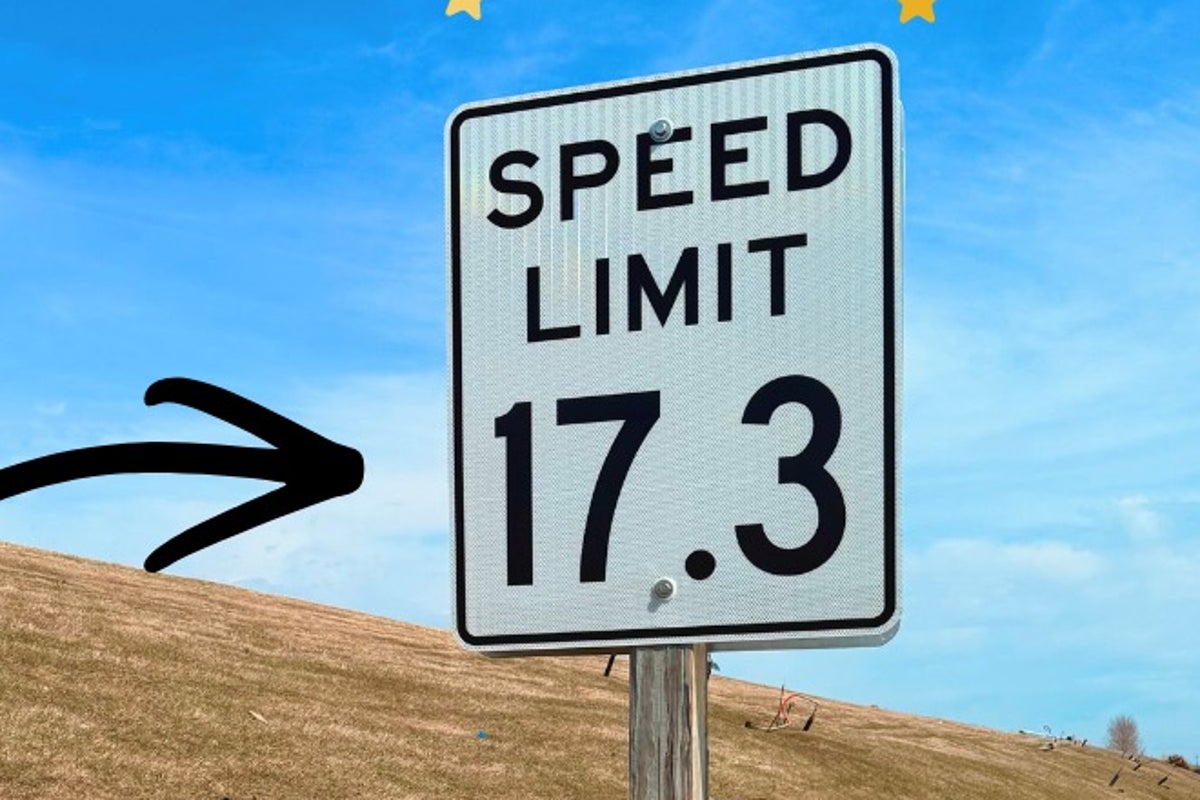
Drivers passing through the small town of Theresa, Wisconsin usually double-check their eyesight when they hit a specific stretch of Highway 28. Standard speed limit signs across America rely on clean, round numbers. You see 25, 35, or 55 miles per hour.
But in Theresa, a highly unusual road sign reads exactly 18.6 miles per hour.
It is not a typo. It is not a prank by local teens. That precise decimal point serves a fascinating blend of local history, international engineering standards, and clever psychological traffic management. If you have ever wondered why a local government would go through the bureaucratic headache of printing a fractional speed limit, the answer involves a massive manufacturing plant, a German corporate legacy, and the surprising way human brains process unusual data on the road.
The History of the 18.6 Speed Limit in Theresa
To understand how a decimal point ended up on a rural Wisconsin roadway, you have to look at the massive industrial presence right next to the asphalt. The sign stands on the property of the TAB Products manufacturing facility, a company deeply tied to European operations and international shipping standards.
When the facility layout was established, engineers designed the internal logistics and connecting access roads using the metric system.
The target safety speed for the heavy machinery, forklifts, and delivery trucks on the property was determined to be exactly 30 kilometers per hour. For decades, this worked perfectly for internal operations. Trouble started when the private access roads began interacting more frequently with public traffic and local drivers who were entirely accustomed to the American system of measurement.
The math behind the sign is simple but rigid.
$$30 \text{ km/h} \times 0.621371 = 18.6411 \text{ mph}$$
Instead of rounding the number up to 20 miles per hour or dropping it down to 15, company officials and local coordinators made the bold choice to display the exact conversion. They literally printed 18.6 mph onto the metal.
Why Standard Speed Limits Fail to Slow Drivers Down
Most traffic engineers will quietly admit a frustrating truth. Standard speed signs are mostly invisible.
When you drive down a road marked 25 miles per hour, your brain registers the sign as background noise. You look at the road, judge the flow of traffic, and usually drive at whatever speed feels comfortable for the environment. This is known as the 85th percentile rule in traffic engineering, which suggests that most drivers naturally travel at a safe speed based on road conditions rather than the law.
Standard numbers fail because they lack urgency.
- 20 mph feels like a suggestion.
- 25 mph triggers autopilot driving habits.
- 30 mph blends into every other residential street in the country.
When a driver sees a standard number, they instantly calculate their personal "buffer zone." Most people assume police officers will not pull them over for going five miles per hour over the limit. A 25 mph zone effectively becomes a 30 mph zone in the mind of the average commuter. This mental negotiation defeats the entire purpose of hyper-localized safety zones.
The Psychological Trick of the Fractional Sign
The 18.6 mph sign in Wisconsin works because it violates your expectations. It breaks the mental script of driving.
When you glance at a sign that says 18.6, your brain cannot instantly process it as background noise. It forces a cognitive stutter. You ask yourself why that specific number exists. Is it enforced by a hyper-precise radar system? Is there an incredibly specific hazard ahead?
This cognitive friction forces you to look down at your speedometer.
[Standard Sign: 20 mph] ---> Brain Ignores ---> Driver Filters Out
[Unusual Sign: 18.6 mph] ---> Brain Processes ---> Driver Lowers Speed
By the time you finish calculating why the decimal point is there, you have already lifted your foot off the gas pedal. The psychological impact achieves the exact goal the engineers wanted: immediate, conscious compliance without needing a police cruiser parked on the shoulder.
Other Bizarre Speed Limits Across America
Theresa, Wisconsin is not the only place using odd numbers to grab your attention. While federal guidelines under the Manual on Uniform Traffic Control Devices (MUTCD) generally discourage fractional limits on public highways, private properties, amusement parks, and small enclaves love to experiment with them.
The famous natural resort community of Sea Ranch, California features a strictly enforced speed limit of 15 miles per hour on its main roads, but branches off into private segments where signs read 14 miles per hour. The goal is identical to the Wisconsin strategy. The community wanted to protect local wildlife and pedestrians, recognizing that a standard 15 mph sign would simply be ignored by vacationers.
In parts of the American South, certain industrial parks and private university campuses utilize 19 mph or 11 mph signs. Every single one of these oddities is a deliberate attempt to shock drivers out of their commuter daydreams.
What to Do When Navigating Odd Traffic Zones
If you happen to find yourself road-tripping through Dodge County, Wisconsin, or any other area utilizing non-traditional traffic signs, you need to adjust your driving habits immediately.
Treat these zones as high-risk areas for pedestrian traffic or heavy machinery. Do not attempt to apply your usual five-mile-per-hour buffer zone to a fractional limit. These signs are almost always installed by private entities or small municipalities with a zero-tolerance policy for speeding due to specific liability risks. Keep your eyes on the pavement, match the odd number as closely as your vehicle's speedometer allows, and appreciate the strange engineering history that shaped the roadway.