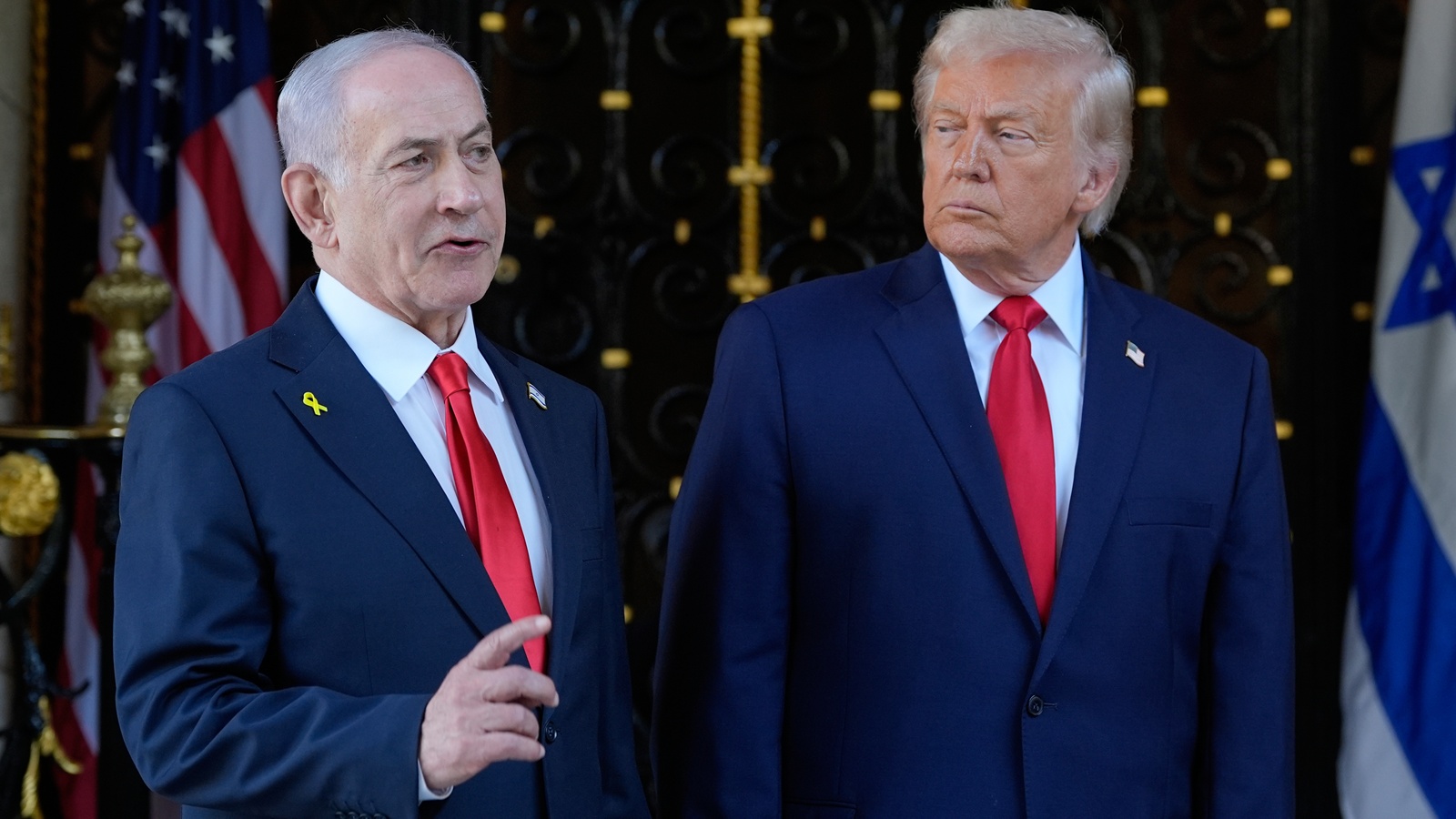
Donald Trump did not hide his exhaustion. Hours before an Oval Office summit with Israeli Prime Minister Benjamin Netanyahu, the American president dismissed the latest intelligence briefings coming out of Jerusalem with a sharp public reprimand. The core conflict centers on Iran's secretive subterranean facility at Pickaxe Mountain, where satellite imagery and regional reports indicate ongoing excavation and construction. Netanyahu arrived in Washington determined to wave these satellite photos as proof that Tehran is aggressively rebuilding its nuclear architecture, demanding a unified military posture to crush the project before it goes dark.
Trump saw a different movie entirely. Expanding on this theme, you can also read: The Diplomatic Theater of Misri in Beijing is a Dead End.
"I don't need Bibi to tell me that," Trump told interviewers, cutting straight to the underlying anxiety driving the Israeli delegation. "Bibi is telling me that because he wants me to stay involved."
Behind the diplomatic posturing lies a stark divergence in strategic timelines. For months, the White House has actively pursued indirect talks with Iranian counterparts to secure a binding nuclear freeze, preferring a negotiated off-ramp to an indefinite, multi-front regional war. Conversely, the government in Jerusalem views any diplomatic opening as a trap that leaves existential threats intact. When Netanyahu broadcasts fresh intelligence regarding underground infrastructure, he is not merely informing Washington; he is attempting to corner the American commander-in-chief into a permanent military commitment. Analysts at Reuters have also weighed in on this trend.
The public clash exposes the limits of an alliance that has spent the past five months navigating a joint military campaign that ultimately left regional shipping choked and American bases targeted. While Washington maintains the capability to target facilities like Pickaxe Mountain with massive ordnance, the current administration calculates that constant escalation serves foreign interests rather than domestic American priorities. Trump's frustration is structural. If American surveillance already tracks every access road and fortification at the site, public grandstanding serves no tactical purpose. It only complicates delicate diplomatic channels currently managed behind closed doors.
To understand the mechanics of this friction, one must examine how intelligence is weaponized in modern geopolitics. Shared data is rarely neutral. When an ally hands over target packages or excavation analyses, the transfer is accompanied by an unspoken operational demand. By making the intelligence public, Jerusalem effectively boxed Washington into a corner, forcing the White House to either validate the threat publicly or look passive in the face of renewed enrichment activities.
Trump chose a third path: public neutralization. By declaring that he already knows the exact status of the underground site and dismissing the threat as manageable, he stripped the intelligence of its coercive power. The American president framed the revelation not as an alarming discovery, but as a predictable lobbying effort designed to keep American bombers circling Middle Eastern skies.
This dynamic highlights a fundamental imbalance in the bilateral relationship. For decades, intelligence sharing functioned as the currency of mutual trust. Today, it has transformed into an instrument of political leverage. Netanyahu faces intense domestic pressure to project absolute intransigence against Tehran, ensuring that his political survival remains tethered to a state of perpetual high alert. Trump, meanwhile, is attempting to wind down costly foreign entanglements to focus on domestic economic stability and negotiated deterrence.
The disagreement over Pickaxe Mountain is merely a symptom of this deeper fracture. As the Oval Office talks proceed behind closed doors, the fundamental question remains unresolved. Intelligence can map a mountain, but it cannot bridge the widening gap between an ally seeking perpetual intervention and a superpower looking for the exit.


