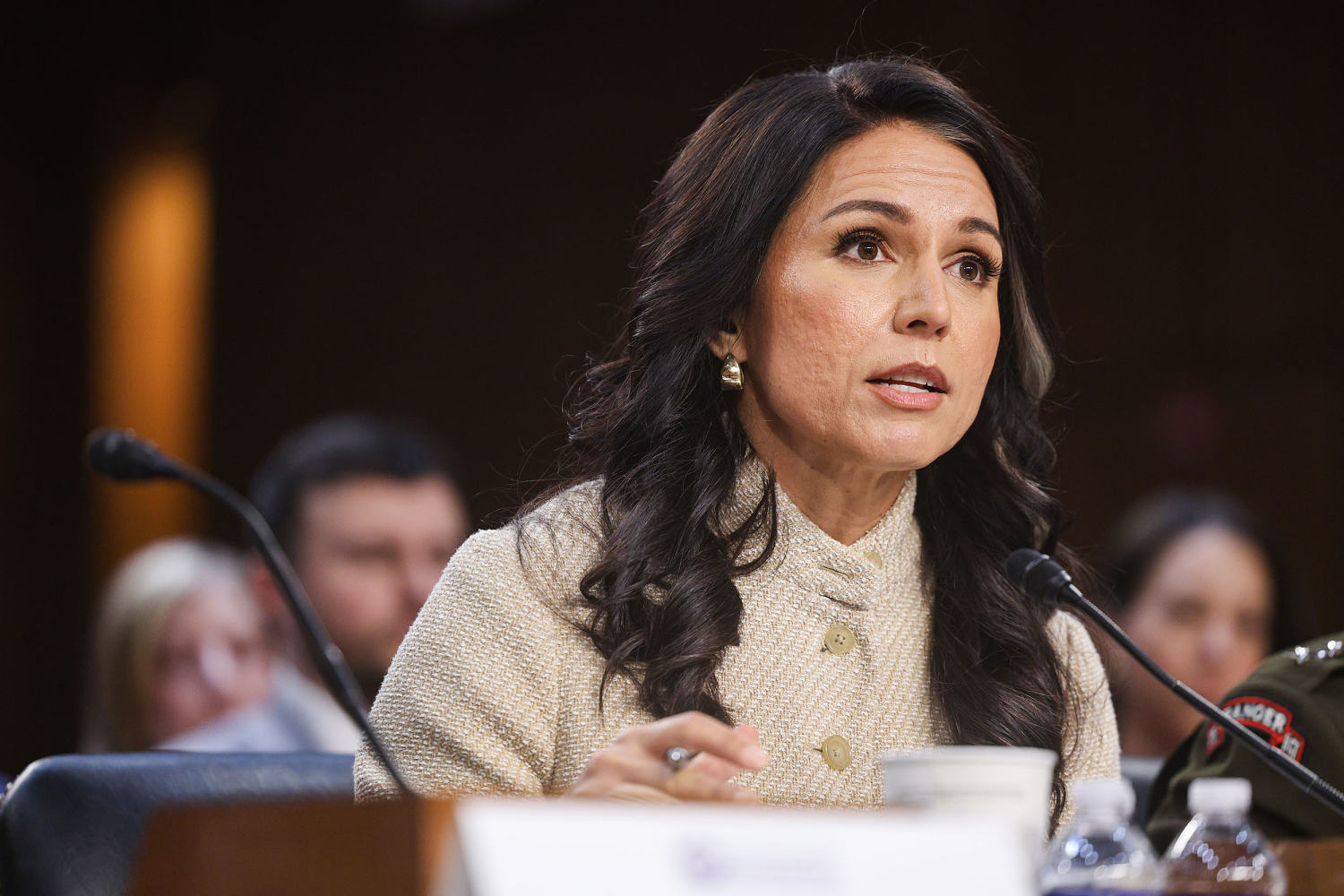
Director of National Intelligence Tulsi Gabbard announced her resignation, effective June 30, 2026. While her formal resignation letter centers on a deeply personal crisis—her husband Abraham's recent diagnosis with an extremely rare form of bone cancer—the departure marks the end of a highly turbulent chapter for the U.S. intelligence community. Gabbard is now the fourth Cabinet-level official to exit during President Donald Trump's second term. Beyond the tragic family emergency, her exit follows months of intense policy friction, public contradictions from the Oval Office, and a widening chasm over American operations in the Middle East.
Aaron Lukas, the principal deputy director, will assume the role of acting director. He inherits an agency shaken by structural upheavals and a stark ideological battle over the limits of American power.
Isolationism Versus the Oval Office
Gabbard was an unconventional pick from the start. A former Democratic congresswoman who pivoted to an independent and eventually championed Trump's "America First" agenda, she lacked traditional intelligence community experience. Her core political identity was forged in opposition to foreign military intervention. She frequently blasted what she called an elite class of warmongers in Washington.
That isolationist stance eventually placed her on a collision course with the reality of an escalating crisis with Iran.
The friction became undeniable during a series of high-profile congressional hearings. In March 2025, Gabbard testified before the Senate Intelligence Committee that Iran was not actively building a nuclear weapon. The assessment clashed with the more aggressive posture favored by key White House advisers. The fracture burst into the open in June 2025, when the United States launched military strikes on Iranian nuclear facilities. Trump publicly broke with his intelligence chief, declaring her formal assessment flatly "wrong."
For an intelligence director, a public rebuke of this scale from the commander-in-chief is often a terminal event.
During subsequent appearances on Capitol Hill, lawmakers repeatedly cornered Gabbard. They pressed her to reconcile her personal anti-interventionist ideology with the administration's active military operations. Her defense became a boilerplate reminder of executive authority. She stated that the decision to strike belonged exclusively to the president, effectively distancing her office from the strategic choices driving the conflict.
The Deputy Rebellion and Staffing Chaos
The tension inside the Office of the Director of National Intelligence (ODNI) was not limited to disagreements between Gabbard and the president. It rippled down through her own handpicked leadership team, culminating in a messy staff rebellion earlier this year.
Joe Kent, a top deputy appointed to lead the National Counterterrorism Center, resigned in protest over the direction of the war in Iran. Kent did not slip away quietly. He launched a public broadside, alleging that foreign intelligence operations had maneuvered the Trump administration into an unnecessary conflict. He explicitly blamed outside influences for driving U.S. military operations in Syria and Iran.
The political fallout from Kent's exit severely weakened Gabbard's standing. It forced her into a defensive posture, trying to manage an agency where senior staff openly questioned the foreign policy decisions they were tasked with supporting.
Recent Cabinet Departures under Trump
Gabbard’s exit fits into a broader pattern of rapid turnover that has come to define this administration.
| Official | Department | Departure Date | Primary Reason or Context |
|---|---|---|---|
| Kristi Noem | Homeland Security | March 2026 | Ousted amid scrutiny over immigration enforcement and disaster response. |
| Lori Chavez-DeRemer | Labor | April 2026 | Resigned following multiple internal misconduct investigations. |
| Tulsi Gabbard | National Intelligence | Effective June 30, 2026 | Husband's cancer diagnosis; followed months of policy rifts over Iran. |
Intelligence Gathering in a Divided Era
The structural problem of the ODNI under Gabbard was rooted in the fundamental tension between raw intelligence analysis and political ideology. The agency was created after the September 11 attacks to unify 18 disparate intelligence entities, ensuring that analytical data flowed smoothly to the executive branch without being filtered through a political lens.
When an administration actively distrusts its own intelligence apparatus, the mechanism breaks down. Gabbard’s mandate was to reshape the agencies to prevent what her allies viewed as deep-state overreach. Instead, the office frequently found itself sidelined during critical national security moments. Reports indicated she was left out of several high-level briefings and decision-making sessions regarding the active conflict with Iran.
The dynamic created an untenable situation. The nation's top intelligence official was publicly disconnected from the nation's most pressing military campaign.
The Unresolved Search Controversies
Gabbard's tenure was also complicated by domestic political assignments that blurred the traditional lines of her office. Her involvement in domestic operations sparked fierce resistance from congressional Democrats and civil liberties advocates.
Most notably, Gabbard faced intense scrutiny regarding her presence at an FBI search of a Fulton County, Georgia, election center. Trump later confirmed that she joined the operation at the specific request of Attorney General Pam Bondi.
The move drew immediate fire from lawmakers like Senator Mark Warner, who criticized the involvement of the nation's top intelligence official in domestic law enforcement and election infrastructure matters. Gabbard defended her presence as an oversight measure requested by the executive branch. The incident further polarized her relationship with the congressional oversight committees responsible for approving her budget and monitoring her agency's activities.
The Handover to Aaron Lukas
The immediate challenge falls to Aaron Lukas. As acting director, he must steady an agency that has spent a year and a half caught between an anti-interventionist leadership team and a wartime White House.
Lukas is a traditionalist compared to Gabbard. His immediate priority will be restoring broken lines of communication with regional allies who grew wary of Washington’s mixed signals during the height of the Gabbard-Kent policy disputes. He must also repair the frayed relationship between the ODNI and the centralized intelligence agencies, particularly the CIA and the Defense Intelligence Agency, which frequently clashed with Gabbard’s skeptical approach to foreign threat assessments.
The institutional scars of the past 18 months will not heal quickly. The next permanent nominee will face a grueling confirmation process, where every past assessment on Iran, domestic surveillance, and executive authority will be litigated in public. Gabbard’s exit solves a political problem for a White House looking for absolute alignment during an active military conflict, but it leaves the intelligence community looking for stability that has been absent since the term began.