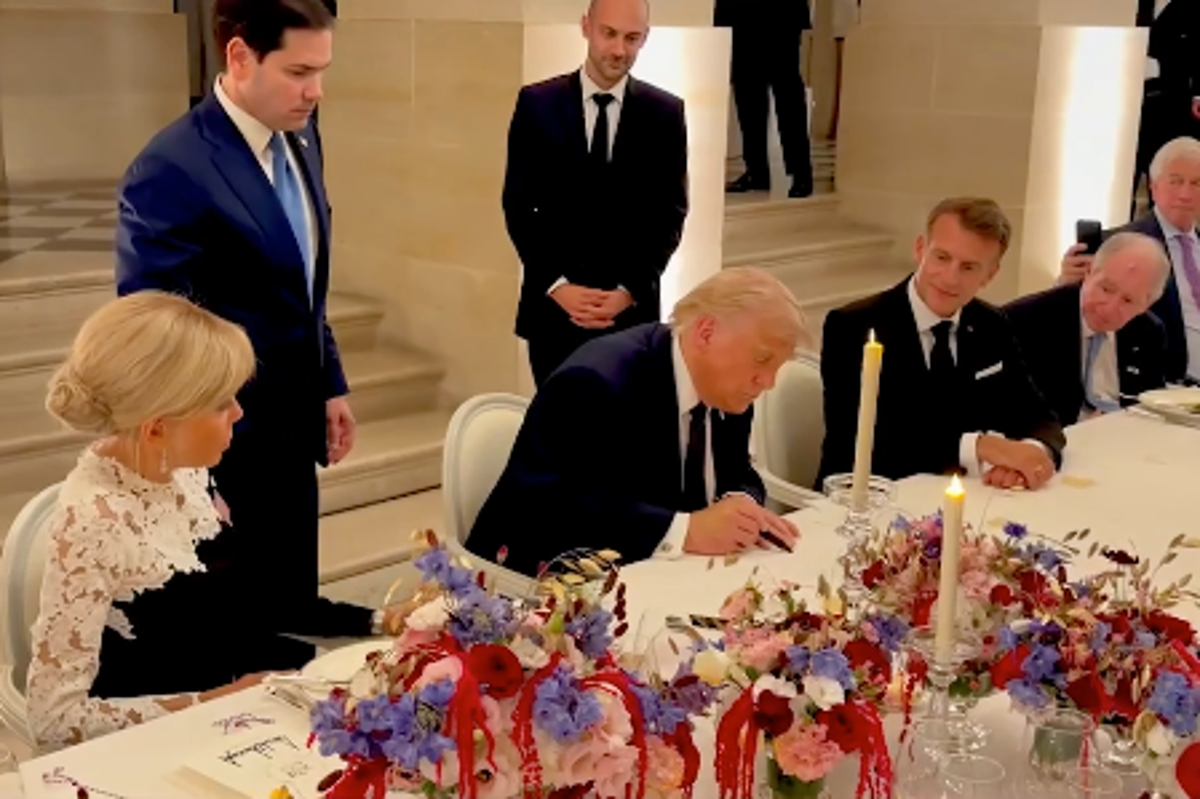
The threat of an absolute global economic collapse did what months of heavy bombardment could not. By signing a fourteen-point memorandum of understanding with Iranian President Masoud Pezeshkian, U.S. President Donald Trump abruptly ended a devastating hundred-day war that had choked off the primary artery of the global energy supply. The deal achieves an immediate ceasefire and temporarily reopens the Strait of Hormuz. Yet behind the triumphant rhetoric emanating from Washington lies a series of severe, front-loaded concessions to Tehran that reveal just how desperate the American administration was to avert a historic financial panic.
The core agreement traded a cessation of hostilities and a temporary suspension of Iran's uranium enrichment for the immediate lifting of the U.S. naval blockade on Iranian ports. Washington has also granted sweeping sanctions waivers that allow Iran to instantly resume exporting its crude oil to global markets. To critics across the political spectrum, the deal looks less like a strategic victory and more like an emergency bailout for a global economy that was rapidly running out of fuel. The primary objective of the American intervention had been the permanent dismantlement of Tehran’s nuclear architecture and the neutralization of its regional proxies. This interim agreement accomplishes neither, pushing the most contentious issues into a highly volatile sixty-day negotiating window while leaving Iran with its regional influence largely intact.
The Crushing Economic Arithmetic of the Strait Closure
No economy can survive the indefinite closure of its most critical maritime chokepoint. When the conflict erupted on February 28, the immediate shuttering of the Strait of Hormuz removed nearly twenty percent of the world’s daily petroleum and liquefied natural gas supply from commercial circulation. The resulting shock waves hit global financial systems with terrifying speed. Retail gasoline prices across the United States surged toward unprecedented heights. Factory outputs in Western Europe and East Asia cratered as energy costs multiplied overnight.
Inside the West Wing, internal projections warned that if the shipping lanes remained blocked into the third quarter of the year, the world would plunge into a prolonged financial depression worse than the crisis of 2008. Shipping insurance premiums for vessels operating anywhere near the Arabian Sea became entirely prohibitive. Commercial fleets refused to send billion-dollar supertankers into a body of water littered with sophisticated anti-ship cruise missiles and unmapped fields of naval mines.
The administration discovered that naval power has strict operational limits when confronting an adversary willing to wage asymmetric warfare across a narrow waterway. American carrier strike groups could successfully intercept waves of incoming drones and ballistic missiles, but they could not guarantee the safety of civilian merchant vessels. Every commercial ship that suffered damage or hit a mine further paralyzed international trade. The war of attrition was not destroying the Iranian regime; it was breaking the back of the international shipping industry.
Tehran Commands a Price for Safe Passage
The most alarming aspect of the new geopolitical reality is not the temporary truce, but what happens when the initial sixty-day window expires. While President Trump publicly proclaimed that the waterway would be permanently free of restrictions, officials in Tehran immediately contradicted that narrative. Iranian chief negotiator Mohammad-Bagher Ghalibaf went on state television to clarify that the maritime environment will never return to its prewar state.
Tehran asserts that it possesses total legal sovereignty over the shipping channels running through its territorial waters. The Islamic Republic has officially announced its intention to implement a permanent transit fee system for all commercial vessels passing through the strait once the initial two-month toll-free period concludes. This effectively transforms one of the most vital international waterways into an Iranian-controlled toll road.
The strategic implications of this shift are profound. If international maritime traffic must pay a direct tax to a state that remains heavily hostile to Western interests, the cost of global commerce permanently adjusts upward. It sets a dangerous precedent for other critical global shipping channels, from the Bab-el-Mandeb to the Malacca Strait. Nations could see their economic lifelines subjected to localized taxation under the threat of military closure.
The Toxic Rift Between Washington and Jerusalem
The signing of the memorandum has sparked a bitter diplomatic confrontation between the United States and its closest regional ally. Israeli Prime Minister Benjamin Netanyahu had viewed the American military intervention as a once-in-a-generation opportunity to decisively eliminate Iran’s nuclear facilities at Natanz and Fordow. The sudden cessation of hostilities leaves those subterranean enrichment sites intact, albeit under temporary international monitoring.
Furthermore, the ceasefire explicitly covers the northern front in Lebanon. This component of the deal requires a total halt to military operations against Hezbollah, a demand that Tehran insisted upon as a non-negotiable prerequisite for reopening the oil lanes. The Israeli leadership has fiercely rejected this constraint. Senior military officials in Tel Aviv argue that leaving Hezbollah’s heavily armed forces entrenched along their northern border is an intolerable security risk.
This divergence in priorities highlights the fundamental mismatch in the wartime objectives of the two allies. For Washington, the primary threat was an uncontrolled global economic downward spiral driven by astronomical oil prices. For Jerusalem, the threat was existential and localized. By prioritizing global economic stability over the total destruction of Iran’s proxy network, the American administration has created a deep schism that Tehran will undoubtedly exploit throughout the upcoming negotiations.
The Surrender of Financial Leverage
To secure the initial signature of President Pezeshkian, American negotiators had to dismantle large portions of the maximum pressure financial architecture that had taken years to construct. The immediate issuance of oil export waivers means that billions of dollars in fresh petroleum revenue will begin flowing directly into the central bank in Tehran within weeks. This sudden influx of hard currency will rapidly restabilize the domestic Iranian economy, which had been buckling under the weight of the wartime naval blockade.
The deal also establishes a framework for the eventual unfreezing of hundreds of billions of dollars in overseas Iranian assets that have been locked up in international banks for years. When questioned about this massive financial concession, President Trump offered a remarkably candid defense of the decision. He noted that the funds in question did not belong to the United States and warned that a permanent refusal to return frozen assets would destroy the credibility of the U.S. dollar as the world's reserve currency.
This argument reveals a structural vulnerability in the American weaponization of international finance. When the global economic system is pushed to the brink of collapse, the utility of financial sanctions diminishes rapidly. By choosing to front-load these economic rewards rather than conditioning them on the verified, permanent dismantlement of Iran's nuclear program, the United States has surrendered its primary piece of diplomatic leverage before the real technical negotiations have even begun.
A Tenuous Future on a Sixty-Day Clock
The document signed at Versailles is not a comprehensive peace treaty. It is a highly fragile pause in a conflict that remains fundamentally unresolved. The minimum nuclear commitment extracted from Tehran requires the International Atomic Energy Agency to oversee the downblending of its four hundred and forty kilogram stockpile of highly enriched uranium. While this temporarily widens the timeline required for Iran to produce a nuclear weapon, it does nothing to alter the technical knowledge and infrastructure that the country has acquired.
The entire architecture of this agreement rests on a countdown that expires in less than two months. If the upcoming technical talks in Geneva fail to produce a permanent framework regarding regional security, shipping tolls, and nuclear limitations, the waivers will expire and the naval blockade could be reinstated. The president has already used characteristically aggressive language to warn that the military option remains on the table if Iran fails to cooperate during the talks.
The reality on the ground suggests that returning to open warfare will be far more difficult than the administration admits. Having tasted the catastrophic economic consequences of a closed strait, international markets and corporate entities will exert immense pressure on Washington to avoid a secondary flare-up. Tehran understands this dynamic perfectly. The Iranian leadership knows that the global economy cannot withstand another hundred days of maritime warfare, giving them an exceptionally strong hand to play as the two nations prepare to face each other across the negotiating table in Switzerland.


