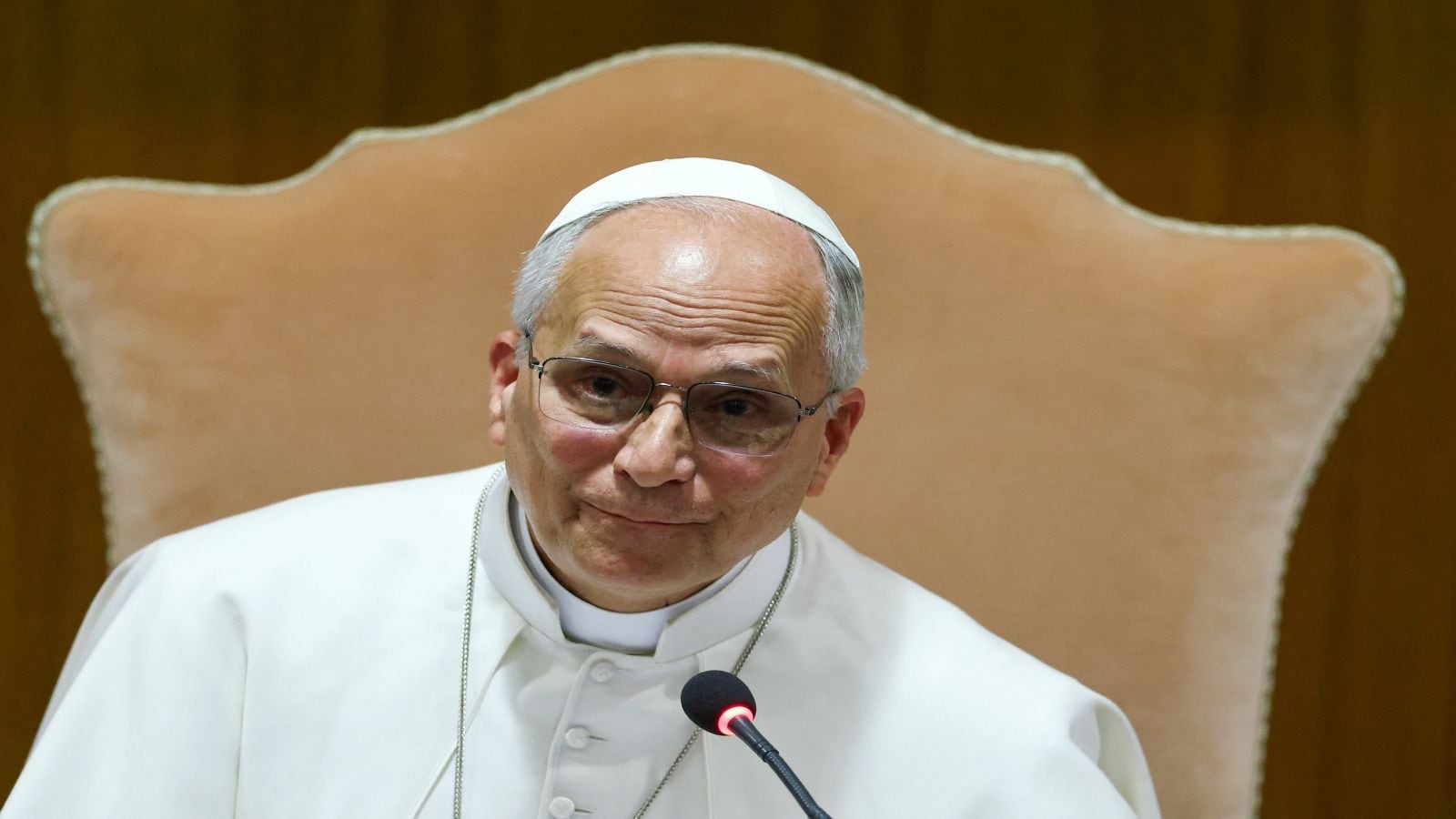
Pope Leo XIV landed in Madrid this week with a mandate that exposes a bitter, quiet civil war between the Vatican and the Spanish hierarchy. By directly ordering Spain’s bishops to listen to abuse survivors and provide genuine financial reparations, the first American pontiff didn’t just offer pastoral advice. He challenged a entrenched institutional culture that has spent decades denying the systemic nature of clerical crimes. For the hundreds of thousands of Spanish survivors, the papal directive is a long-delayed validation. For the country's bishops, it is an uncomfortable reckoning that threatens both their financial autonomy and their traditional authority.
The primary tension lies in a fundamental disagreement over accountability. While Pope Leo insists that the church must take structural responsibility, Spain’s bishops have spent years arguing that clerical abuse is not a systemic problem, frequently pointing out that statistical majorities of sexual crimes occur in secular society. This defensive crouch is finally collapsing under the weight of independent investigations and public outrage.
The Numbers Game and Institutional Denial
For decades, the Catholic Church in Spain operated under a shield of exceptionalism. While major abuse scandals forced multi-million-dollar settlements and structural overhauls in the United States, Ireland, and Australia, Spanish church leaders maintained that their dioceses were largely untainted.
That illusion vanished when a landmark 2023 report by Spain's human rights ombudsman estimated that hundreds of thousands of minors had been abused within church environments since 1940. When accounting for lay employees in Catholic schools and youth programs, the estimated number of victims escalated significantly.
The reaction from the Spanish Episcopal Conference was not sudden repentance. Instead, it was an exercise in statistical minimization. Bishops questioned the methodology of the report, suggesting the figures were inflated by anti-clerical political motives.
This statistical battle obscures the human cost. For survivors, the denial from the pulpit felt like a second abuse. The institutional response concentrated on protecting the reputation of the church rather than addressing the trauma of the victims.
The Fight Over the Purse Strings
The friction between Rome and Madrid isn't merely theological. It is deeply financial.
In March 2026, under intense political pressure from Spain's left-leaning coalition government, the bishops signed a joint protocol establishing an extrajudicial reparations program. This system was designed to handle cases involving deceased clergy or crimes where the statute of limitations had expired.
The critical clause in this agreement, however, is what truly agitates the local hierarchy. The Spanish government, through an independent panel of experts, retains the final word on payout amounts.
REPARATIONS DISPUTE MECHANISM
[Independent Expert Team (Ombudsman)] ➔ Reviews Case & Proposes Payout
                 │
                 ├──► Agreement Reached ➔ Church Pays
                 │
                 └──► No Agreement ➔ Joint Committee (Church, Ombudsman, Victims)
This arrangement marks a stark departure from how the church prefers to manage its capital. Historically, dioceses across the globe have used bankruptcy filings or internal, opaque tribunals to dictate compensation on their own terms. By yielding final authority to a secular state apparatus, the Spanish church lost its absolute control over its treasury.
Local bishops view this as a dangerous precedent. They argue that a secular committee might set arbitrary compensation figures that could bankrupt smaller, rural dioceses. Advocates counter that without state enforcement, the church would simply default to its default setting: total silence and minimal payouts.
The Fault Lines of Resistance
Pope Leo's speech to the bishops in Madrid explicitly tied financial reparation to spiritual conversion. He stated that prevention cannot merely be a matter of bureaucratic protocols or defensive legal strategies. It must be an expression of faith.
Yet, implementing this vision faces significant resistance within the local infrastructure.
The Statute of Limitations Shield
Many bishops still rely on civil and canonical expiration dates to avoid legal liability. When survivors come forward with decades-old allegations, they are frequently met with formal letters stating that the time for legal recourse has passed.
The Problem of Deceased Perpetrators
A vast number of documented cases involve priests who died long before the public reckoning began. Local dioceses have historically argued that they cannot investigate or offer restitution for the actions of individuals who can no longer defend themselves in a court of law.
Decentralized Resistance
While prominent figures like Cardinal Carlos Cobo of Madrid have championed initiatives like "Proyecto Repara" to offer psychological and legal accompaniment to survivors, provincial bishops often ignore these models. In rural dioceses, the traditional culture of protecting the priesthood remains fiercely intact.
Why the New Program is Built on Sand
Prominent survivors and activists remain deeply skeptical of the current church-state compensation model. They argue that the entire framework is structurally flawed because it relies on a voluntary timeline.
The program gives victims a window of just one year to apply for compensation. For someone who has spent forty years suppressing the trauma of childhood assault, a twelve-month administrative deadline is absurdly restrictive. It ignores the complex psychology of trauma, where coming forward often requires decades of mental preparation.
Furthermore, the system does not address the institutional cover-up. It focuses entirely on individual perpetrators, leaving the bishops and superiors who moved abusive priests from parish to parish completely insulated from personal accountability. Until the system penalizes the administrators who hidden the crimes, any talk of a new culture remains superficial.
Pope Leo's public insistence on "listening" and "just reparation" puts the Vatican on a direct collision course with this bureaucratic foot-dragging. The Pope is pushing for a total institutional shift, while the local hierarchy is trying to manage a public relations crisis until the political pressure subsides.
The success of this papal intervention will not be measured by the warmth of the applause in Madrid's cathedrals. It will be measured by the willingness of local chanceries to open their secret archives, sign the compensation checks dictated by secular authorities, and abandon the defensive rhetoric that has protected abusers at the expense of children.