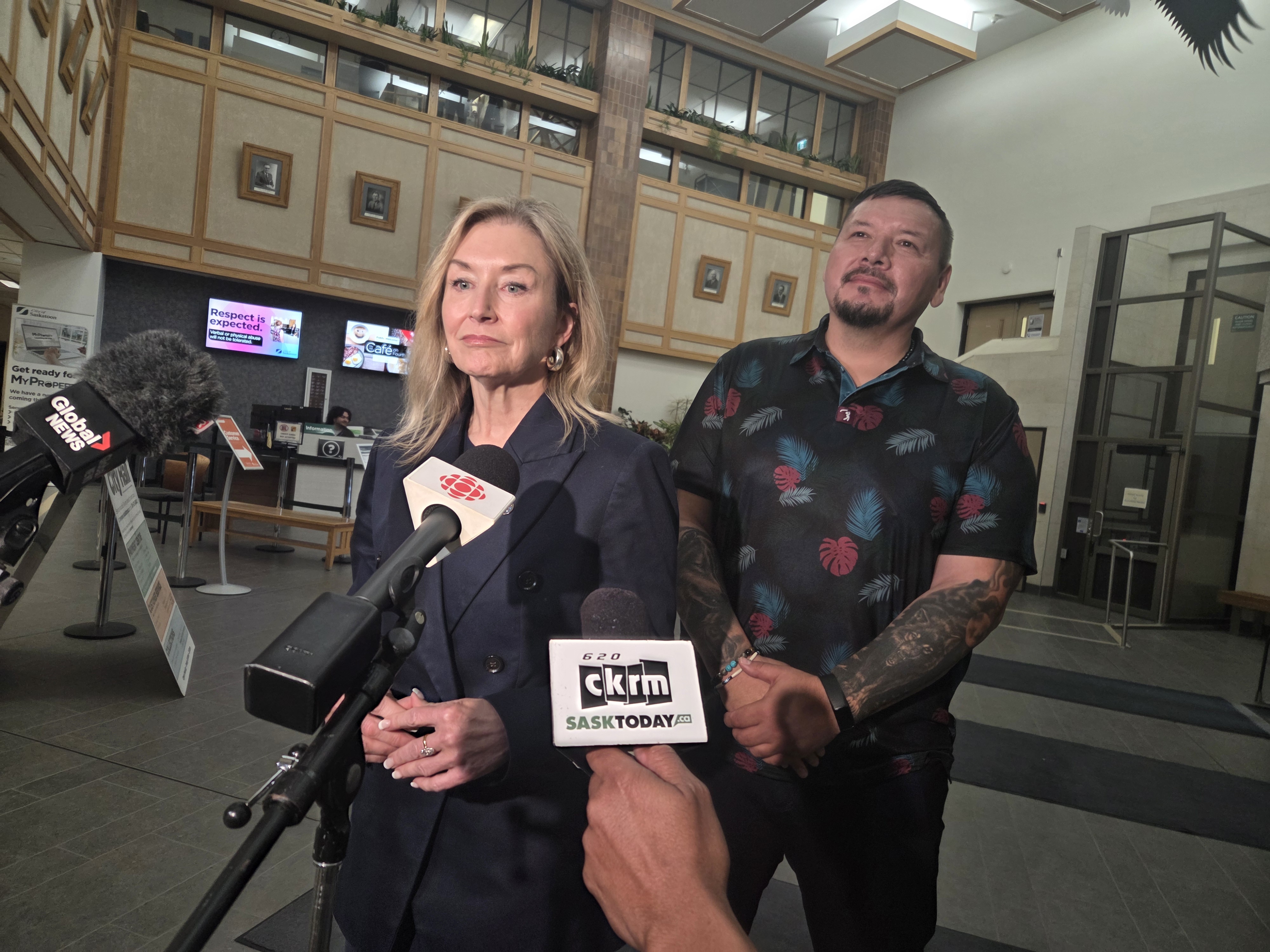
Saskatoon City Council voted unanimously to bypass standard competitive bidding processes and enter direct, exclusive negotiations with the Muskeg Lake Cree Nation to salvage its stalled $1.2-billion Downtown Event and Entertainment District (DEED). The sudden shift occurred exactly three months after the city rejected a massive operational bid from global venue management giant OVG360, leaving the massive municipal infrastructure plan without a clear path forward or a financing anchor. By choosing a single partner behind closed doors, municipal leadership avoided a costly public expression of interest process but sparked immediate controversy over transparency, public trust, and the financial reality of funding a modern arena complex.
The pivot reveals a calculated gamble by a municipality facing staggering cost projections, rising downtown social disorder, and a critical lack of external funding. While the partnership is framed as a historic leap for economic reconciliation, it operates as a high-stakes rescue mission for a project that city hall simply cannot afford to build on its own.
Bypassing the Playbook
In March, municipal officials walked away from OVG360, an international firm backed by immense private capital, after councilors grew uncomfortable with the long-term management terms and financial risks presented to local taxpayers. That rejection left the DEED project stranded.
When Muskeg Lake Cree Nation subsequently approached the city with an offer to step into the void, administrators faced a choice: launch a transparent, open procurement process to see who else might bid, or hand exclusive talking rights to a trusted local partner. They chose the latter, a move that sent shockwaves through traditional public procurement circles.
City Manager Jeff Jorgenson admitted that skipping an Expression of Interest (EOI) felt unusual, but argued that a wider search would have been disingenuous because the city likely would have settled on Muskeg Lake regardless. He also confirmed that another unnamed First Nation had expressed explicit interest in the project but was turned away without a formal evaluation.
That blunt admission triggered friction inside chambers. Councilor Robert Pearce targeted the decision, warning that a perceived deficit in public consultation had already created a deep well of distrust among Saskatoon residents. For an electorate already skeptical of a billion-dollar downtown megaproject, selecting a developer through closed-door discussions rather than an open competitive market threatens to undermine the democratic legitimacy of the entire initiative.
Municipal defenders counter that the market had its chance. Councilor Randy Donauer reminded critics that the original request for proposals was cast wide to North America, yielding underwhelming results that left the city practically begging for viable partners.
The Financial Calculus of an Urban Reserve
The partnership hinges on a mechanism that standard corporate developers cannot replicate: the creation of a massive new urban reserve right in the heart of downtown Saskatoon. Under the proposed framework, the lands underlying the new arena and the expanded TCU Place convention centre would be converted into an urban reserve held by Muskeg Lake Cree Nation.
Muskeg Lake is uniquely positioned to pioneer this model. In 1988, the Nation established Canada’s very first commercial urban reserve in Saskatoon's Sutherland neighborhood, transforming it into an economic hub that currently hosts major medical facilities and corporate offices. The Nation boasts an estimated net worth exceeding $100 million and brings a proven track record of sophisticated commercial property management.
The strategic value of this structure boils down to structural tax advantages and a unique backdoor to federal capital.
- Tax Sovereignty: Urban reserves allow First Nations to design distinct property tax regimes and business licensing structures. This can create an insulated, highly competitive micro-economy inside the downtown core, attracting commercial tenants who might otherwise shy away from the city's standard commercial tax rates.
- Federal Funding Leverage: The City of Saskatoon’s current funding blueprint relies on a hope that the municipal, provincial, and federal governments will split the $1.2-billion price tag cleanly into thirds. However, both the provincial and federal governments have been non-committal about cutting massive checks directly to a municipal arena project. By positioning an Indigenous government as the primary development and operational partner, the project unlocks entirely new streams of federal infrastructure funding earmarked specifically for economic reconciliation and First Nations wealth creation.
Chief Kelly Wolfe explicitly noted this advantage after the historic vote, highlighting that partnering with the First Nation opens doors to federal funding mechanisms that remain firmly shut to municipal governments acting alone.
The Mystery Developer in the Shadows
While Chief Wolfe successfully pitched the vision of a rejuvenated downtown—dangling the enticing, if distant, prospect of attracting a professional hockey franchise or bringing back the World Junior Championships—the operational reality remains shrouded in secrecy.
Muskeg Lake Cree Nation will not be building or running a $1.2-billion entertainment district alone. Chief Wolfe confirmed that the Nation is collaborating closely with an experienced, large-scale development partner holding deep expertise in sports and entertainment venues. However, he repeatedly declined to name the entity, citing the preliminary, non-binding nature of the current Memorandum of Understanding.
This anonymity introduces a massive variable into the equation. For the project to succeed, this hidden corporate entity must possess the operational muscle to manage a modern arena complex, without triggering the same corporate overreach anxieties that scuttled the previous OVG360 deal. Taxpayers are essentially being asked to support a exclusive negotiation process where one of the key operational drivers remains completely invisible to the public.
Furthermore, Chief Wolfe confirmed that a casino is explicitly off the table. The planned arena site—a parking lot north of Midtown Plaza—was the exact location rejected by Saskatoon voters in a contentious 2003 plebiscite regarding a proposed First Nations casino. By proactively removing gaming from the negotiations, Muskeg Lake is steering clear of past political landmines, focusing purely on real estate development, hospitality, and venue operations.
Downtown Reality Check
The political momentum behind the DEED project stands in stark contrast to the economic reality unfolding on the streets directly outside city hall. While councilors debate structural frameworks and future arena designs, downtown business owners are grappling with immediate, systemic crises that threaten their survival.
Data from the Saskatoon Police Service highlights a sharp increase in concentrated social disorder, property damage, and public intoxication incidents across the commercial core. Driven by soaring inflation and an underfunded social support system, local Business Improvement Districts (BIDs) report that businesses are actively leaving downtown because the cost of operating has become unsustainable.
During the same council session that advanced the arena negotiations, Randy Pshebylo, Executive Director of the Riversdale BID, presented a bleak assessment of the current commercial climate. He noted that property owners are watching their annual tax assessments skyrocket by thousands of dollars, even as their tenants face broken windows, security threats, and declining foot traffic.
To prevent a total commercial flight before a new arena can even break ground, the city was forced to allocate an emergency $128,674 just to maintain basic mobile and continual security patrols around concentrated service centers until the end of the year. If Saskatoon cannot stabilize its existing downtown streets, the promise of a shiny new entertainment district will do little to convince suburban residents or tourists to spend their money downtown.
Moving Past Symbolic Reconciliation
Despite the procurement irregularities and lingering financial questions, the political will behind the negotiation is anchored by a desire to shift reconciliation from empty statements to structural reality.
Dan Willems, the city’s director of technical services who will lead the bilateral talks, argued that providing actual Indigenous ownership and operational control over a city's crowning infrastructure asset embeds equity directly into the economic fabric of Saskatoon. The initiative has secured unanimous backing from all seven chiefs of the Saskatoon Tribal Council, providing a unified regional front that makes it politically difficult for any council member to oppose.
Mayor Cynthia Block characterized the decision to enter direct negotiations as a small step that could ultimately prove to be a mighty one for the city's history.
But inspiration does not pay for steel and concrete. Under the current mandate, city administration must report back to the Governance and Priorities Committee every two months to detail milestones, lease structures, and financial exposure. The honeymoon phase of unanimous political cheers will face its true test when the actual cost-sharing agreements and legal liabilities land on the council floor.
The city has locked itself into an exclusive room with a single partner, having discarded the safety net of an open market competition. Saskatoon has bet its entire downtown future on a novel legal and economic partnership, and there is no turning back.


