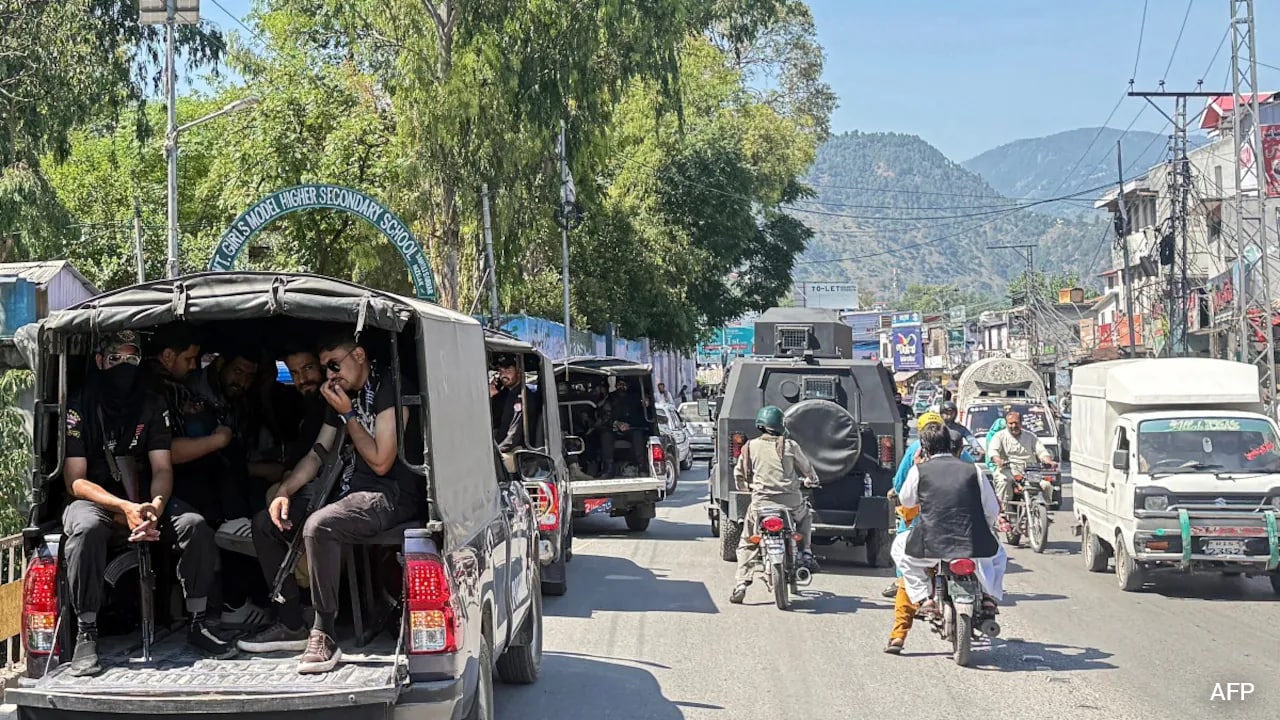
For three quarters of a century, Islamabad has used a dependable script for any unrest in Kashmir. The narrative was simple, clean, and entirely externalized. Every stone thrown, every strike observed, and every cry for political self-determination was swiftly attributed to the machinations of New Delhi. But that old script has officially collapsed. The massive, deadly civil unrest choking major towns across Pakistan-administered Kashmir cannot be blamed on Indian interference.
This is an internal explosion. The thousands of protesters filling the streets of Rawalakot, Muzaffarabad, and Kotli are not chanting about geopolitics or the Line of Control. They are furious about local governance, systemic economic exploitation, and a rigged constitutional structure that dilutes their political voice. Led by the Jammu Kashmir Joint Awami Action Committee (JAAC), a grassroots coalition of traders, lawyers, and civil society members, this movement is the culmination of years of quiet, bubbling resentment. By treating the region as a resource-rich colony while denying its people basic economic fairness, Islamabad has engineered its own crisis.
The Hydropower Paradox and the Flour Crisis
To understand why a population traditionally aligned with Pakistan has turned so aggressively against the state apparatus, one must look at the utility bills. The region generates a massive surplus of cheap, clean hydroelectricity. It produces around 3,000 megawatts of power, contributing significantly to the national grid of a perennially energy-starved Pakistan.
Yet, the locals who live in the shadows of these massive dams are charged exorbitant tariffs. Residents saw their electricity bills multiply fivefold over a short period, a consequence of IMF-mandated structural adjustments pushed down from Islamabad. The economic logic of being forced to buy back their own natural resource at inflated, heavily taxed retail prices broke the social contract. A mass boycott of electricity bills began in Poonch district and quickly spread across the territory. People simply stopped paying.
Simultaneously, inflation gutted the household budget. The price of subsidized wheat flour, a fundamental dietary staple, skyrocketed while regional markets suffered from acute shortages and rampant smuggling into Pakistan's proper provinces. When the JAAC organized a 38-point charter demanding affordable flour, tariff rollbacks based on production costs, and an end to elite privileges, it was not an ideological uprising. It was a fight for survival.
Islamabad attempted to throw money at the problem, approving an emergency 23 billion rupee subsidy package to artificially lower prices. But temporary financial Band-Aids cannot heal a deep structural wound. The core issue is not just the price of a sack of flour. It is about who owns the land, who controls the resources, and who gets to decide how the region is governed.
The Refugee Seat Fracture
The crisis has entered a much more dangerous phase, moving from economic grievances to a direct constitutional confrontation. The current flashpoint centers on a highly specific, arcane feature of the local legislature: the 12 reserved seats for Kashmiri refugees.
When the local administrative architecture was designed decades ago, 12 seats in the Azad Jammu and Kashmir Legislative Assembly were set aside for refugees who had fled Indian-controlled territory and settled permanently across various provinces of Pakistan proper. The original intent was symbolic and strategic, keeping the flame of a unified, disputed Kashmir alive within the legislature.
Today, these seats function as a blunt tool for political engineering. Because these voters reside outside the geographic boundaries of the region—scattered across cities like Karachi, Lahore, and Rawalpindi—the political parties running the federal government in Islamabad can easily manipulate these constituencies. Historically, whichever party holds power in Islamabad sweeps these 12 refugee seats, effectively allowing the federal government to install its own puppet administration in Muzaffarabad, regardless of how the actual residents of the region voted.
The JAAC has demanded the outright abolition of these 12 seats, arguing that they disenfranchise local residents and grant disproportionate power to outsiders. The local Supreme Court recently intervened, ruling that these seats are constitutionally protected and cannot be dissolved without a formal amendment. This judicial brick wall has infuriated the populace. The state has responded with a heavy hand, banning the JAAC, cutting off internet access, launching mass arbitrary arrests, and deploying paramilitary forces. The resulting clashes have left multiple police officers and over a dozen civilians dead.
The Cost of Bureaucratic Hypersufficiency
While regular citizens struggle to afford basic groceries, the local administrative state remains absurdly bloated. The region features an oversized ministerial cabinet, an array of redundant bureaucratic departments, and a ruling class that enjoys sprawling official residences, luxury vehicles, and tax-free perks funded by a captive local population.
This stark disparity has stripped the government of any remaining moral authority. The JAAC’s charter specifically targets these elite privileges, demanding a radical downsizing of the state apparatus. For decades, Islamabad maintained control by co-opting local elites, offering them lucrative positions and state patronage in exchange for keeping the population quiet. That mechanism of control has broken down. The local leadership can no longer shield the federal government from the wrath of a population that feels thoroughly cheated.
Islamabad’s current strategy relies entirely on kinetic force and containment. Officials have tried to paint the JAAC as an element bent on anarchy and terrorism, a standard authoritarian tactic used to justify state violence. But labeling a broad-based coalition of local business owners, shopkeepers, and public defenders as "terrorists" has only deepened the alienation.
The territory is trapped in a volatile cycle. The federal government cannot afford to permanently subsidize commodities given its fragile economic standing with international lenders, yet it cannot withdraw those subsidies without triggering an immediate return to the streets. More importantly, the state is fundamentally unwilling to concede on the issue of the 12 reserved seats or regional autonomy, because doing so would mean relinquishing its tight, decades-long grip on the strategic territory.
The old geopolitical shield is gone. The state can no longer point across the border to explain away the systemic failures, the empty kitchens, and the blood on the streets of Rawalakot. The crisis is entirely homegrown, born of structural exploitation and political disenfranchisement, and no amount of security crackdowns can erase the reality that the population has simply had enough.


