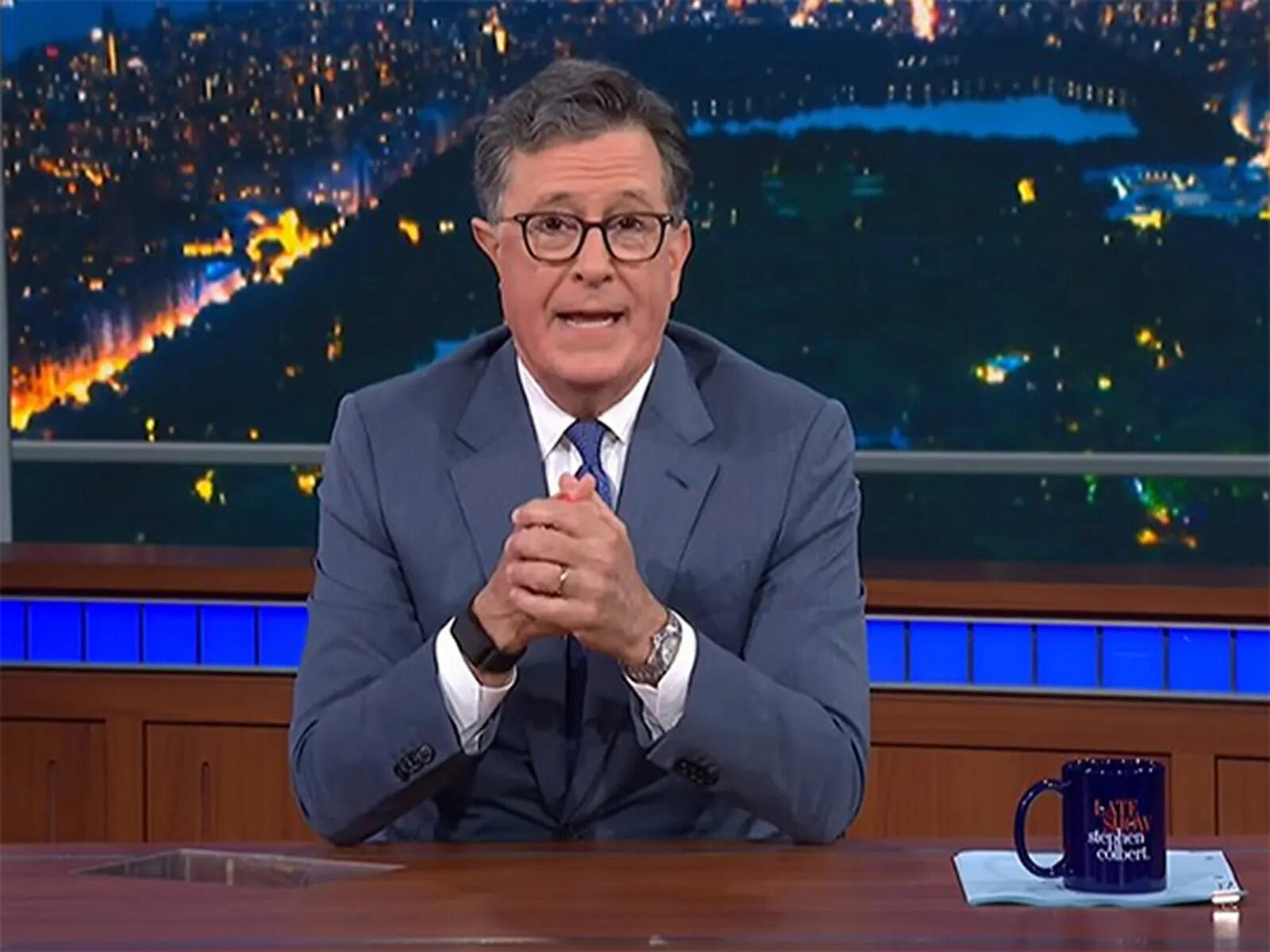
The final broadcast of The Late Show with Stephen Colbert on May 21 marks the end of an era, but not for the reasons corporate executives want you to believe. CBS has spent the last several months insisting that shuttering the 33-year-old franchise is a purely financial necessity dictated by shifting consumer habits and a brutal ad market. This explanation is convenient, tidy, and mostly hollow. The reality behind the sudden death of the most-watched show in late-night television belongs to a much darker story about political pressure, corporate mergers, and the total surrender of broadcast networks to institutional fear.
When Colbert walks out of the Ed Sullivan Theater for the last time, he leaves behind a medium that has been systematically sterilized. The network is not just replacing a host; it is permanently retiring the Late Show brand, giving the prestigious 11:35 PM time slot back to local affiliates who plan to run syndicated comedy game shows. To understand how the crowning jewel of CBS entertainment became radioactive overnight, one has to look past the balance sheets and examine the collision between corporate consolidation and the dangerous business of nightly political satire. In other updates, read about: Deconstructing the Scale Paradox of Ridley Scott.
The Corporate Capitulation Hidden Behind the Balance Sheet
The official corporate narrative paints late-night television as a dinosaur bleeding cash in a world dominated by social media clips and decentralized podcasts. CBS executives explicitly stated that the cancellation was a financial decision against a challenging backdrop, completely unrelated to ratings or content. On paper, the macro trends support them. Linear television viewership has fallen for a decade, and younger audiences prefer consuming monologue jokes via morning phone scrolls rather than staying up past midnight.
Yet, this logic crumbles under basic scrutiny. The Late Show remained the undisputed king of the time slot, consistently pulling in over 2.7 million nightly viewers and generating massive digital engagement numbers that dwarf its competitors. Shows at the top of their ratings bracket do not get unceremoniously axed without an underlying pathology. Deadline has provided coverage on this fascinating issue in great detail.
The turning point occurred not in a writers' room, but during a high-stakes corporate negotiation. In the summer of 2025, Paramount Global, the parent company of CBS, was desperately seeking regulatory approval for an $8 billion merger with Skydance Media. Simultaneously, the company agreed to a quiet $16 million settlement with Donald Trump over a disputed 60 Minutes interview involving Kamala Harris.
Colbert did what a satirist is supposed to do. He went on the air and skewered his own bosses, explicitly labeling the payout a "big fat bribe." Within days of that broadcast, CBS announced that the Late Show franchise would be permanently terminated in May 2026.
To believe this timing is a coincidence requires a degree of corporate naivety that no seasoned analyst can afford. Media conglomerates seeking government approval for multi-billion-dollar mergers cannot tolerate highly volatile liabilities on their nightly schedules. A late-night host who treats the executive suite as a target is no longer an asset. He is a liability that needs to be scrubbed from the ledger before the papers are signed. Even David Letterman emerged from retirement to publicly call the network’s financial explanation the work of "lying weasels," pointing directly to the lack of corporate courage in modern broadcasting.
The Evolution of Comedy from Therapy to Threat
Political satire on American television used to operate under an unspoken treaty. Late-night hosts were court jesters who poked fun at the powerful, popped the bubbles of political pomposity, and provided a safe, collective release valve for a stressed electorate. Johnny Carson mastered this by remaining strictly centrist, ensuring that both sides of the aisle felt the sting of his jokes without ever feeling truly alienated.
The rise of highly polarized politics fundamentally altered that dynamic. Over his 11-year run, Colbert transformed the monologue into a nightly prosecutorial summation. For a massive segment of the population, his show wasn't just entertainment; it was a form of nightly sanity preservation.
This shift changed how powerful figures view comedy. Comedians are no longer viewed as mere joke-tellers. They are treated as hostile political actors. When a monologue treats a political figure not as a buffoon to be mocked, but as an existential threat to democratic norms, the nature of the transaction changes. Trump regularly weaponized his social media platforms to attack late-night hosts, celebrating Colbert’s eventual cancellation by bragging that the comedian had been "fired."
When satire becomes this potent, it invites institutional retaliation. The chilling effect does not require a direct memo from a network executive telling a host what they can or cannot say. It happens through structural elimination. By completely retiring the Late Show format and handing the time slot over to Byron Allen's Allen Media Group to run Comics Unleashed, CBS is consciously removing the apparatus of daily political commentary from its airwaves. A syndicated stand-up clip show cannot comment on a breaking Supreme Court decision or a midnight presidential post. That is precisely why the network bought it. Dead air contains no political risk.
The Mechanics of the Eviction
The sheer urgency of Colbert’s departure exposes the internal panic defining the modern network infrastructure. In a conversation with fellow late-night hosts on the Strike Force Five podcast, Colbert revealed that his staff will be cut off financially almost immediately after the final curtain drops on May 21.
Production crews will begin tearing down the physical infrastructure of the Ed Sullivan Theater within 24 hours of the final taping. This is a radical departure from traditional network handoffs. When a host retires voluntarily, there is a transition period, a celebration of legacy, and a preservation of institutional memory. The immediate, aggressive dismantling of the Late Show set mirrors the clearing out of a corporate office after a sudden mass layoff.
This rapid eviction demonstrates how desperate the modern media apparatus is to distance itself from topical humor. The network is executing a structural pivot away from the high-overhead, high-risk world of daily production toward low-cost, politically inert programming. The economics of late-night were manageable as long as the cultural prestige and corporate protection remained intact. Without that shield, the high production costs of a live band, a massive writing staff, and a prime New York City theater become impossible for risk-averse executives to justify.
The Fragmented Future of the American Monologue
The death of the Late Show does not mean political humor will vanish, but it does mark the end of the shared cultural experience. For decades, the late-night monologue served as a baseline for the national conversation. It was the place where the country processed major historical events collectively, laughing at the same absurdities before going to sleep.
That monoculture is gone. The future of political satire belongs to hyper-niche, decentralized platforms. Comedians are migrating to independent podcasts, Substack networks, and short-form video platforms where they can speak directly to a self-selected audience without seeking permission from a corporate board of directors.
This fragmentation comes with a significant cost. On an independent platform, a comedian answers only to their subscribers, which naturally incentivizes them to feed the biases of their specific silo. The broad-based appeal required to sustain a major network broadcast forced a certain level of discipline and creative rigor. When satire moves into the echo chamber, it loses its ability to challenge power broadly and instead becomes a tool for reinforcing existing divisions.
The institutional cowardice that killed the Late Show will ultimately replicate itself across other networks. Executive suites across the industry are watching the CBS experiment closely. If the network successfully stabilizes its margins by replacing a sharp, daily satirical program with cheap, frictionless syndication without suffering a permanent revolt from viewers, competitors will follow suit. The nightly news monologue is becoming a luxury that corporate America simply cannot afford to protect.
The tragedy of the situation is that the public loses an essential piece of its democratic toolkit. Satire has always been the most effective way to expose the absurdity of authoritarian rhetoric and institutional corruption. When the structures that support that satire are dismantled to appease regulators and smooth out corporate mergers, the public square grows significantly quieter. Colbert is heading off to write screenplays about Middle-earth, escaping a reality that has become too bureaucratic for honest comedy. The audience is left with the silence of a blank screen and a corporate guarantee that everything is under control.