Every November, streaming platforms flood your home screen with dozens of interchangeable holiday films, TV shows, and specials designed to be forgotten before New Year's Day. If you want programming that actually holds up under scrutiny, skip the algorithmic filler and queue up proven classics alongside sharp modern exceptions like The Holdovers, Klaus, The Muppet Christmas Carol, A Charlie Brown Christmas, The Bear's "Fishes" episode, and Spirited.
Most seasonal roundups read like recycled press releases. They treat a cheap, six-day production shot in an Ontario warehouse with the exact same reverence as a meticulously crafted studio feature. Having covered television programming and film distribution for thirty years, I have watched the holiday genre morph from a sincere broadcasting tradition into an industrial content assembly line.
The Economics of the Assembly Line
To understand why your streaming queue looks like a sea of identical red-and-green sweaters, follow the money. Networks and streaming services realized long ago that seasonal viewership is remarkably forgiving. Audiences put these titles on in the background while wrapping gifts, baking, or scrolling on their phones.
Because the viewer is distracted, studios slash budgets. Scripts are written in weeks using rigid, predictable beats—the big-city executive returning to a struggling small town, the fake relationship that turns real, the local bakery threatened by a greedy developer. Directors shoot twenty pages a day instead of the industry standard of three to five. Lighting is flat and overly bright to hide cheap sets.
Yet these projects deliver massive returns on investment. They cost next to nothing to produce, require zero original intellectual property, and spike platform engagement metrics every single fourth quarter. When a studio can manufacture twelve mid-tier romances for the price of one prestige drama, quality becomes an unnecessary expense.
The Films That Refused to Cut Corners
True cinematic longevity requires friction. The best holiday films endure not because they offer pure escapism, but because they acknowledge the stress, loneliness, and financial anxiety that actually define the winter months for millions of people.
The Holdovers (2023)
Alexander Payne’s 1970s-set drama is an instant modern standard because it refuses to rush toward easy sentimentality. Paul Giamatti plays a universally despised boarding school history teacher stuck supervising a handful of abandoned students over winter break. Shot on digital cameras engineered to mimic the grain, halation, and mono sound of 1970 cinema, the film treats seasonal isolation with dry wit and deep empathy. Nobody magically changes overnight; two damaged people simply learn to tolerate, and eventually care for, each other.
Klaus (2019)
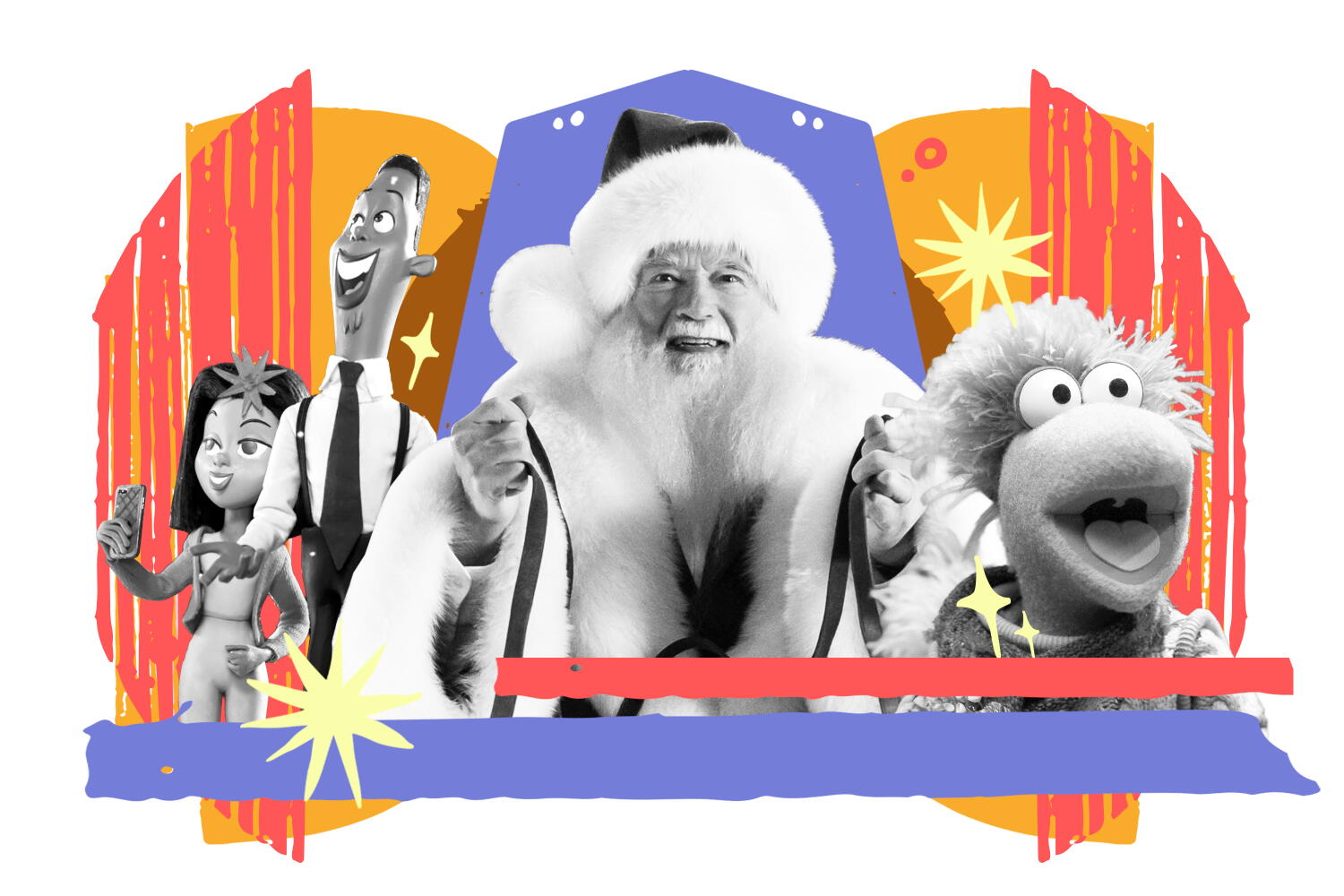
While major animation studios spent a decade chasing photorealistic 3D rendering, director Sergio Pablos went backward to move forward. Klaus uses traditional hand-drawn 2D animation enhanced by bespoke volumetric lighting software, creating a visual texture that feels like a living storybook. More importantly, its origin story for Santa Claus is rooted in transactional self-interest. A spoiled, lazy postman teams up with a reclusive woodsman purely to hit a mail quota so he can return to his privileged life. The emotional payoff works because the cynicism at the start is entirely earned.
The Muppet Christmas Carol (1992)
Michael Caine made a critical acting choice on the set of this adaptation. He decided to treat his puppet co-stars with the exact same gravity he would bring to the Royal Shakespeare Company. That single decision anchors the entire movie. Director Brian Henson kept large chunks of Charles Dickens’s original Victorian prose intact, giving Gonzo—playing Dickens himself—some of the best narration in family cinema. It remains the most faithful and emotionally resonant adaptation of the novella ever put on film.
It’s a Wonderful Life (1946)
People misremember Frank Capra’s masterpiece as a cozy fairy tale. It is actually a dark, relentless psychological thriller about a man driven to the brink of suicide by systemic financial corruption and crushed personal dreams. George Bailey spends the entire movie sacrificing his own ambitions to keep his neighbors out of the clutches of a predatory monopolist. The famous ending only works because Capra forces the audience to sit through two hours of genuine despair first.
Die Hard (1988)
Setting aside the tired internet debate over whether it qualifies as a Christmas movie, John McTiernan’s action benchmark is a masterclass in spatial storytelling and character economy. Every single detail introduced in the first twenty minutes—the watch, the barefoot walk, the German terrorist’s specific tailoring—pays off before the credits roll. It uses the corporate Christmas party not as window dressing, but as the exact mechanism that isolates the hostages and creates a ticking clock.
The Shop Around the Corner (1940)
Before Nora Ephron modernized the premise in You’ve Got Mail, Ernst Lubitsch directed this razor-sharp romantic comedy set in a bustling Budapest leather goods shop. James Stewart and Margaret Sullavan play sparring coworkers who despise each other by day while unknowingly falling in love through anonymous letters by night. Lubitsch’s famous "touch"—his ability to convey complex character dynamics through subtle visual cues and closed doors—keeps the story grounded in the economic realities of working-class retail clerks trying to survive the holiday rush.
Spirited (2022)
Musical comedies rarely take structural risks anymore, which makes this inversion of A Christmas Carol worth your time. Instead of focusing on Scrooge, the narrative follows the Ghost of Christmas Present, played by Will Ferrell, as he targets an "unredeemable" media consultant played by Ryan Reynolds. While some of the modern corporate satire runs slightly long, the choreography is massive, old-school Hollywood spectacle, and the central twist genuinely reframes how we think about personal redemption.
Television Specials That Still Matter
Television has historically been the true home of seasonal programming, largely because broadcast schedules forced families to watch together at a specific hour. Before on-demand streaming fractured the monoculture, a thirty-minute special had to justify preempting regular programming.
A Charlie Brown Christmas (1965)
CBS executives hated this special when they first saw the rough cut. They thought the pacing was too slow, the use of real children for voice acting sounded amateurish, and Vince Guaraldi’s melancholic jazz score was completely wrong for a cartoon. Creator Charles Schulz and producer Lee Mendelson stood their ground, refusing to add a laugh track. That defiance produced the most honest half-hour in television history—a quiet, existential meditation on commercialism that trusts young viewers to handle heavy themes without being pandering.
The Bear Season 2 Episode 6 "Fishes" (2023)
If you want to understand the psychological toll of family gatherings, watch this sixty-six-minute pressure cooker. Creator Christopher Storer assembles an absurdly stacked cast—including Jamie Lee Curtis, Bob Odenkirk, and Jon Bernthal—to depict a catastrophic Seven Fishes dinner in Chicago. The camera never stops moving. Overlapping dialogue, boiling pots, and timer alarms build an almost unbearable sense of dread. It is exhausting, brilliant television that captures the exact moment generational trauma explodes over dinner.
The Twilight Zone Season 2 Episode 11 "The Night of the Meek" (1960)
Shot on cheap videotape rather than 35mm film to save money during the show's second season, Rod Serling’s script overcomes every technical limitation through sheer writing power. Art Carney plays Henry Corwin, an alcoholic department store Santa fired on Christmas Eve after showing up drunk to work. Wandering the snowy alleys, he discovers a bottomless sack that produces whatever people truly need. Carney’s performance is devastating, turning a simple fantasy premise into a sharp critique of how society discards the poor once the seasonal charity drives end.
Ted Lasso Season 2 Episode 4 "Carol of the Bells" (2021)
Most modern sitcom holiday episodes feel forced, interrupting ongoing plotlines for cheap gags. Ted Lasso sidesteps that trap by splitting its ensemble into three distinct, character-driven vignettes. Roy Kent and Keeley spend the afternoon hunting down a dentist for their niece; Rebecca drags Ted along to deliver gifts to underprivileged kids; and Higgins hosts the international players who couldn't fly home. It avoids heavy-handed moralizing by focusing entirely on how chosen families form when biological ones are thousands of miles away.
Bob’s Burgers Season 13 Episode 10 "The Plight Before Christmas" (2022)
Animated sitcoms rarely earn genuine tears after a decade on the air, yet this episode pulls it off effortlessly. Bob and Linda frantically try to split their time between three simultaneous school performances—Gene’s xylophone concert, Tina’s substitute role in a play, and Louise’s poetry reading. Louise pretends she doesn't care if anyone shows up to hear her poem, masking her vulnerability behind her usual cynicism. The final five minutes, scored to a minimalist arrangement of Philip Glass’s "Mishima," rank among the finest moments in modern television animation.
Black Mirror "White Christmas" (2014)
Charlie Brooker’s feature-length special weaponizes seasonal nostalgia to explore the horror of digital consciousness. Set in a remote snowy cabin where two men slowly reveal why they are trapped there, the episode introduces the concept of "blocking" people in real life—reducing them to static, silent silhouettes. It is bleak, claustrophobic, and deeply unsettling, serving as the ultimate antidote if you are suffering from toxic positivity overload.
How the Grinch Stole Christmas! (1966)
Chuck Jones brought his Looney Tunes timing to Dr. Seuss’s verse, creating twenty-six minutes of pure visual momentum. Notice how little dialogue actually exists outside of Boris Karloff’s iconic narration. Jones tells the story through the Grinch’s exaggerated facial expressions, rubbery physical comedy, and the contrast between the warm, curved lines of Whoville and the sharp, jagged angles of Mount Crumpit.
The Cult Classics and Counter-Programming
Sometimes the smartest way to survive December is to abandon traditional warmth altogether. Counter-programming thrives during the holidays because audiences crave an escape from manufactured cheer.
- Eyes Wide Shut (1999): Stanley Kubrick’s final film uses Christmas lights as a hypnotic, almost sinister motif throughout a nocturnal odyssey across New York City. Every single scene contains twinkling bulbs in the background, turning a symbol of domestic comfort into a reminder of hidden desire, wealth disparity, and marital fragility.
- Tangerine (2015): Shot entirely on modified iPhone 5s smartphones on Christmas Eve in Los Angeles, Sean Baker’s kinetic dark comedy follows two transgender sex workers tearing across Hollywood in search of a cheating pimp. It is loud, chaotic, profane, and ultimately deeply moving—proving that budget constraints force genuine visual innovation when the filmmakers actually care about their subjects.
- Gremlins (1984): Joe Dante subverted Steven Spielberg’s wholesome Amblin brand by delivering a subversive horror-comedy that single-handedly forced the MPAA to invent the PG-13 rating. Beneath the puppet mayhem lies a biting satire of small-town conformity and consumer culture, anchored by Phoebe Cates’s notoriously bleak monologue about how she learned Santa wasn't real.
- Brazil (1985): Terry Gilliam’s dystopian nightmare takes place during a bleak, heavily commercialized Christmas season where terrorist bombings interrupt department store shopping sprees. Gift-wrapped packages hide bureaucratic surveillance, mocking the absurdity of maintaining festive traditions inside a collapsing totalitarian state.
- The Ref (1994): Long before dark family comedies became prestige TV staples, Denis Leary starred as a cat burglar forced to take an upper-middle-class couple hostage on Christmas Eve—only to realize their toxic, nonstop bickering is far worse than anything he faces from the police. Judy Davis and Kevin Spacey deliver verbal body blows with surgical precision.
- Tokyo Godfathers (2003): Satoshi Kon’s anime masterpiece follows three homeless companions in Tokyo—a middle-aged alcoholic, a former drag queen, and a runaway teenager—who find an abandoned baby in the garbage on Christmas Eve. Kon uses fluid, hyper-expressive animation and a series of escalating coincidences to examine society's invisible margins without ever slipping into cheap pity.
- Trading Places (1983): John Landis turned a classic prince-and-the-pauper setup into a ruthless takedown of Wall Street arrogance. Dan Aykroyd’s drunken, desperate crash of a high-society Christmas party—wearing a filthy Santa suit while stuffing an entire smoked salmon into his jacket—remains one of the sharpest pieces of physical comedy ever filmed.
How to Audit Your Watchlist
Stop letting recommendation algorithms dictate your December viewing habits. Streaming platforms promote titles based on licensing margins and completion rates, not artistic merit. They bury older catalog titles beneath banners promoting whatever mid-budget project they just financed.
Before you press play on anything new this season, look at the production credits. Check who directed it, whether it was shot on location or on a generic soundstage, and if the script was written by someone with actual credits outside of seasonal filler. Open your streaming app, clear the algorithmic suggestions from your continue-watching row, and manually search for one title from this list instead.