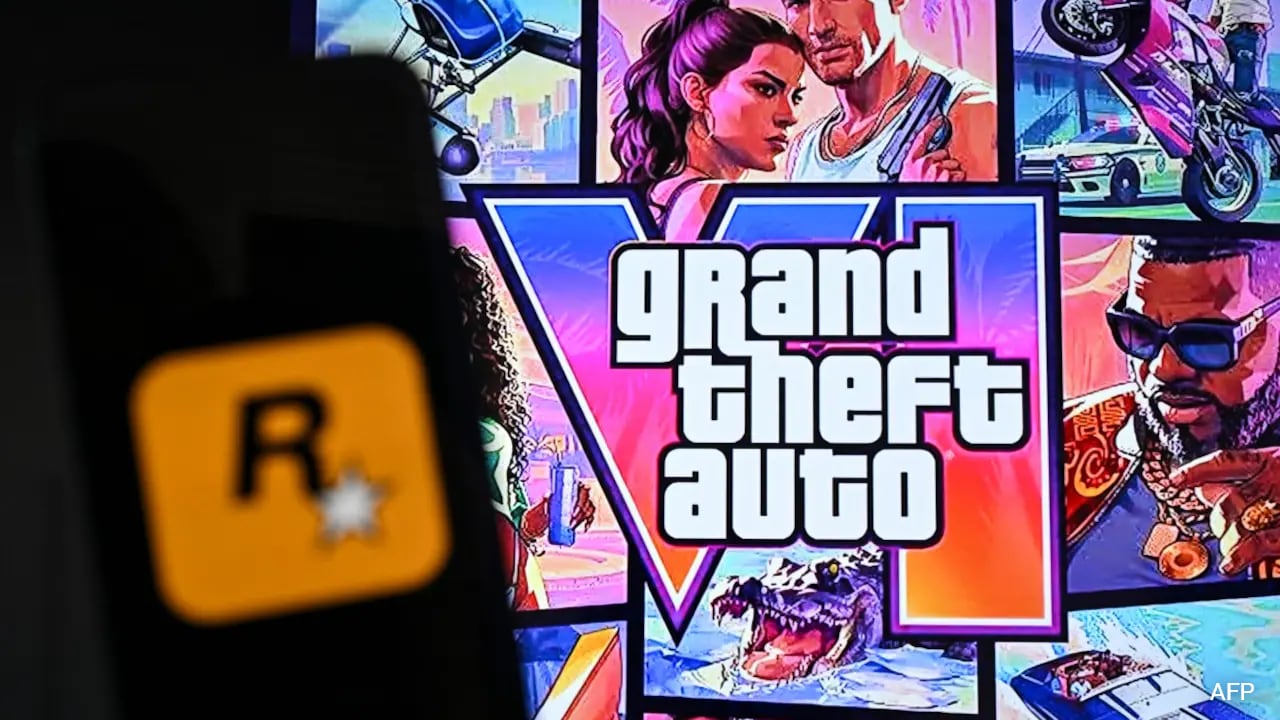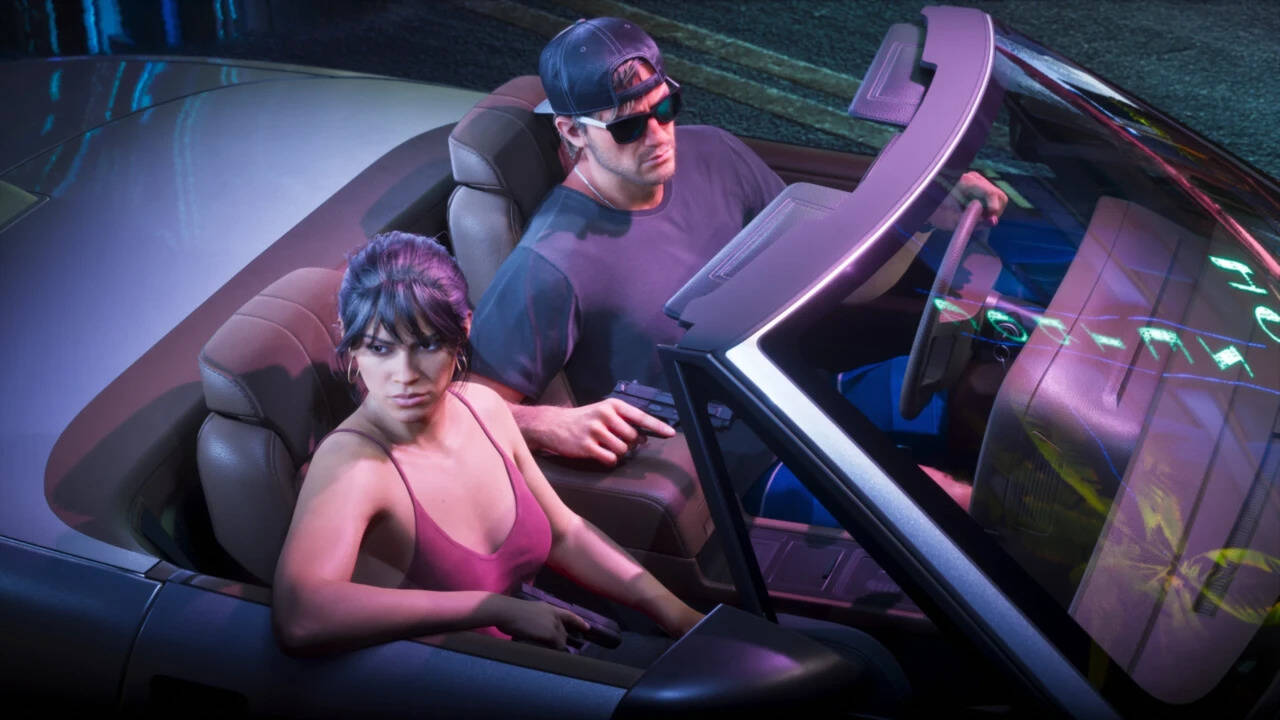
Grand Theft Auto VI did not take thirteen years to arrive because Rockstar Games was simply polishing reflections on puddles in Vice City. It took thirteen years because the economic model of blockbuster video games fundamentally broke in 2013, and Rockstar spent a decade trying to figure out how to survive the explosion of its own success.
When Grand Theft Auto V launched in September 2013, it was designed as a traditional single-player epic with a tacked-on multiplayer experiment. Nobody inside Take-Two Interactive predicted that Grand Theft Auto Online would morph into a multi-billion-dollar printing press that would sustain a publicly traded company for three console generations. That accidental goldmine rewired the DNA of modern game development. It created an impossible standard where releasing a sequel meant willingly cannibalizing the most profitable entertainment product in human history.
Now, the wait is over. The hype is deafening, the stock valuations are bloated, and the expectations are entirely detached from reality. If you look past the neon-soaked trailers and the breathless social media countdowns, you will find an industry holding its breath. Grand Theft Auto VI is no longer just a video game. It is a stress test for whether single-player, big-budget entertainment can still justify its astronomical cost.
The 2013 Trap
To understand why the gap between GTA V and GTA VI stretched across more than a decade, you have to look at the financial gravity of Shark Cards.
In the old days of console gaming, a studio made a game, shipped it in a box, took the revenue spike during the holiday quarter, and immediately put two hundred developers to work on the sequel. Cash flow demanded velocity. Rockstar operated on that exact schedule for years, releasing GTA III, Vice City, and San Andreas within a three-year window.
GTA Online destroyed that calendar. By generating hundreds of millions of dollars annually with a fraction of the development overhead required for a brand-new title, the live-service mode removed the financial urgency to ship GTA VI. Why risk a multi-hundred-million-dollar gamble on a new release when the existing product is printing money every Tuesday?
This created a massive structural bottleneck. Rockstar could not simply pivot its entire workforce to the next mainline entry because GTA Online required constant feeding. New heists, new vehicles, and new properties demanded elite engineering talent. At the same time, Take-Two Interactive’s shareholders grew accustomed to predictable, recurring quarterly revenue. The company went from being a hit-driven publisher to a digital landlord.
The Death of the Crunch Machine
There is a second, far less comfortable reason for the thirteen-year silence. Rockstar had to rebuild its entire corporate culture from the ground up.
During the final stretch of Red Dead Redemption 2 in 2018, reports surfaced detailing brutal, hundred-hour workweeks across Rockstar’s global studios. The public backlash was swift and severe. For decades, the games industry treated human burnout as a standard line item in the production budget. That era ended in 2018.
Rockstar leadership was forced to overhaul its internal pipeline, eliminating mandatory crunch, restructuring management, and bringing in new oversight to sanitize a frat-house workplace reputation. That cultural correction came with a direct mathematical cost. When you cut sixty-hour weeks down to forty, and you refuse to burn out your senior engineers, timelines stretch.
Add a global pandemic in 2020 that sent thousands of developers home with high-security dev kits, and the production schedule shattered. Building a modern open-world simulation requires tight, synchronous collaboration between animators, physics programmers, and audio engineers. Doing that over residential internet connections slowed iteration to a crawl.
The Illusion of Infinite Scale
Players expect Grand Theft Auto VI to make GTA V look like a primitive relic. They want every building enterable, every non-player character running on complex behavioral routines, and photorealistic lighting that pushes current hardware to its thermal limits.
Here is the brutal economic truth of modern game development. Fidelity scales exponentially, while human productivity remains linear.
Making a puddle look realistic in 2013 took one artist three days. Making a puddle look realistic in 2026—complete with ray-traced reflections, dynamic ripples based on wind velocity, and accurate evaporation rates—takes three artists two weeks. Multiply that exponential labor increase across a map twice the size of Los Santos, and you begin to see why budgets have ballooned past the billion-dollar mark.
Let us look at a hypothetical example to see how this math breaks a studio. Imagine a developer wants to add a single new dynamic event, like a high-speed police chase that erupts organically down the street from the player. In 2004, that required a basic script, three police cars, and some generic siren audio. Today, that same event requires real-time traffic rerouting, pedestrian panic animations, dynamic destruction physics for every storefront the cars clip, contextual dialogue from bystanders pulling out smartphones to record the crash, and seamless integration with the player's wanted level.
The industry is hitting a wall of diminishing returns. The effort required to make a game ten percent more realistic now costs twice as much money and takes three times as long. Rockstar is one of the few companies on earth with the cash reserves to brute-force its way through that wall, but even their pockets have a bottom.
Satire in an Unsatirizable World
Beyond the technical and financial hurdles lies a creative minefield that nobody at Take-Two wants to talk about. Grand Theft Auto built its empire on sharp, cynical parody of American culture. Dan Houser, the co-founder and primary creative voice behind the series' writing, spent twenty years skewering left-wing hypocrisy, right-wing paranoia, celebrity culture, and corporate greed with equal malice.
Dan Houser left Rockstar in 2020.
His departure left a massive creative vacuum right as American culture became nearly impossible to parody. How do you write exaggerated political satire when real-world headlines read like rejected Grand Theft Auto radio scripts? How do you mock social media influencers when actual teenagers are filming themselves committing felonies for algorithmic clout?
If Rockstar leans too heavily into the juvenile, shock-value humor of the early 2000s, they risk alienating a massive portion of their modern audience and triggering regulatory scrutiny. If they play it too safe and sanitize the script to appease corporate sponsors and platform holders, they strip the franchise of the rebellious edge that made it famous in the first place.
Setting the game in a modern-day Vice City—a fictionalized Miami—is a deliberate attempt to solve this problem. Florida is already a living caricature of American excess, wild wealth disparity, and bizarre local news. Rockstar does not have to invent the absurdity anymore. They just have to hold up a mirror and turn up the contrast.
The Competitor Graveyard
While Rockstar spent thirteen years building its magnum opus, the rest of the gaming industry tried—and largely failed—to steal its crown.
Look at the landscape of open-world crime games over the last decade. Saints Row attempted a reboot in 2022 that flopped so hard it shuttered its historic developer, Volition. Watch Dogs burned out after three entries, failing to find a consistent tone. Cyberpunk 2077 arrived in 2020 in a catastrophic technical state that took CD Projekt Red three years and hundreds of millions of dollars to rehabilitate.
None of them came close to dethroning GTA V. Why? Because Rockstar possesses a proprietary advantage that money alone cannot buy: institutional memory.
Thousands of developers across Rockstar North, Rockstar San Diego, and Rockstar India have spent twenty years refining the RAGE engine. They know how to make a car feel heavy when it turns a corner at ninety miles an hour. They know how to tune weapon recoil so every shot carries kinetic weight. Competitors try to replicate the formula using off-the-shelf engines like Unreal, only to discover that open-world physics and systemic AI cannot be slapped together in a three-year development cycle.
Because no competitor could match Rockstar's technical craft, GTA V continued to sell millions of copies every single year, sitting comfortably on the monthly top-ten sales charts a full decade after release. Rockstar had zero competitive pressure to rush GTA VI out the door.
The Pricing Trap and the Industry Shockwave
Now that the game is finally here, its arrival threatens to destabilize the entire video game market.
Publishers across the globe have been quietly praying that Take-Two Interactive would use Grand Theft Auto VI to break the seventy-dollar price ceiling for standard video games. Production budgets have tripled over the last two console generations, yet software prices have only crept up by ten dollars. Wall Street analysts have spent years arguing that a massive, hundred-hour cultural event like GTA VI should retail for eighty, ninety, or even one hundred dollars.
Even if Take-Two holds the line on the base price, the aggressive monetization of the inevitable online component will set the new standard for digital extraction. In 2023, Rockstar acquired Cfx.re, the team behind FiveM and RedM—the massive community-run roleplay servers that kept GTA V at the top of Twitch viewership charts for years.
That acquisition was the clearest signal yet of Rockstar's true endgame. They are not just building a single-player crime drama. They are building a creator-driven metaverse platform designed to absorb the user-generated content economy currently dominated by Roblox and Fortnite.
Meanwhile, rival publishers are terrified of the release window. Every major studio has spent the last eighteen months scrambling to clear their release calendars to avoid getting crushed in GTA VI's blast radius. When a game commands the attention of a hundred million players simultaneously, consumer spending on rival titles dries up overnight. Marketing budgets become useless because every algorithm on YouTube, TikTok, and X is entirely consumed by Vice City clips. For mid-sized studios operating on razor-thin margins, launching within sixty days of Grand Theft Auto VI is financial suicide.
The Weight of Impossible Expectations
The greatest threat to Grand Theft Auto VI is not a rival studio, a regulatory board, or a technical bug. It is the psychological weight of thirteen years of collective daydreaming.
When an audience waits over a decade for a piece of entertainment, the product stops being a piece of software and becomes a mirror for everyone's personal nostalgia. Millions of players are not just hoping for a good crime game; they are subconsciously expecting GTA VI to make them feel the exact same rush they felt when they booted up San Andreas in high school or GTA V in their early twenties.
No piece of code can deliver a time machine.
There will be inevitable friction at launch. Players accustomed to the instantaneous, fast-travel gratification of modern live-service shooters may chafe against Rockstar’s commitment to slow, deliberate animations and grounded realism. Hardcore roleplayers will clash with casual griefers in the online lobbies. Purists will dissect every frame of the lighting engine and complain about minor graphical compromises required to keep the frame rate stable on aging console hardware.
Yet none of that friction will stop the juggernaut. Take-Two Interactive will break every day-one entertainment sales record on the books, eclipsing Hollywood blockbusters and music releases by orders of magnitude.
The real story will unfold six months after the launch dust settles. We will find out whether the traditional, single-player narrative blockbuster has a sustainable financial future, or if Grand Theft Auto VI represents the final, extravagant monument to an era of game development that has become too expensive to ever repeat.